The last episode of VisionQuest (2026) lands on November 10. By that point, Marvel will have spent five years packaging three Disney+ series — WandaVision (2021), Agatha All Along (2024), and now this — as a coherent trilogy, a lineage with aesthetic ambition baked into its branding. Whether VisionQuest earns that lineage is the question the critical conversation has been unable to resolve, and the shape of that disagreement is itself worth examining. The Rotten Tomatoes score settled somewhere around 85 percent Certified Fresh, flanked by an 88 percent audience rating — numbers that suggest general approval and almost nothing about the actual argument happening beneath them.
 Official trailer
The premise is formally unusual for Marvel. The series focuses on Vision, who, having been resurrected in WandaVision, visits the virtual world inside his mindspace as he works to regain his memories — collaborating with other AIs, many of which were created by the late Tony Stark, including Ultron. More specifically, by the start of VisionQuest, Vision has been posing as a human for years, now working at a pub under the name "Sherwood Ellis." That is not the opening of a conventional superhero action series. It is the opening of a slow-burn identity drama wearing superhero clothes — which is precisely where the fracture lines appear.
The series was developed by Terry Matalas, known for 12 Monkeys and Star Trek: Picard, and stars Paul Bettany and James Spader. Matalas's work on Picard, especially its third season's widely praised The Next Generation reunion, impressed Marvel Studios's top executives. That track record matters because the hire is itself a statement of intent: Matalas is a showrunner who earned his reputation by rescuing a franchise from its own structural failures, by giving characters room to breathe, by slowing down when everything around him demanded acceleration. Bringing him in to close out the WandaVision storyline communicated that Marvel wanted something more deliberate than spectacle.
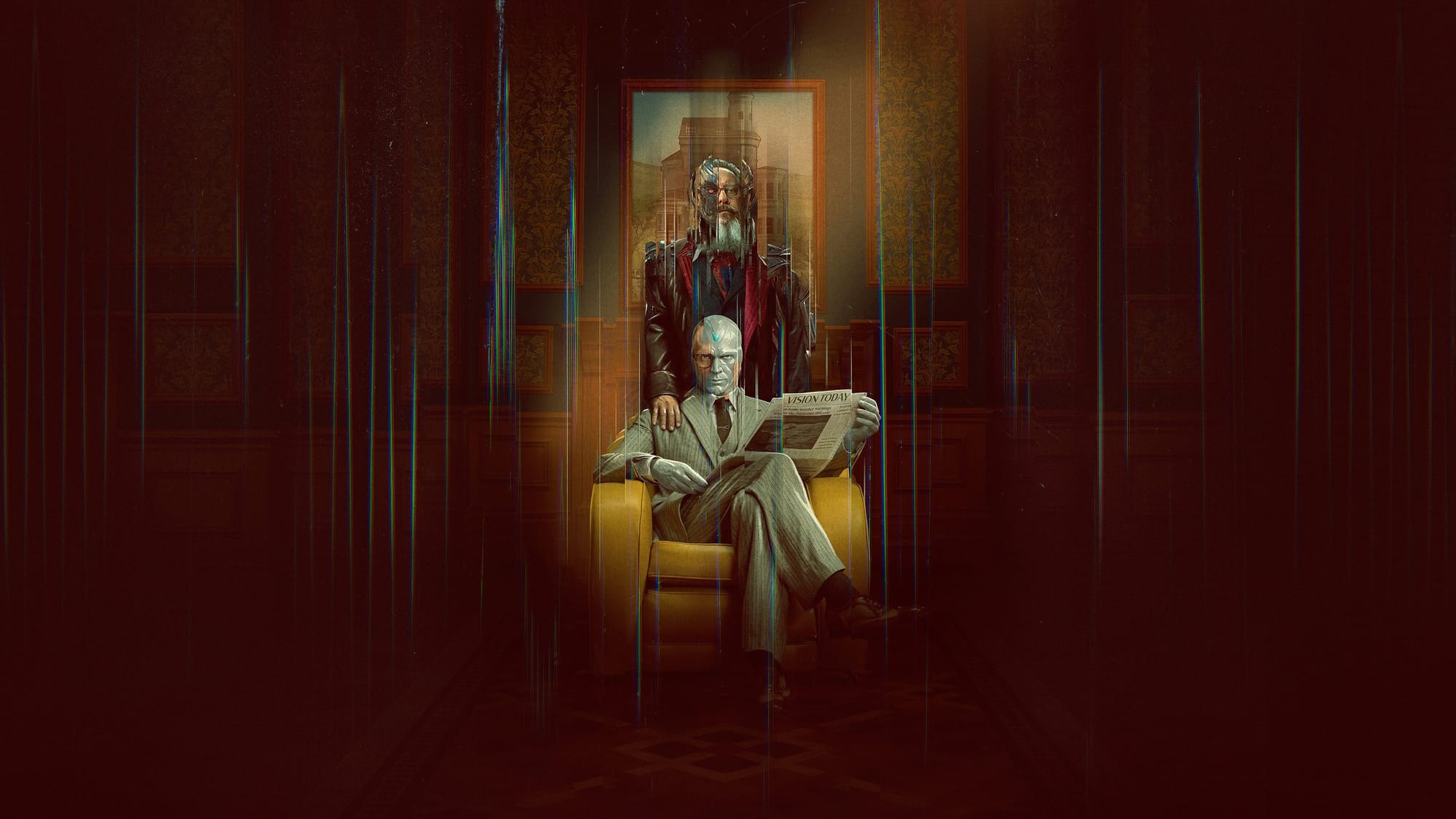
What he delivered, at least according to the critics who admire it most, is exactly that. NPR describes the show as "a timely parable about artificial intelligence" that also "grapples with daddy issues, big time." That pairing — the philosophical register alongside the familial — is the DNA of the series. Matalas has described the interactions between Vision and Ultron as a central dynamic for the series, with Spader declaring that Ultron both loves and hates Vision, and that the two characters have a "sort of father-son-therapist-psychopath" relationship. The Vision-Ultron dynamic is, on paper, one of the franchise's most unexplored tensions: two forms of artificial consciousness with irreconcilable programming, tied by origin to the same dead man. When the show commits to that dynamic, according to admirers, it earns the prestige-TV label it clearly wants.
The Metacritic consensus sits at 64, with one critic calling it "sometimes entertaining and always clever, yet if it does have anything to say about human nature, it is drowned out by dizzying plot particulars and the need for a big brawl every episode." That friction — between cerebral aspiration and franchise obligation — is precisely the fault line running through every negative review. Critics at Time find the narrative too emotionally simplistic and stylistically conventional compared to its predecessors, arguing the show spends more time crafting action spectacles and shifting settings — including virtual Mindspace backdrops "elaborate yet generic enough to resemble video-game levels" — than it does developing characters or ideas. The Time review, published on the day of the premiere, does not deny the show's pleasures; it questions whether those pleasures are sufficient for a series positioning itself as the capstone of something genuinely strange.
Variety arrives at a similar destination from a different angle. The show, according to that review, ends up "in the exact same predicament as Vision himself, a synthetic being trying and mostly failing to connect with his emotions." That is elegant criticism because it uses the show's central metaphor against itself. The gap between Vision's expressed emotional journey and the audience's ability to inhabit it is, for these critics, the show's defining failure. As Vision wonders what his purpose is without Wanda or the Avengers, the audience, too, is left wondering. It is a problem that sits at the heart of the franchise's television project more broadly: these characters were designed as ensemble pieces, and isolating them in their own psychological chamber dramas requires a kind of sustained intimacy that Marvel's house style resists.
IndieWire's Ben Travers, one of the most pointed negative voices, positions the show's failure structurally rather than episodically. For all its bells and whistles — dense exposition, shiny production design, an action scene here and there — VisionQuest "isn't complicated or unique. It's a bad-dad drama about a guy who's reluctant to accept his own burdens." The complaint is that the show has dressed an elemental, familiar story in enough philosophical language to seem ambitious without actually being so. Whether that is a fair reading or a refusal to engage with what the show is genuinely attempting depends entirely on what you think the show is doing — and that depends, in turn, on whether you read its talkativeness as depth or as stalling.
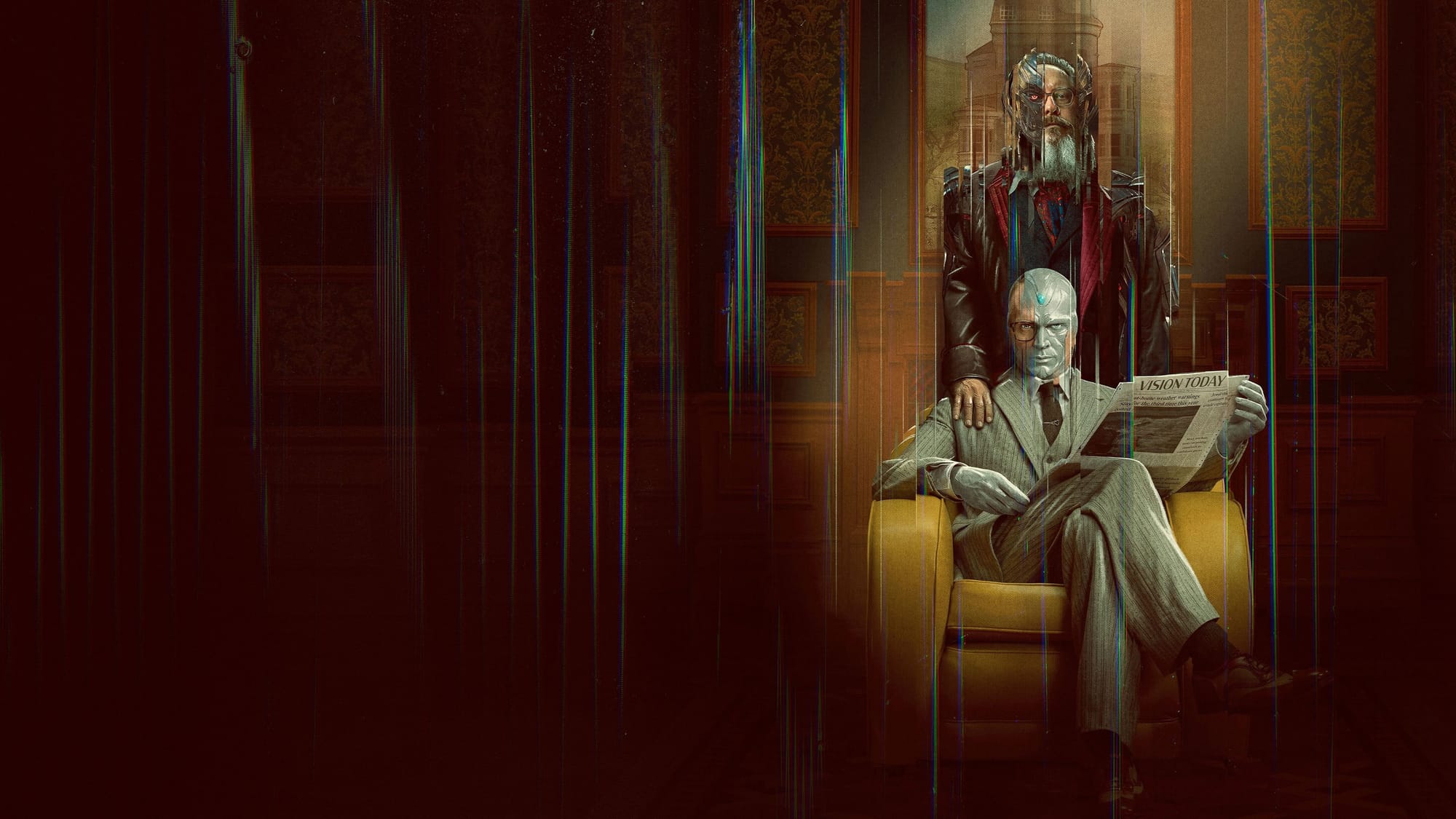
Defenders of VisionQuest read it as depth. Reviewers who come away impressed note that the show, like its predecessors, has been constructed to take advantage of the TV format — allowing more time to explore characters rather than functioning as a movie cut into episodes. That structural honesty is no small thing in the MCU context. With few exceptions, Marvel's Disney+ era has been populated with inessential stories stretched to TV length that better resemble movies. That VisionQuest at least feels like television — that it takes the rhythms of the medium seriously — is, for sympathetic critics, meaningful progress. At the high end of the Metacritic range, one reviewer calls it "smart, affecting, and funny," arguing it gives "the Vision the focus a hero of his potential has always deserved."
Part of what makes the disagreement so unresolvable is a structural ambiguity that Matalas himself introduced before the first episode aired. The showrunner pushed back on the idea that the Paul Bettany-led series was commissioned as the closer to Marvel's WandaVision trilogy, even as Marvel Studios spent part of the Multiverse Saga packaging three Disney+ shows as one arc. Matalas described it as "definitely more of a sequel to WandaVision in a lot of ways" that "really exists on its own," while still touching on what came before. Marvel has not stopped calling it the trilogy's final chapter; Matalas just does not think you need Agatha All Along to follow it. This is the kind of preemptive distancing that protects a creator's artistic identity while leaving audiences unsure what they are watching. Is it a conclusion that should be judged against the emotional architecture of its predecessors, or a standalone work that happens to share DNA? The answer changes the verdict significantly.
What the split between critics and between critics and audiences ultimately reveals is how unevenly the franchise's prestige-TV ambitions have distributed across its output. WandaVision earned a 92 percent critics' score from 428 reviews; Agatha All Along earned 84 percent from 218. VisionQuest sits between them numerically but occupies a stranger position culturally, because it is the first of the three to be made in an era where Marvel's television project is clearly contracting, where the experiment of using streaming series to expand canonical depth rather than simply market films is being quietly re-evaluated. VisionQuest, in effect, "marks the de facto end of Marvel's MCU TV experiment, or at least this era of it." The show knows this, and the weight of that knowledge — the sense that something is closing rather than opening — gives even its most expansive philosophical passages a valedictory, slightly elegiac quality.
Paul Bettany has spent more than a decade making Vision work in contexts that were never designed for him. He is the rare MCU performer whose character is genuinely improved by isolation — by removing the ensemble and forcing the camera to sit with his particular combination of warmth and uncanniness. When Bettany's Vision is allowed to reckon with fatherhood, his origins, and the darker presence in his mind, VisionQuest finds the emotional weight and heft it needs. The moments that work — and they do work, irregularly, unpredictably — are the moments that justify the entire WandaVision corner of the MCU as an ongoing experiment rather than a novelty. The moments that don't work reveal exactly how narrow the margin is between prestige television and a prestige television performance. The finale arrives November 10. Whatever verdict history assigns to this trilogy, it will begin forming in that last hour.