World of Warcraft: Forever (2026) goes live today, November 4, and the question it answers is not "what do players want from Classic?" but something harder and more institutional: can a single MMORPG sustain three distinct, permanent, internally coherent versions of itself indefinitely? Blizzard's answer, encoded in every design decision of this release, is yes — and the studio is betting its most important franchise on the architecture holding.
 Gameplay
Blizzard has described Forever as a new permanent third World of Warcraft experience, positioning the franchise explicitly around three distinct pillars: Modern, Classic, and Forever. That framing is deliberate and load-bearing. The current live game, World of Warcraft: Midnight, is receiving its own separate update track, meaning Blizzard is now running what amounts to three distinct versions of WoW simultaneously: the live expansion track, Classic era servers, and Forever. No major western studio has attempted anything like this with a single IP at this scale. The closest analogy isn't another MMO — it's a publisher maintaining three separate canonical television universes simultaneously, each funded, staffed, and updated on its own schedule.
The Difference Between a Season and a Branch
The community label "Classic Plus" has circulated for years, and at BlizzCon 2026, game director Faries directly acknowledged the label on stage, saying, "Yes, yes, yes, yes, this is Classic Plus." But Blizzard has since been careful to draw a sharper line. The company explicitly says Forever is not a mode, not a season, and not simply a new version of Classic. It is supposed to become a permanent third home for World of Warcraft with its own future.
That distinction matters structurally. Senior developer Nuthals credits the work Blizzard did with Season of Discovery, an offshoot of WoW Classic that saw the studio experiment with new class abilities, progression systems and dungeons within the confines of the original game, as a direct predecessor. Season of Discovery was a proof-of-concept under a time limit. Forever removes the limit and raises the stakes: it uses lessons from that project but builds a permanent branch with its own timeline, infrastructure, progression systems, zones, raids, playable race, and long-term roadmap. The semantic difference between "seasonal mode" and "permanent branch" is not just marketing. It changes the entire calculus of how players invest, how communities form, and how Blizzard allocates engineering resources for years forward.
Horizontal Is the Argument
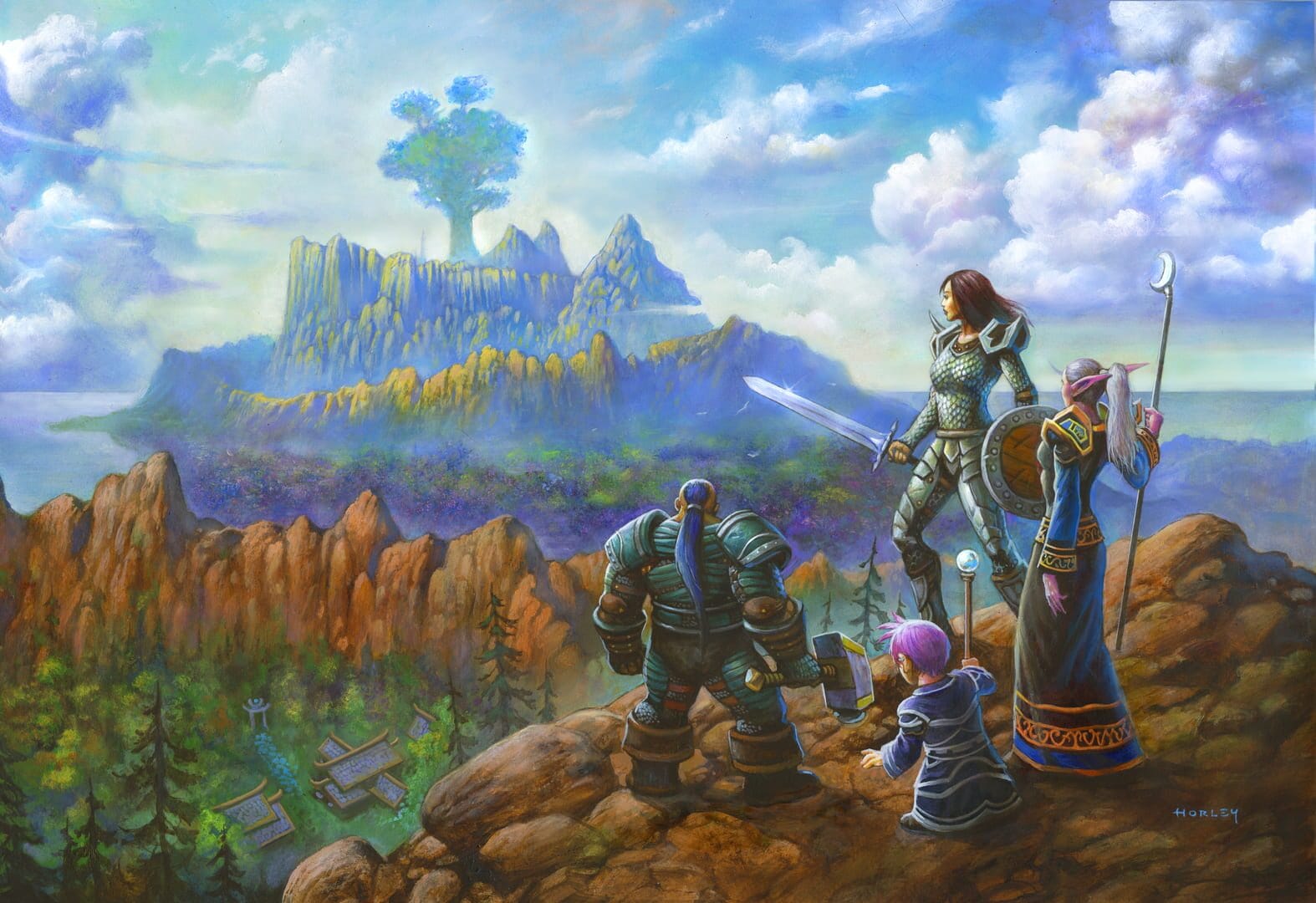
WoW Forever exists in something of a time bubble. The idea is that Blizzard will continue expanding the level 60 experience in Forever, adding new raids, quests, and content in a horizontal way rather than a vertical way. This is the most consequential mechanical decision in the game. Every major WoW expansion since The Burning Crusade (2007) has raised the level ceiling, rendering the previous zone of geography and storytelling into transitional leveling content. Forever refuses that logic entirely.
The game introduces an account-wide horizontal progression system called the Legacy System — a whole new way to progress, focusing on exploring everything the game has to offer, rather than power progression alone. Progression goes outward, not upward: new zones, dungeons, raids, and systems arrive without a higher level to reach. Retail WoW's expansion model converts old geography into obsolete content; Forever's model must make that geography permanently worth inhabiting. That is a fundamentally different content philosophy, and it demands fundamentally different pacing from the development team.
What Launches Today
At launch, WoW: Forever expands the Eastern Kingdoms and Kalimdor with new and reimagined zones and more than 1,000 new quests across the level 1–60 journey, introducing new destinations including Mount Hyjal, Shen'dralas, the Riverglades, and Zephras Isle. Blizzard builds three of the four new zones into the world players already know, rather than adding a new continent — a pointed choice that signals the game's design philosophy: depth before breadth, familiar geography made strange by new history.
The Skyborne race adds new faction choices. This new playable race can join either the Alliance or the Horde at character creation, with unique racial abilities depending on that choice, and begins in the level 1–12 Zephras Isle starting zone. Skyborne can be Druids, Hunters, Rogues, and Warriors; Alliance-aligned Skyborne can also be Mages, while Horde-aligned Skyborne can also be Shaman. The launch also adds six new race-class combinations: Gnome Priest, Human Hunter, Dwarf Shaman, Orc Mage, Troll Warlock, and Undead Paladin. These are not cosmetic additions — they are Forever's declaration that this Azeroth is developing its own history, one that never existed in the original game and never will in the retail timeline.
Access to Forever is included with an existing World of Warcraft subscription or game time, while optional digital upgrade packs provide additional content and cosmetic items. The Skyborne race and its starting zone are available through upgrade packs on Battle.net starting at $60. The base subscription model keeps the entry barrier low; the tiered packs give Blizzard a revenue mechanism that doesn't require selling a box or charging for a new subscription line. It is an elegant funding model for a branch that must justify its ongoing existence without cannibalizing the retail audience.
The Beta as Proof of Demand
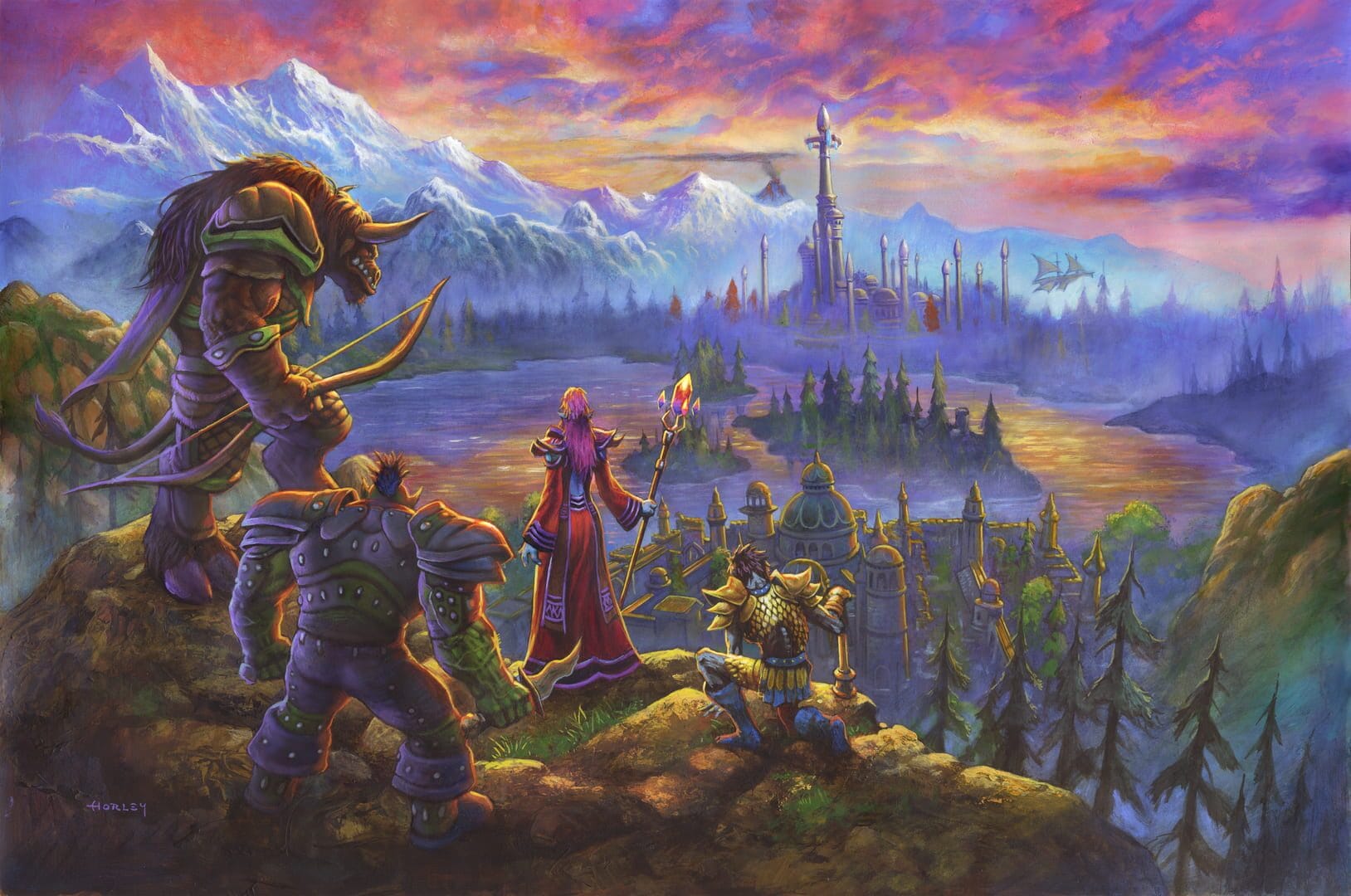
The clearest signal that Forever isn't a niche experiment came from the beta, which ran from September 17 through October 23. According to Microsoft CEO Satya Nadella, World of Warcraft: Forever just concluded "the largest beta in franchise history." Players created 8,862,354 characters during the beta, according to an official Blizzard infographic. Of those, 1,889,084 were Skyborne — roughly 21 percent of all characters created. Senior Game Designer Josh Greenfield called the numbers "the craziest I've seen in 17 years."
Blizzard recently concluded the largest beta in World of Warcraft's history, despite the fact that players had to purchase one of Forever's premium bundles, which start at $60, to take part in the experience. That last detail is worth sitting with. Players paid for access to a beta for a game they can play under their existing subscription, and they did so in numbers that broke franchise records. Executive producer Holly Longdale described Forever as a new beginning for World of Warcraft that would preserve the original game's setting while allowing Blizzard to tell new stories within it. The beta numbers suggest the community took her at her word.
The Structural Bet
The existence of three different Worlds of Warcraft might risk diluting the playerbase, but if any MMO is big enough to sustain three official forks — and if any studio has the resources to support them — it's probably WoW and Blizzard. That is the honest framing, and it is the right one. The risk is real. World of Warcraft Classic (2019) succeeded precisely because it was a clean, contained proposition: the original 2004 game, preserved, with no new commitments attached. Forever makes an open-ended commitment. It promises a world that will keep growing sideways indefinitely, staffed by a team that must generate original lore rather than replicate known history.
Blizzard is effectively asking what original Azeroth could have become if development had continued outward from that world instead of following the expansion path that produced modern WoW. That is a genuinely interesting question. It is also an enormously expensive one to answer across years, with no exit ramp that doesn't feel like a betrayal to the playerbase that signed on for permanence. Season of Discovery could end gracefully because it was always seasonal. Forever named itself after the one thing it cannot afford to stop being.
The design argument Blizzard is making today is not about nostalgia. It is about whether the original topology of Azeroth — the social friction, the horizontal scale, the world that expected you to slow down — can sustain a distinct audience in 2026 and beyond. For the millions who showed up to the beta, the answer was obvious enough to pay sixty dollars to prove it. The more difficult answer begins today. For a broader look at how legacy game franchises are navigating the tension between new releases and preserved classics, our coverage of ArcheAge Chronicles entering Early Access this same week offers a pointed counterexample of what happens when that balance is not managed carefully. And the question of whether studios can maintain distinct live-service audiences in parallel is one Final Fantasy XIV's Tokyo Fan Fest is asking in its own way, with Evercold positioning itself as the next chapter for a game that has already proven it can hold a loyal audience for over a decade.
World of Warcraft: Forever launches today, November 4, 2026, at 3:00 PM PST, included with an active WoW subscription. The Skyborne Heroic Pack and higher editions, beginning at $60, are available on Battle.net.