On November 3, 2026 — exactly three years to the day since Blue Eye Samurai (2023) first cut its way onto Netflix — creators Amber Noizumi and Michael Green dropped a teaser trailer and a hard date: Season 2 arrives January 19, 2027. The timing was not incidental. It was a formal acknowledgment of the gap, a way of saying that the wait was the work. The show that redefined what adult animation could do is back — and it has moved its exacting eye from Edo Japan to seventeenth-century London.
 Official trailer
That pivot alone would be enough to generate industry conversation. But the significance of this announcement runs deeper than geography. When Season 1 premiered, it did so with almost no fanfare, landing quietly on a streaming platform already crowded with prestige content. The show's first season was universally praised, scoring 97% on Rotten Tomatoes. Blue Eye Samurai reached global top 10 status for two weeks and climbed to number one in 50 countries. Then the awards arrived. The Netflix series enjoyed a perfect run during its 2024 Emmy Awards campaign, scoring four wins out of its four nominations at the Creative Arts Emmy Awards. Among them was Outstanding Animated Program for the episode "The Tale of the Ronin and the Bride." Its prior accolades that year also included six Annie Award wins. For a show that had never been loudly marketed, it was a seismic reckoning.
What made Season 1 so formally arresting was not any single element but the coherence of all of them together. Set during Japan's Edo period, Blue Eye Samurai follows Mizu, a biracial warrior on a quest to kill the four white men who raped her mother and conceived her — and much of the show's praise went to its violent action scenes and distinct CG animation, with Metal Gear Solid creator Hideo Kojima labeling it "the best anime of the year." The show's visual language borrowed from ukiyo-e print composition, Kurosawa-era chambara, and Western noir simultaneously, refusing to let any single tradition fully claim it. That formal hybridity was inseparable from the story it was telling: Mizu is a character defined by rejection from every category she should belong to. The aesthetics and the ethics were the same argument.
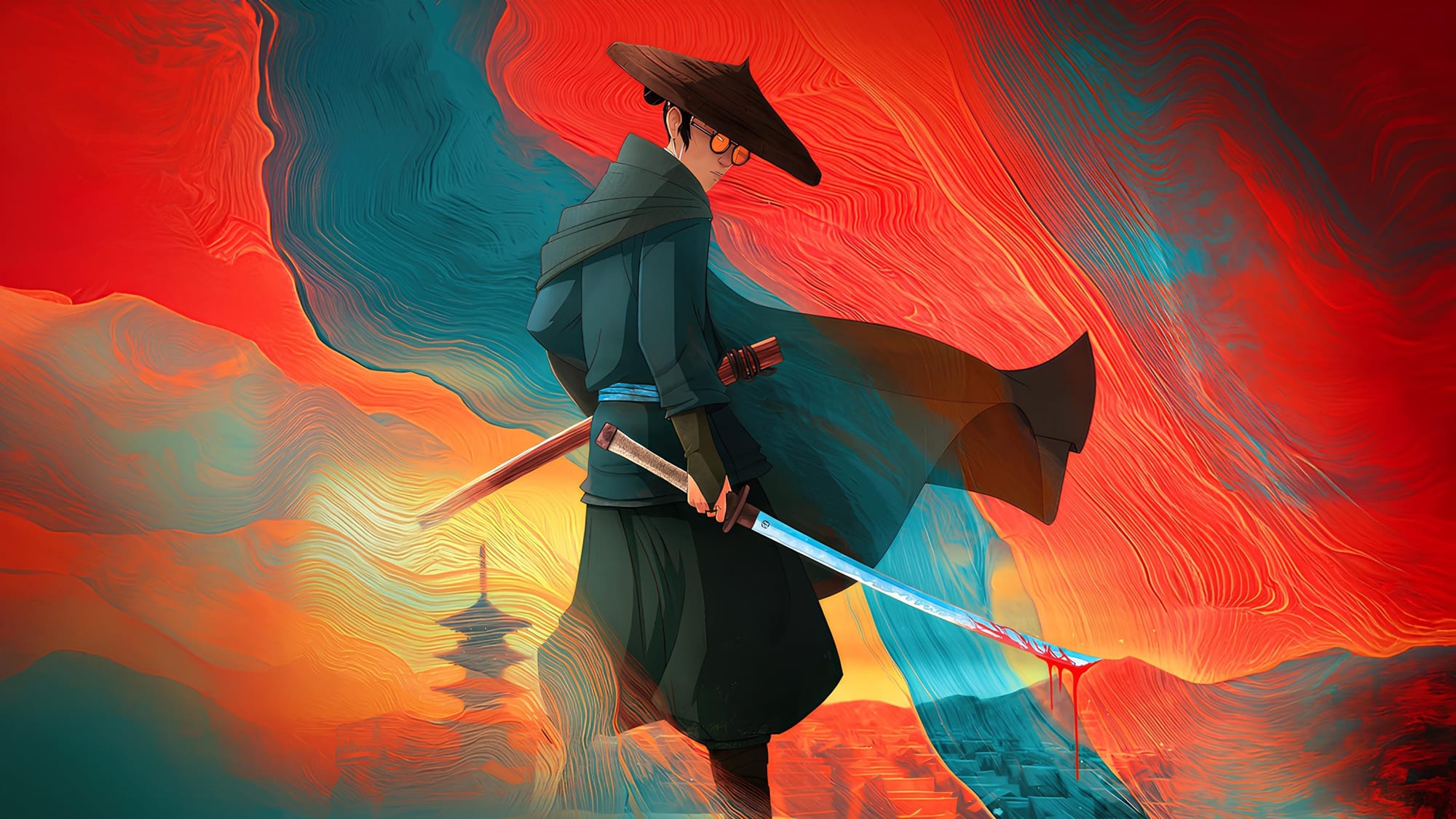
The question Season 2 must answer is whether that coherence survives transplantation. When we last saw Mizu, voiced by Maya Erskine, she was sailing toward London to search for the two remaining men who might be her father. The official Season 2 logline states that Mizu's bloody quest continues in London, where she faces new friends, old foes, and her own demons — while in Japan, Akemi (Brenda Song) and Taigen (Darren Barnet) navigate Edo Castle under a dangerous new Shogun, and Ringo (Masi Oka) searches for new purpose. The split geography is structurally interesting: the show is not abandoning the world it built but layering a second world on top of it, running both simultaneously across six episodes.
Noizumi and Green have been deliberate about why London, and why 1657 specifically. "London in 1657 had a thriving culture of illicit activity, something that fittingly parallels our story of Japan," the creators said. "Mizu will have to navigate this dark underbelly amid a puritanical society that persecuted women as witches, closed bars and theaters, and even outlawed Christmas." The Interregnum period — England under the grip of Cromwellian Puritanism, the monarchy not yet restored — is not an arbitrary backdrop. It is a society organized around the violent enforcement of a moral order, which is precisely the kind of environment that Mizu, constitutionally incapable of accepting imposed hierarchies, was built to destroy from within. As the creators noted, "For the first time, she'll have to confront what it's like to stand out as Asian in a sea of white faces." In Edo Japan, Mizu's blue eyes marked her as other. In London, her entire body will.
The scale of that world-building demanded time. Series co-creators Green and Noizumi revealed in an August 2024 roundtable with Collider that Season 2 will have six episodes, each with a runtime of roughly 44 minutes. The creators initially targeted a 2026 release before the season slipped to 2027. That delay, in context, reads not as production failure but as fidelity. Noizumi and Green addressed the wait directly, writing: "Rome wasn't built in a day, and neither were 17th-century London or Edo Japan." It is a statement that doubles as a creative philosophy. The show has never been in a hurry. It has always been in pursuit of something specific.
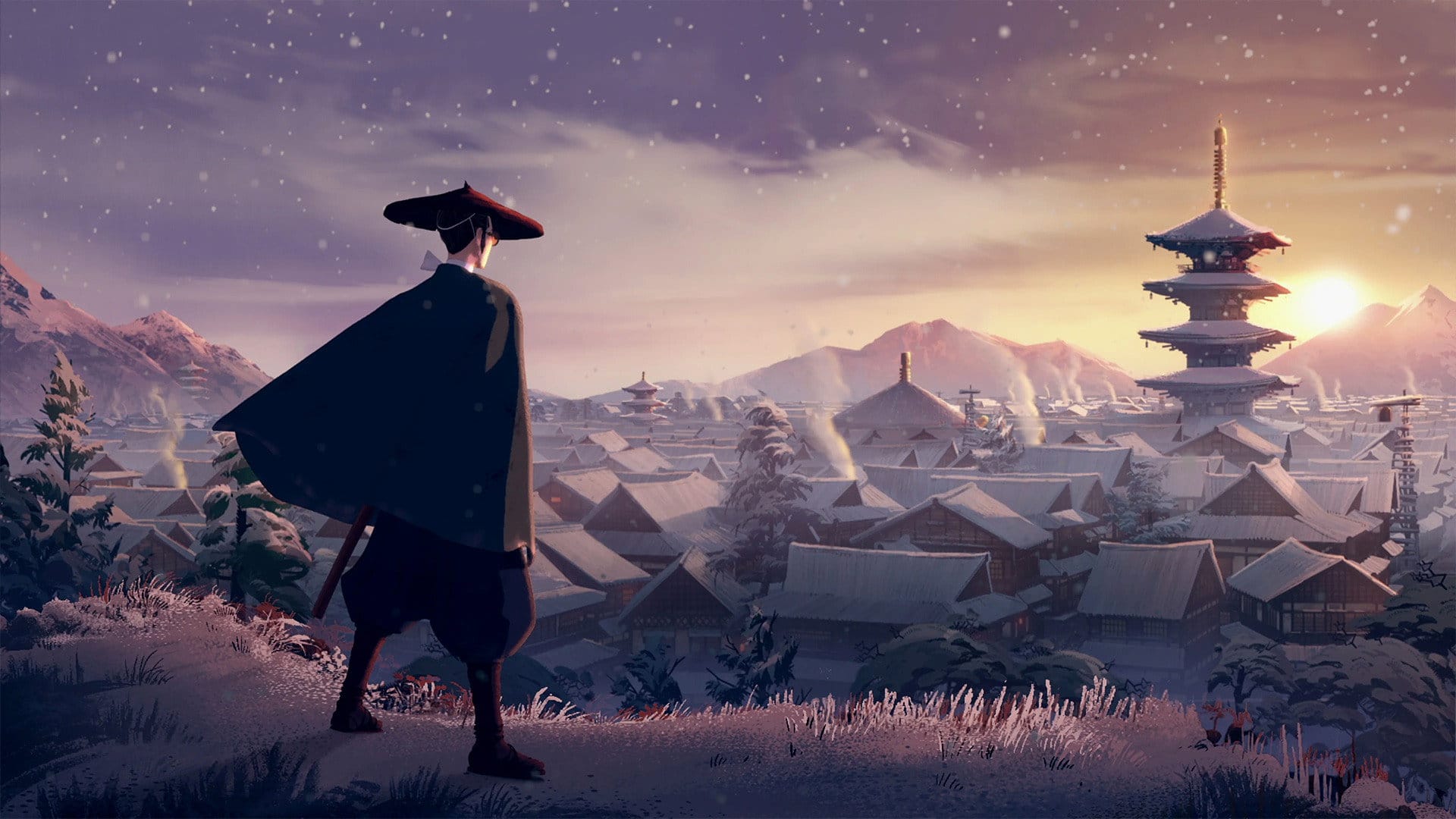
Jonathan Pryce, Joel Kim Booster, and Sherry Cola have joined the cast, while French animation studio Blue Spirit is returning to animate the season. Blue Spirit's involvement matters. The studio's capacity to render both the micro-precision of sword choreography and the atmospheric weight of historical environments was central to what Season 1 achieved, and the shift to London — fog, narrow streets, candlelit interiors — will demand a different kind of visual vocabulary. Preview footage shown at the Annecy International Animation Film Festival in June 2026 included clips of Mizu and Fowler in London, Mizu being confronted by locals, and her brawling in a pit fight. The silhouette of Season 1's visual ambition is there: bodies in motion, architecture as pressure, violence as argument. What changes is the colour palette of the world they're moving through.
January 2027 is shaping up as a significant month for serialized animation. Akane-banashi Season 2 and its new cast also land that month, and Mashle Season 3 arrives in the same window — but neither of those returns carries the specific weight of Blue Eye Samurai's return. This is a show that has earned a different kind of expectation. It is not expected to be entertaining. It is expected to be an argument.
Netflix has already renewed the show for a third season, which will also be the series' last, slated to debut in 2028. That confirmation, made public in August 2026, changed the shape of what Season 2 means. It is no longer uncertain whether Mizu's story will be completed. It will be. Which means Season 2 is not fighting for survival — it is the second act of a planned trilogy, the longest turn, the place where the architecture of the whole thing becomes legible. Second acts are where ambition gets tested most severely, because they cannot coast on novelty and cannot rely on resolution. They must be sustained, structural, and honest about what the story is actually about.
Noizumi and Green built the first season over three years. The new season has been a long time coming, with the creative team spending approximately three years bringing the next chapter to life — and considering the first season's stunning animation, elaborate fight sequences, and attention to historical detail, it's understandable why the production hasn't exactly been a quick turnaround. The date announcement on the third anniversary of Season 1's premiere was not a coincidence. It was a signal. The show that refused to rush in 2023 has not changed its terms. Blue Eye Samurai Season 2 arrives January 19, 2027 — on its own schedule, by its own standards, into a London that has been built, as the creators put it, brushstroke by brushstroke.