Three volumes. Six months. 1,856 pages of gold-foil hardcover manga. Today, Witch Hat Atelier: Grimoire Edition Vol. 3 ships from Kodansha Comics, and with it, the most structurally deliberate prestige repackaging of a modern manga series in the English-language market closes its run. The question it leaves behind is whether the format itself proved anything — and whether anyone was paying close enough attention.
The Architecture of the Edition
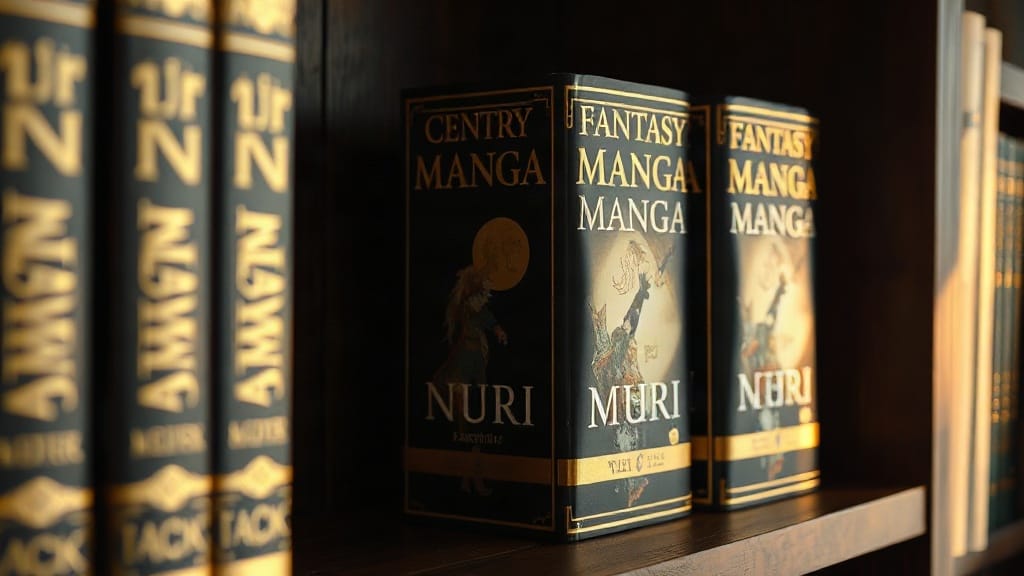
The Grimoire Edition is not a box set. Box sets bundle volumes that already exist in known configurations and sell on nostalgia or convenience. The Grimoire Edition is a purpose-built object: an oversized 7×10-inch hardcover printed on premium paper, with intricate gold foil covers, interior color pages, and exclusive bonus content that does not appear in the standard paperback volumes. Each volume collects three of the original tankōbon, but the reading experience is materially different — closer to an art book that also happens to tell a story than to a simple omnibus reprint.
Vol. 3 collects chapters 36 through 51, spanning Witch Hat Atelier paperback volumes 7 through 9, at 608 pages and a retail price of $49.99. Vol. 1 launched on May 5, 2026 — covering volumes 1 through 3 at 624 pages. Vol. 2 followed on September 22, 2026, covering volumes 4 through 6, also at 624 pages. All three dropped within a single calendar year, a pace that reads less like tentative market-testing and more like a publisher that had already decided the audience was there and committed to flushing the entire run through the pipeline before the moment cooled.
The timing was not accidental. Witch Hat Atelier (2016) — known in Japan as Tongari Bōshi no Atorie — had its long-awaited anime adaptation premiere on Crunchyroll on April 6, 2026, produced by studio BUG FILMS under director Ayumu Watanabe. The Grimoire Edition Vol. 1 arrived exactly one month later, anchoring a collector product to the peak of the property's cultural visibility. Vol. 2 landed in September, well after the anime's June 29 finale. Vol. 3 arrives today, November 3, with a Season 2 confirmed but carrying no release date. The edition's full run has, in other words, entirely occurred during the gap between anime seasons — which is precisely where most manga properties lose casual readers and retain only the committed.
What Kamome Shirahama Built
Serialization began in July 2016 in Kodansha's Monthly Morning Two magazine, a seinen publication that skews toward readers comfortable with slow-burn, detail-dense storytelling. The first English volume did not reach North American shelves until April 2019 — a three-year gap that would have killed most series' English momentum. It did not kill this one. By June 2026, the manga had over 9 million copies in circulation worldwide, a figure that reflects not viral spikes but sustained, compounding readership built volume by volume across nearly a decade.
The series follows Coco, a girl who discovers that magic — universally believed to be a gift of birth — is in fact accessible to anyone who learns to draw the correct casting seals. The premise is deceptively simple. What Shirahama built around it is one of the most visually demanding manga currently in publication: linework so precise and architectural that the author's pace — one monthly chapter — is understandable not as slow production but as structural necessity. The world of the Zozah Peninsula, where spells are drawn rather than spoken, demands that every panel of spellcasting be legible as instruction, not just spectacle.
Shirahama is also a working cover artist for both DC and Marvel — credits include Star Wars: Doctor Aphra and Batgirl and the Birds of Prey — and the cross-contamination shows. Her page design is not conventionally manga in its relationship to negative space. Western comics influence sits inside a Japanese serialization structure, and the result is something that reads as neither and both. The Grimoire Edition's enlarged format — seven inches wide, ten inches tall — makes that hybrid legibility tangible in a way the standard paperback trim cannot.
The Collector-Format Question
The Grimoire Edition is a bet on a specific reader: someone who already loves the series, watched the anime, wants a permanent object for their shelf, and is willing to pay $49.99 per volume for the privilege. That reader exists. The more interesting question is whether the format actively grew the audience for the underlying manga, or whether it simply monetized the audience that was already there.
The structural answer — the one Kodansha's own release calendar implies — is that the Grimoire Edition was never designed to onboard new readers. Anime onboarding was handled by the April premiere and the standard paperback volumes, which remain in print at $12.99 each. The deluxe edition was designed to hold the existing readership in place during the wait for Season 2, to give the committed collector a reason to re-engage with material they had already read, and to establish a premium price ceiling for the property. In that sense, Vol. 3 shipping today is less a conclusion than a phase boundary: the collector format has done its work, the property is now in the holding pattern between confirmed continuation and actual delivery.
This is the same logic that animates DC's prestige hardcover program — and the same risk. Deluxe formats are vulnerable precisely when they outpace the underlying property's release momentum or cultural moment. The Grimoire Edition avoided that trap by completing its full run within a single year, rather than spacing volumes across multiple years while reader attention migrated elsewhere. The compression was a strategic choice, and it was probably the right one.

What Vol. 3 Actually Contains
Chapters 36 through 51 — the narrative territory of the Grimoire Edition's final volume — represent the period in which the series shifts registers. The earlier arcs established the world, the apprentices, the Brimmed Caps as a threat, and Qifrey's ambiguous moral position. By volume 7, the story has moved into harder terrain: Coco's journey toward the Tower of Tomes, described in the official synopsis as the library that is supposed to hold every answer, including the truth behind Qifrey's past and the source of his obsession with the antagonists who operate in the shadows of the magical world.
It is worth noting what the Grimoire Edition does not contain: volumes 10 through 16, which represent roughly four more years of story and which remain, for now, in standard paperback format only. The manga is ongoing. As of April 2026, 16 volumes have been published in Japan, and the English release continues. A second box set of the standard paperbacks — covering the first six volumes — also shipped in August 2025. The Grimoire Edition covers through volume 9. What happens beyond that, in terms of deluxe format, has not been announced.
The absence of an announced continuation to the Grimoire line is itself information. Either Kodansha is waiting to see how the first three volumes performed before committing to further deluxe production, or the current three-volume run was always designed as a contained artifact tied to the first anime season's coverage arc. Either reading is plausible. Neither is yet confirmed.
The Longer Calculation
Season 2 of the anime is confirmed and in production at BUG FILMS, with a teaser shown at Anime Expo in July 2026. No release date has been announced, and given that Season 1 required years of production before its April 2026 premiere, the gap before Season 2 is unlikely to be short. That gap is exactly the period the Grimoire Edition was designed to fill, and it has now filled it — at least for volumes 1 through 9.
What today's release ultimately tests is whether a prestige format can function as a viable publishing strategy for manga between major cultural moments, rather than just a one-time celebration of an anniversary or a completed run. The complete box-set model, by contrast, requires a finished series — it is retrospective by nature. The Grimoire Edition ran concurrently with an ongoing property, between anime seasons, in real time. That is a different and harder thing to pull off. Vol. 3 shipping today suggests Kodansha pulled it off. The sales figures, when they eventually surface, will say whether the bet paid.