There is a particular cruelty in being a character who was invented for legal reasons and then, against all odds, became genuinely compelling. Spider-Woman's Jessica Drew was one of several characters created in the race between comic companies to protect names adjacent to popular properties; Stan Lee wanted a "Spider-Woman" on Marvel's books before DC could stake a claim. That instrumental origin haunted the character for decades — a reputation for disposability she has never fully escaped. Today, with Spider-Woman (2026) #1 from writer Dan Watters and artist Andrea Broccardo hitting shelves, Marvel is making the clearest argument in years that Drew deserves better than her origin story suggests.
That intended one-off in Marvel Spotlight #32 sold so well that Drew was given a solo series. Fifty issues of an ongoing followed, and at its conclusion she was killed — later resurrected, then falling into disuse, supplanted by other characters using the Spider-Woman name. The pattern since then has been periodic rehabilitation: a strong run here, a team book elevation there, an Avengers membership that stuck. Her return as a member of the New Avengers in the 2000s introduced Drew to a new generation of fans who ensured she never went back to limbo again. But solo book after solo book has launched and ended without fundamentally answering the character's core problem: who is Jessica Drew when nothing external — no spy agency, no Avengers roster, no pregnancy arc — is defining her?
Watters and Broccardo's answer is aggressive and structurally smart. Spinning out of Amazing Spider-Man: Spider-Versity, Spider-Woman bonded with Carnage to prevent it from killing heroes and to save Norman Osborn from doing the unthinkable after being expunged of his sins. The setup sounds, on the page of a press release, like a symbiote gimmick of the kind Marvel has cycled through since the 1980s. It is not. What Watters is doing — and what AIPT's review this morning correctly identifies as the book's real engine — is using the Carnage bond as an identity rupture rather than a power upgrade.
Watters reveals how Carnage changes Spider-Woman, making Jess colder while she struggles to keep the symbiote contained. That coldness is not a costume change. It is a rewriting of the character's emotional register, and Drew's history makes that rewriting land with particular force. Her original premise had her as a spider that somehow evolved into a human — a brainwashed fiction created by HYDRA — meaning her very selfhood was constructed by an outside manipulative force from the beginning. Fifty years later, she is once again hosting an intelligence that is not hers, once again fighting to know where she ends and the foreign thing begins. The echo is not accidental.
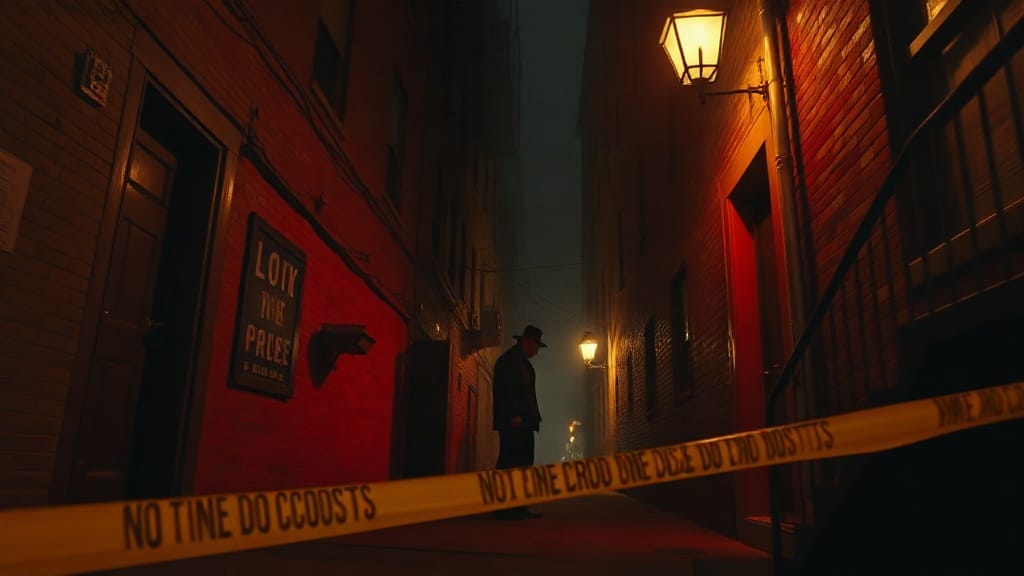
Together with Carnage, Drew investigates the Hangman, a mysterious vigilante going after New York City's criminal organizations and has its toughest mob bosses — like Tombstone — running scared. As Jessica struggles to keep her violent new companion in check, she must also keep her symbiote secret safe from her most trusted journalist allies. That second pressure point — the concealment from Ben Urich, her journalist partner — is where the book starts to earn its detective-noir credentials. Watters has said a giallo sensibility shapes Spider-Woman's new series, and Broccardo's visual language backs that claim. Broccardo's art is strong, especially in the character acting — a quality that matters enormously in a book where the most dangerous scenes are interior ones, not action beats.
This series is a bit different from the previous Spider-Woman series — it is a detective noir story, with Jessica tormented by something that changes her life, her superhero behavior and her approach to the cases as a detective. That framing, in Broccardo's own words, is the clearest articulation of what distinguishes this launch from earlier attempts. The 2020 and 2023 series were both fine comics that treated Drew as a protagonist in search of a plot. This one treats the plot as a pressure cooker for the protagonist's sense of self. The difference is not cosmetic.
The Carnage bond arrived via Amazing Spider-Man: Spider-Versity, meaning Watters inherited a status quo he did not entirely originate. The interesting question is whether he sees that as a constraint or a gift. Everything in issue one suggests the latter. Watters has noted: "Carnage and Spider-Woman aren't affecting each other in quite the way that either of them expected to... and that has repercussions for both of them." That bilateral pressure — symbiote changing host, host changing symbiote — is exactly the structural move that separates a good symbiote story from a derivative one. The symbiote as metaphor for intrusive thought, for inherited violence, for the parts of yourself you cannot lock in a box, is well-trodden Marvel territory. But Drew's specific history — HYDRA conditioning, pheromone powers that make human connection unreliable, a son aged and weaponized against her in the previous series — gives that territory new topography.
Watters has said he was keen to go back to the well of her early villains, which is another structural tell: this is a book that wants to build from the archive rather than erase it. Issue one delivers a creepy scene with Jessica communicating with Carnage, establishes the main villain's deeply human motivations, and shows us how violent the threat Spider-Woman is after. That triad — psychological horror, humanized antagonist, moral compromise in the protagonist — is the template for the best crime noir, and it is a template Drew's powers and history happen to map onto unusually well. Her venom blasts, her pheromones, her wall-crawling: all of these read differently when the person using them is compromised by an entity with Carnage's appetites.
The 50th anniversary framing is worth taking seriously rather than dismissing as marketing. Marvel is celebrating a half-century since Jessica Drew's first appearance in 1976's Marvel Spotlight #32. That milestone was preceded by September's Spider-Woman 50th Anniversary Special #1, which brought Ann Nocenti back to a character she has genuine history with — in the 1980s, Nocenti wrote the final four issues of Spider-Woman's ongoing series, not only ending it with issue #50 but killing Jessica Drew in that final issue. The symbolic weight of Nocenti's return for the anniversary and Watters's new ongoing is not subtle: the woman who ended the character helped launch the new era, and the new era's premise — symbiote colonization of a self already fractured by manipulation — rhymes with the original series' death-as-identity-erasure more than anyone has publicly acknowledged.
This is also a book about secrecy as moral cost. The series takes Jessica back to her roots as a private investigator, teaming her with journalist Ben Urich to uncover the hidden threats that lurk in the shadows — and yet the central secret she is keeping from Urich is the most consequential fact about her current state. That dramatic irony, embedded in the premise from page one, is the kind of structural patience that distinguishes a writer thinking in arcs from one writing issue to issue. The first issue is an excellent start that embraces Carnage's horror while keeping Jessica Drew's humanity at the center of the story.
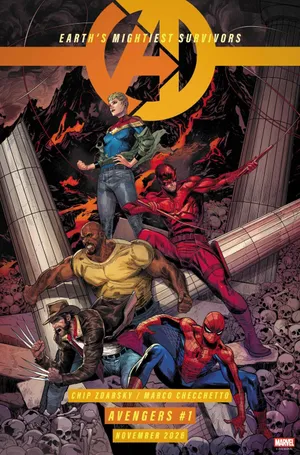
It is worth noting the parallel with what Chip Zdarsky has been doing over in Avengers #1 — Zdarsky's most structurally honest Marvel flagship in decades — where the goal is similarly to use an institutional reset to ask genuinely uncomfortable questions about identity and legacy. Both books are betting that Marvel readers in 2026 want psychology as much as spectacle. The difference is scale: Avengers has to carry a universe, while Watters and Broccardo only have to carry one woman's sense of self against a symbiote that wants to dissolve it. The narrower canvas is, paradoxically, the more demanding one.
Spider-Woman (2026) #1 is priced at $4.99 and available now from Marvel Comics. If Watters and Broccardo can sustain the architecture of this first issue across an ongoing — keeping the symbiote as philosophical antagonist rather than plot convenience, keeping Urich's obliviousness as a ticking moral clock — then this may be the run that finally answers the question Jessica Drew has been asking since 1977: who are you when everything that made you was put there by someone else?