There is a category of film the industry routinely underestimates during the last week of October: the mid-budget word-of-mouth title that arrives without franchise scaffolding, holds its nerve through a noisy marketplace, and gradually becomes the most efficient thing on the chart. Wicker (2026), Alex Huston Fischer and Eleanor Wilson's bawdy folk fable, is becoming exactly that.
 Official trailer
The numbers from the weekend of October 30–November 1 tell the story cleanly. Domestically, Wicker had one of the best holds of the weekend, falling just 28% to approximately $4.1 million as Black Bear expanded it to 2,374 theaters. That expansion — 903 additional locations — was the biggest theater-count increase on the chart. Internationally, Wicker clinched the top spot at the UK and Ireland box office, debuting at No. 1 with $2.34 million, narrowly edging A24's psychological thriller Primetime, directed by Lance Oppenheim and starring Robert Pattinson, by a razor-thin margin of just £10,141. Two markets. Two completely different signals. The same underlying story: audiences are finding the film and coming back to tell someone else about it.
To appreciate what that hold means, it helps to know where the film started. Wicker debuted in North America on October 23 and earned a three-day opening weekend gross of $5.7 million — the best domestic debut of all time for its distributor, Black Bear Pictures. That opening came despite the film playing in 1,255 fewer theaters than Jason Statham's Shelter, thanks to a per-screen average of $3,906 against Shelter's $2,028. Per-screen average is the box office's most honest early metric, and Wicker's number was exceptional — the kind of figure that tells an exhibitor to find more screens fast. Black Bear did exactly that.
The final second-weekend figure came in at $4.36 million, a 24% decline — a hold on par with the second ease of Focus Features' 2024 drama Conclave. Conclave went on to become one of the year's most discussed films in awards conversations. The comparison is not incidental.
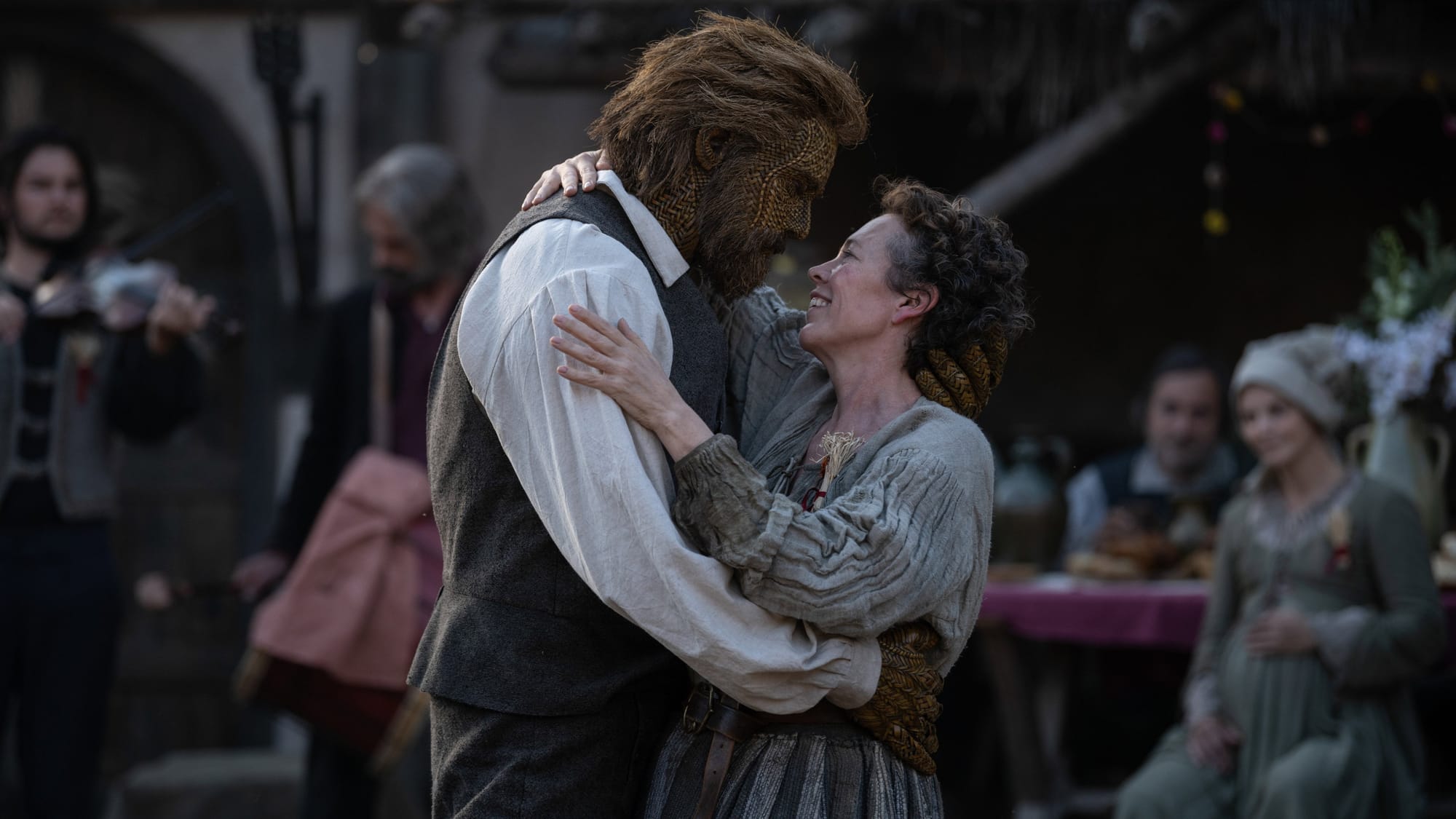
What is driving this retention is a film that, by design, resists easy summary but travels well by word of mouth. Wicker follows an ostracized fisherwoman who commissions the local basketmaker to weave her a husband, but when her wicker creation proves unexpectedly extraordinary, his presence ignites jealousy and upheaval that threatens their quiet village. The film is based on Ursula Wills-Jones's short story "The Wicker Husband," and marks Fischer and Wilson's second feature following their apocalyptic parenthood comedy Save Yourself!
The cast is the film's most immediate commercial asset. Olivia Colman, Alexander Skarsgård, Peter Dinklage, and Elizabeth Debicki lead the ensemble. Dinklage, as the well-intentioned basketmaker who originally weaves the wicker husband, steals every scene he gets. But the engine of the film — and of its box office durability — is the central pairing. Skarsgård's character is described by critics as a triumph of practical effects from Joe Dunckley and WETA Workshop, with expressive eyes and an intricately woven face, while subtle sound design makes him creak like an old rocking chair, adding depth and vulnerability. This is not a green-screen shortcut. The craftsmanship is visible, and visible craftsmanship is something audiences notice and discuss.
The critical record backs this up. The film has earned a stellar, Certified Fresh score of 94% on Rotten Tomatoes. The critics consensus describes it as a charming fable that strikes the right balance between naughty and nice, drawing much of its appeal from deftly deployed salty humor, seamless creature effects, and Olivia Colman's eminently lovable performance. The film received a double standing ovation when it premiered at the Sundance Film Festival in January. The gap between that reception in January and the theatrical release in late October is itself part of the story: Black Bear Pictures acquired North American distribution rights at the European Film Market in February 2026, and then spent eight months building anticipation rather than rushing the release. The film closed the 59th Sitges Film Festival on October 18, 2026 — a final platform play just days before the wide US opening. The campaign was methodical in a way that studios with quarterly earnings pressure rarely manage.

The UK performance deserves its own paragraph. The film opened in the United Kingdom on October 30, 2026, and the story it tells — a fisherwoman in a rain-soaked village, folk-tale textures, an Oscar-winning British actress at its center — arrives with cultural fluency that American genre films rarely carry across the Atlantic without franchise infrastructure. A $2.34 million opening weekend that beats every other film in market, including A24's most heavily anticipated psychological thriller of the fall, is not a soft result. It is a statement about where the audience's attention actually lives, as opposed to where marketing money predicted it would be.
This is also, quietly, a landmark moment for Black Bear. The company has only recently begun distributing movies in the United States after spending more than a decade as a production company for films including Mudbound, Nyad, and Train Dreams. Wicker is performing above anything in their domestic releasing history, and the expansion strategy — measured in the first weekend, aggressive in the second, with Australia still incoming on November 5 — suggests a distributor that has studied what theatrical longevity actually requires. The second-weekend hold was noted by industry analysts as the best on the chart, with the picture now past its reported $10 million production cost on domestic gross alone after just ten days.
The Halloween marketplace this film had to survive was not friendly. You Can See Everything reached the number one spot in its third weekend of release on the back of a viral A24 campaign, while Clayface was expanding aggressively with studio support behind it. These are noisy titles with large marketing budgets and pre-existing audience awareness. Wicker had none of those advantages. It had a 94% score, a double Sundance ovation, and a lead actress who is constitutionally incapable of a bad performance. It turned out that was enough — and then some. For more on how mid-budget theatrical releases are navigating this competitive landscape, see Kynari's analysis of Klara and the Sun, which shows what happens when the ingredients don't cohere, and the second-weekend collapse of Street Fighter, still visible lower on this weekend's chart.
The metric that will define whether Wicker earns a full legacy conversation — or simply a footnote as a pleasant exception — is what happens over the next two weekends. The film's legs ratio currently sits at 2.47, measuring total domestic gross against its biggest single weekend. That is the number of a film being discovered in waves, not exhausted in one. With Australia yet to open and the UK still in its first full week, the international picture remains fluid. What is not fluid is the signal the second weekend sent: Wicker is not declining like a Halloween novelty. It is building like a film with something to say — which, in this market, is the rarest thing of all.