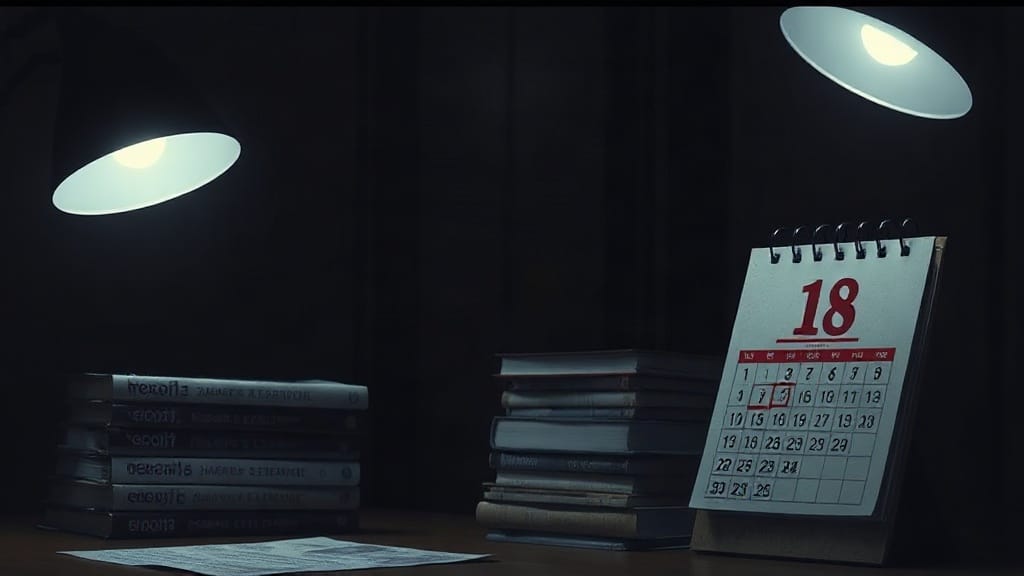
The final chapter of Black Night Parade (2016) ran in the November issue of Shueisha's Ultra Jump on October 19, 2026. The ending was not quiet. Alongside the serialization's close, Hikaru Nakamura's official X account confirmed that the January issue of Ultra Jump — due on shelves December 18 — will carry both a bonus side story and what Nakamura described only as a "major announcement." The 12th and final compiled volume lands in Japan on December 17, making the pairing unmistakably deliberate: the physical bookend of the run and the announcement of what comes next, separated by a single day.
That structural choice is not accidental. Releasing the final volume on December 17 and the announcement on December 18 — in the magazine's own issue — is a coordinated media event dressed as a publishing schedule. Someone, presumably Shueisha alongside Nakamura, wanted the last volume in readers' hands before the next phase was named. That sequence implies the announcement is not a loose concept but a finalized project with a date already attached to it somewhere in a production pipeline.
Black Night Parade ran for nearly a decade. Nakamura launched the series in Shueisha's Weekly Young Jump in November 2016, moved it to Ultra Jump in September 2019, and kept it there until its conclusion. The serialization was not a smooth one — the manga went on hiatus multiple times over the years due to the author's health — but it accumulated a loyal readership and, crucially, already demonstrated franchise range before the manga closed: a live-action film adaptation opened in Japan in December 2022. The film, directed by Yūichi Fukuda, proved the story's viability in other formats. What it did not provide was the animated version the premise has always seemed to be building toward.
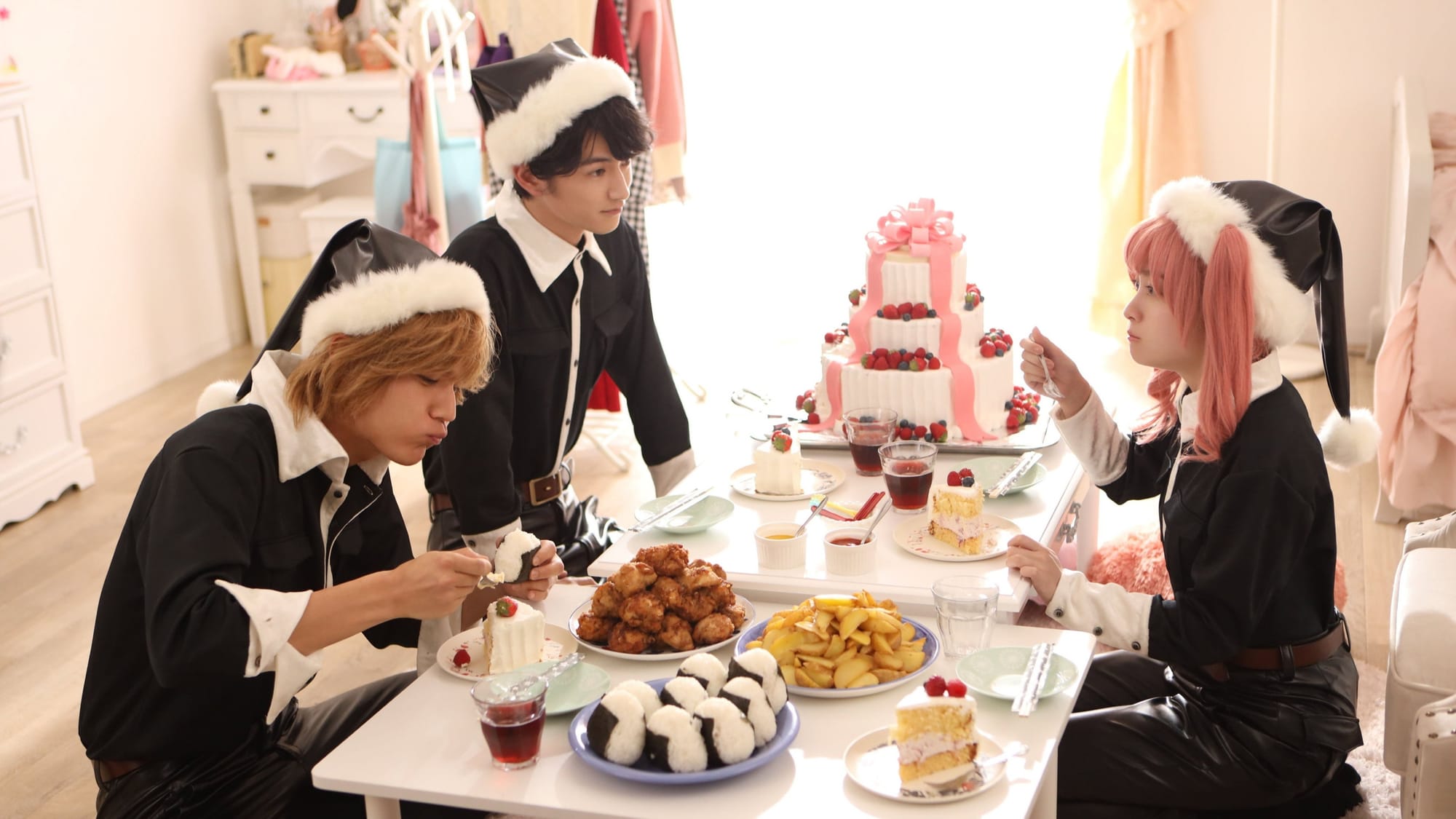
The premise is dark in exactly the right way for anime. Hino Miharu spends Christmas the same way every year, working alone at a dead-end part-time job at a convenience store — until he runs into a shadowy Santa Claus dressed in black and ends up spirited away to the Arctic, pressed into service for a massive, morally ambiguous Christmas operation. While the red-suited Santa handles the good children, the Black Santa's enterprise handles the bad ones: punitive gifts, supernatural Reindeer operatives, and a workplace hierarchy that doubles as a mythology. Miharu eventually discovers that his late father may have been the previous Red Santa, and the conspiracy behind his recruitment deepens across the run's twelve volumes. It is supernatural workplace comedy at its surface and a redemption narrative underneath, a combination that translates to animation with very little translation required.
Nakamura's catalogue earns this moment special weight. Her previous manga Arakawa Under the Bridge ran from December 2004 to July 2015 and inspired two television anime series, a live-action television series, and a live-action film. Before that, her ongoing series Saint Young Men (2007), a comedy about Jesus and Buddha sharing a Tokyo apartment, sold over 16 million copies in Japan and generated OVAs and an anime film from A-1 Pictures. The pattern in Nakamura's work — grounded absurdism with supernatural underpinning, workplace dynamics as the comedy chassis, a tender core beneath the chaos — is consistent, and it is a pattern that Japanese animation studios understand how to serve. Black Night Parade fits that template closely enough that the absence of an anime adaptation has been the anomaly, not the expectation.
The live-action film's existence actually makes the December 18 announcement more interesting, not less. A live-action adaptation at this stage of the IP lifecycle typically functions as a market test — gauging whether general audiences outside the manga readership will engage with the characters and premise. The 2022 film provided that data. If the announcement is an anime, the franchise would be completing a logical escalation: manga to live-action film to animated series, each step widening the potential audience. That path is well-worn in Japanese media; it is almost industrial at this point. What makes Black Night Parade a credible candidate rather than mere speculation is that the tease was made at all. Publishers and authors do not plant flags for announcements they cannot back. Saying "major announcement on December 18" in the final chapter's magazine is a commitment, not a hint.
The seasonal timing is also worth noting. December 18 falls squarely inside Japan's pre-Christmas content window — the period when a property built entirely around Christmas mythology would generate its strongest cultural resonance. An anime announcement timed to land a week before Christmas, for a franchise whose entire aesthetic is built on a corrupted version of the holiday, is not a coincidence. It is editorial. Whoever is behind the December 18 reveal understands that the franchise's identity is the calendar itself.
Seven Seas Entertainment has published the English edition of the manga digitally and in print throughout the series' run, meaning an English-language audience already exists and is primed. The anime market's current trajectory makes that readership meaningful: as Kynari has previously reported, anime hit ¥4.45 trillion in 2025 with overseas revenue accounting for 57 percent of the total — a structural reality that gives international appetite real weight in how studios greenlight and market new productions. A property with established Western distribution infrastructure is not a risk; it is a head start.
There is also the matter of the side story running alongside the announcement in that December 18 issue. A bonus chapter published simultaneously with a major reveal serves a dual function: it reactivates reader engagement with the characters just as the new project is named, functioning less as a farewell and more as a reintroduction. If the announcement is an anime, the side story becomes the bridge between the manga that was and the adaptation that will be. That is not a coincidence either. The architecture of December 18 is too neat for any of its components to be accidental.
The final chapter's title — To the Santa Claus Out There Somewhere — is itself a piece of intentional framing. It is valedictory without being closed. It gestures outward. That is the correct tone for a creator who already knows what comes next and wants readers to feel anticipation rather than conclusion. Nakamura spent nearly ten years building a world with a mythology complete enough to sustain animation, and the franchise's live-action chapter proved the broader market would show up. The announcement on December 18 is the door opening, not closing. The question now is which studio is on the other side of it — and whether the announcement will include a production partner, a studio credit, or just a title card promising more. Either way, December 18 is already the most important date in Black Night Parade's calendar, and not because of Christmas. For readers of other Shueisha manga-to-anime pipelines, the mechanics here are familiar — and for fans eyeing the January 2027 anime landscape, this could reshape it entirely, much as other recent manga conclusions have done. The machinery is already turning. The curtain lifts in six weeks.
This is also a moment to consider what a Nakamura anime in 2026–27 would mean beyond the property itself. Arakawa Under the Bridge got its anime over a decade ago; the medium and the audience have both changed substantially. A new Nakamura adaptation would land in an era where seinen supernatural comedy — the register Black Night Parade operates in — commands serious streaming real estate. See how other recent manga-adjacent announcements have played out: from the franchise extensions now locking January 2027 slots to the longer-form theatrical gambles studios are taking with concluded properties. The pattern is consistent. Manga ends. A date is set. The announcement confirms what the structure already implied. Black Night Parade is following the same logic — and on December 18, the argument stops being structural and starts being a title card.