The night's last competitive award went to the night's least surprising winner, which is itself the point. Rachel Scott of Diotima and Ralph Lauren took home the top honors at the 2026 CFDA Fashion Awards, held Monday evening, November 2, at the American Museum of Natural History in New York. Scott won the top prize for the second time, marking the second occasion she has been named womenswear designer of the year following her debut win in 2024 — and she had already won the emerging designer prize in 2023. Three wins from three nominations across three consecutive years. The CFDA is not discovering Rachel Scott anymore. It is affirming a thesis it has already committed to, and the repetition is the argument.
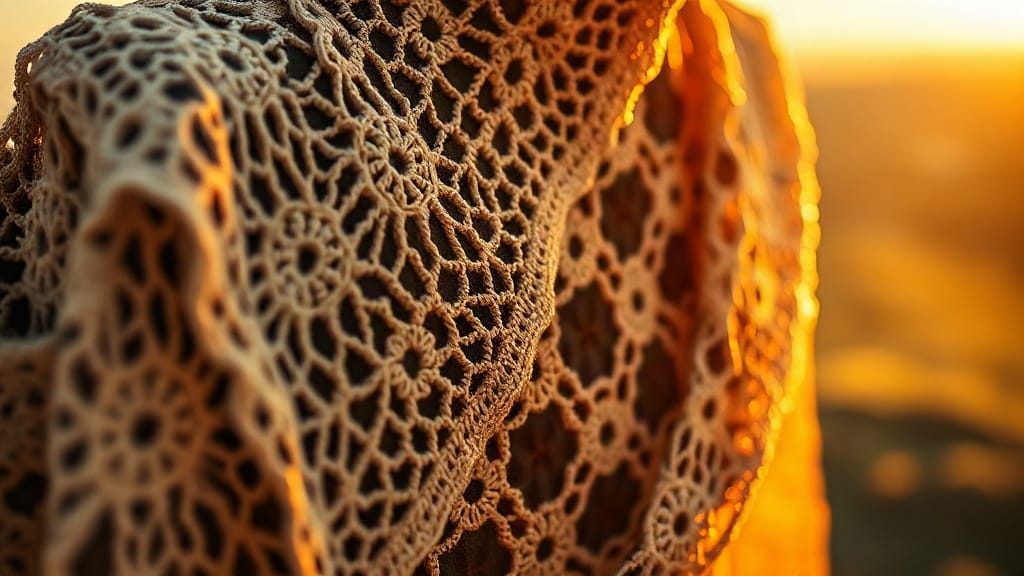
To understand what that argument is, you have to understand what Diotima actually is — and what American fashion typically rewards when it rewards womenswear. Scott founded Diotima in 2021 with her savings, naming it for the priestess in Plato's Symposium as read by the philosopher Herbert Marcuse in Eros and Civilization. That is not the founding story of a brand built for institutional approval. It is the founding story of a designer whose primary reference points are philosophy, Caribbean cultural history, and the labor of women who work with their hands. All of the label's crochet is made in Jamaica, where Scott works with artisan groups including the Bonnygate Women's Group of Saint Mary, and tailoring is produced in New York's Garment District — designs that center hand-worked crochet she has described as closer to couture than beachwear, combined with draping and tailoring.
The craft supply chain is not a marketing flourish. The philanthropic approach to design took root during the Covid pandemic, when Scott became aware of the impact that the loss of the tourist trade was having on local makers in Jamaica. What emerged was a production model that inverts the extractive logic most luxury brands use when engaging artisan communities abroad. Traditional techniques are used to propose modern and sensual silhouettes, subverting and freeing them from the nostalgia often associated with such techniques — and the brand engages and deconstructs the cultural and sartorial convergences of the Caribbean and European traditions. The crochet is not a signifier of heritage. It is the primary structural material, elevated to the same register as the silk and tailoring that Western fashion houses spend centuries asserting as the only legitimate site of luxury.
Born and raised in Kingston, Jamaica, Scott studied fine art, French and philosophy at Colgate University before deepening her design knowledge at Istituto Marangoni in Milan. Her early career included roles at Costume National and Elizabeth and James before joining Rachel Comey, where she became VP of design in 2018. That trajectory — rigorous, patient, industry-embedded — is not the route of someone gaming prize culture. Scott spent nearly two decades learning the technical infrastructure of American fashion before building something that deliberately departed from its aesthetic assumptions. Both of her initial CFDA wins came before she had ever staged a runway show. The guild was voting on the clothes, the model, and the cultural argument, not on spectacle.
She was named Emerging Designer of the Year by the CFDA in 2023 and Womenswear Designer of the Year in 2024, the first Black woman to win the latter award. That first-time qualifier carries institutional weight that is easy to treat as a footnote and wrong to do so. The CFDA was founded in 1962. Six decades of American fashion's most prestigious ceremony produced no Black woman winner in its primary womenswear category until 2024. Scott did not break that record by being exceptional in isolation — she broke it because the guild's nomination and voting structure finally reflected enough critical mass of people willing to make that call. The 2026 repeat win consolidates what 2024 opened: this is not a gesture toward inclusion, it is a sustained institutional position.
The 2026 nominee field made the choice pointed. Scott competed against Catherine Holstein for Khaite, Michael Kors, Tory Burch, and Wes Gordon for Carolina Herrera. That is a list of brands that collectively define the conventional landscape of American womenswear — polish, legacy, commercial scale. Khaite has been one of the dominant critical forces of the past five years. Kors and Herrera are institutional pillars. Scott, running a label that is five years old and built on crochet made by artisan women's collectives in the Caribbean, beat the field twice. The CFDA guild is not choosing the underdog. It is choosing what it believes American fashion should mean, and it is choosing that same thing repeatedly.

The structural reading extends to what Scott has been doing with her institutional position outside Diotima. Her recognition comes during a particularly significant period in her career, as she continues to lead Diotima while also serving as Creative Director of Proenza Schouler. As Jack McCollough and Lazaro Hernandez headed to the top post at Loewe, Scott took over the 2002-founded womenswear and accessories label. Proenza Schouler has historically been among the cleaner expressions of the New York design intellectual tradition — rigorous, anti-decorative, technically engaged. The appointment of Scott to lead it is a continuity argument: the industry read Diotima not as niche but as preparatory. The CFDA win, in that context, is an endorsement of the entire arc, not just the label.
There is a further structural signal in who won Emerging Designer at the same ceremony. Colleen Allen was named American Emerging Designer of the Year, an important recognition for the Brooklyn-based designer whose eponymous womenswear label has attracted growing industry attention — Allen, who was also among the 2026 LVMH Prize nominees, received the award from Cole Escola and Gabriela Hearst. The CFDA pipeline that Scott moved through in 2023 — emerging prize, LVMH shortlist, guild attention — is now generating its next candidate. Scott's continued recognition and Allen's emergence illustrated the growing influence of independent designers, while Lauren's latest award reaffirmed the enduring relevance of established American fashion houses. The ceremony held both ends of that tension without resolving it, which is the only honest position available: American fashion contains Ralph Lauren and Rachel Scott simultaneously, and the institutions that matter are those that can name both without contradiction.
What Fashionista's full winners list and the CFDA's official announcement document is an event. What the three-year arc documents is something harder to reverse: the articulation of a different idea of what American fashion's most prestigious institution thinks its best womenswear looks like. It is not a look that requires a grand Parisian infrastructure or a decades-long heritage narrative. Reviewing Scott's fall 2026 collection for Vogue, critic Nicole Phelps wrote that Scott employs Jamaican crochet artisans "the way French couture houses tout their petites mains." That comparison is the key. The logic of couture — labor-intensive, craft-centered, embedded in specific communities with specific skills — is exactly the logic Diotima operates under. The difference is geography and cultural origin. The CFDA, by returning to Scott a second time, is insisting that the logic travels.
The same institutional question — who gets crowned, and what that crowning is understood to mean — is playing out across fashion's award culture simultaneously. The BFC's 2026 Outstanding Achievement Award to Yohji Yamamoto posed a parallel argument about Western fashion's willingness to canonize work that structurally challenged its own assumptions, decades after the fact. The CFDA is making its argument in real time, mid-career, to a working designer. That is the more consequential position. Awards given retroactively to safely historic figures are acts of curation. Awards given to an active independent designer — twice, with a field of legacy nominees — are acts of direction. The CFDA is pointing at something. The field will spend the next several years deciding whether to follow.