Ninety years ago this afternoon, at three o'clock on November 2, 1936, an announcer named Leslie Mitchell looked into a camera in a converted wing of Alexandra Palace, on a hill in north London, and became the first face of the BBC Television Service. The opening programme lasted an hour. There were speeches, a newsreel, and a singer called Adele Dixon performing a song written for the occasion. It was called, with no irony at all, "Television".
Almost nobody saw it. Estimates put the audience as low as 500 people, a set cost around £100, and the signal reached only Greater London. But that afternoon the BBC began something no broadcaster had done before: a regular, scheduled, high-definition public television service. Everything that followed, from the Coronation to Doctor Who, from the sitcom to the box set, grew out of the decisions made in those two small studios. Ninety years on, the institution that invented the idea of television as a public service is negotiating its own future. The anniversary is a good moment to ask what it actually built.
Two Systems, One Palace
The first months of BBC television were a technology contest broadcast live. Two rival companies had built competing systems: John Logie Baird's 240-line mechanical process and Marconi-EMI's 405-line all-electronic one. Unable to choose, the BBC ran both, duplicating cameras, lighting and control rooms inside the old banqueting and tea rooms of the palace. A coin toss decided that Baird would go first, and the two systems alternated week by week. On February 6, 1937, the BBC dropped Baird for good. The electronic camera had won, and with it the basic grammar of television for the rest of the century.
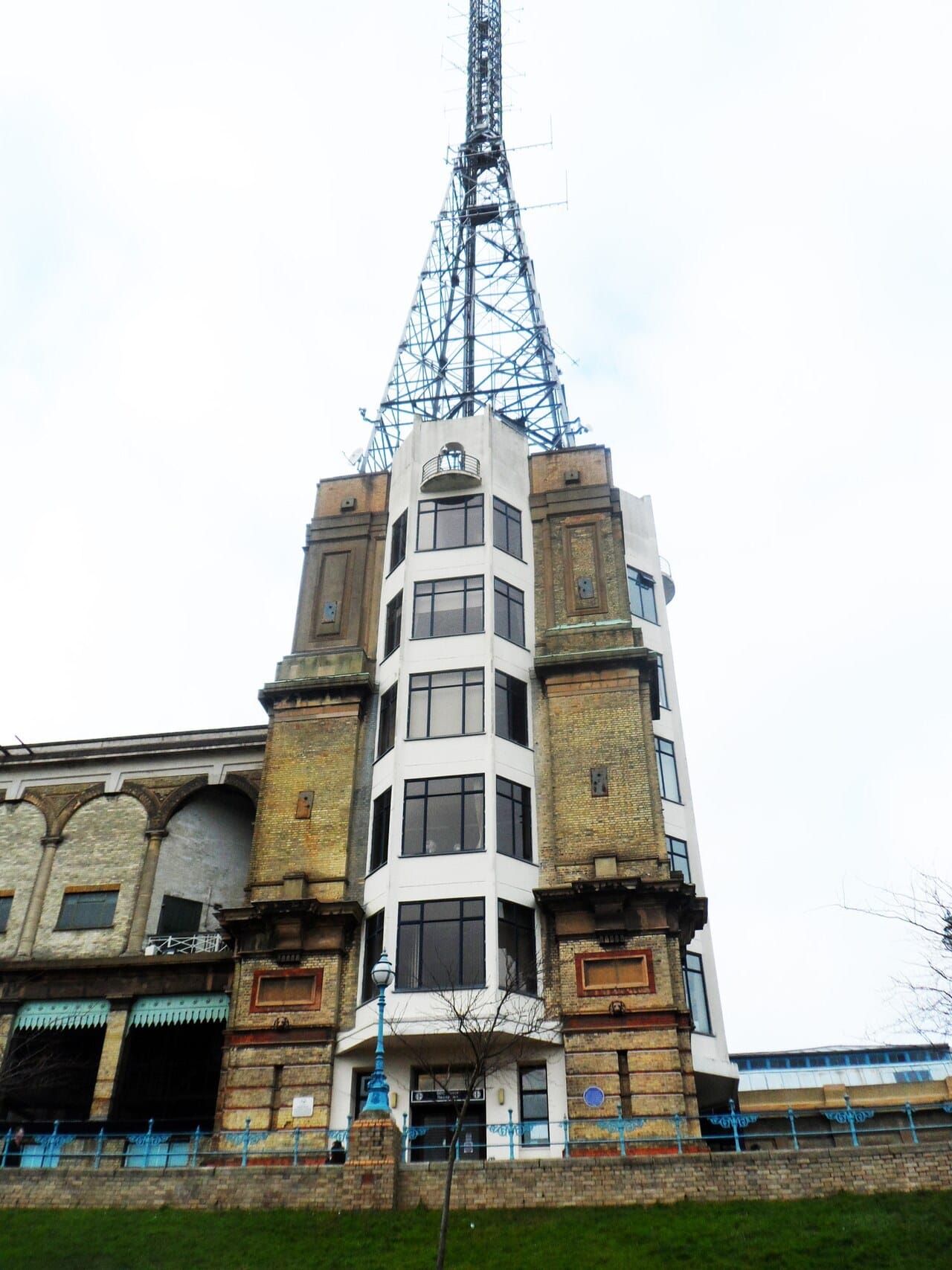
The 65-metre mast built on top of the palace is still there, a London landmark that Historic England notes was Grade II listed in 1996. During testing in August 1936, according to the same account, surges from the transmitter made cutlery spark. It is a good image for what television was about to do to British domestic life.
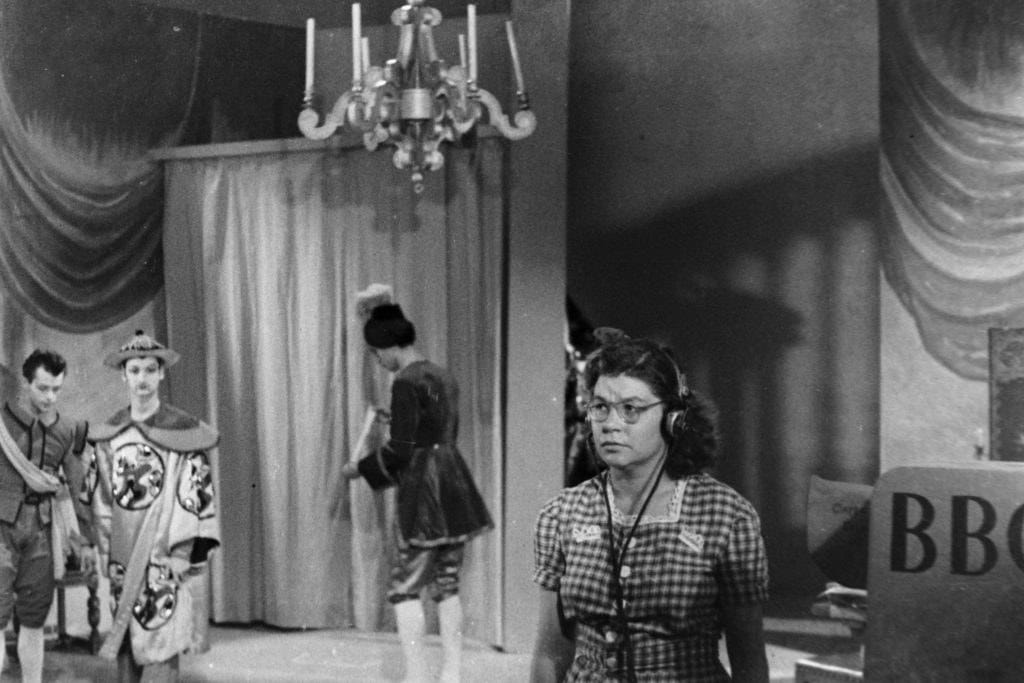
The pre-war service was tiny but ambitious. It broadcast drama, variety and talks, and in June 1937 it showed the Wimbledon Championships for the first time, starting a relationship between television and live sport that has never ended. Then, on September 1, 1939, with war imminent, the service simply stopped. The last thing transmitted before the screens went dark at 12:35pm was a Mickey Mouse cartoon, Mickey's Gala Premiere. Engineers feared the transmitter would guide enemy bombers to London.
"Do You Remember Me?"
When television returned on June 7, 1946, it did so with a joke that has become part of broadcasting folklore. The announcer Jasmine Bligh, who had worked on the pre-war service, came back on air with the words: "Good afternoon everybody. How are you? Do you remember me, Jasmine Bligh?" And then the BBC showed the same Mickey Mouse cartoon it had cut off seven years earlier, as if nothing had happened.
The gesture was more than charming. It established a tone that would define the BBC for decades: a slightly self-deprecating national voice, confident enough to treat a world war as an interruption. That voice reached its first mass audience on June 2, 1953, with the Coronation of Elizabeth II. Cameras had been kept out of Westminster Abbey for the previous coronation in 1937; this time the BBC broadcast the ceremony in full. Around 27 million people in Britain watched it live, many on sets bought or rented for the day, and the number of television licences doubled in the period around it, from about 1.5 million to 3 million. Britain became a television country in a single morning.
The Shows That Made British TV
What the BBC did next is the part pop culture remembers. A month after the Coronation, in July 1953, Nigel Kneale's The Quatermass Experiment began, proving that television could do genuine, frightening science fiction on a tiny budget. Ten years later, on November 23, 1963, came An Unearthly Child, the first episode of Doctor Who, with William Hartnell as a mysterious traveller in a police box. It ran until 1989, came back in 2005, and is now one of the longest-running science-fiction series anywhere.
Structure mattered as much as programmes. BBC2 was supposed to launch on the evening of April 20, 1964, but a fire at Battersea Power Station blacked out Television Centre, and the channel's first official programme, the next morning, turned out to be the children's show Play School. The second channel gave the BBC room to experiment, and on July 1, 1967, BBC2 began regular colour broadcasts with Wimbledon, the first channel in Europe to do so. With two channels, the BBC could take bigger risks, and its comedy legend grew out of that freedom: Monty Python's Flying Circus on BBC1 in 1969, Fawlty Towers on BBC2 in 1975, and later The Office, each of which redefined what British comedy could be.
The list goes on, and every generation writes its own. Only Fools and Horses and EastEnders became national events in the 1980s; Pride and Prejudice in 1995 set the template for the prestige period drama; Strictly Come Dancing turned ballroom into Saturday-night ritual; Sherlock and Fleabag exported the BBC's sensibility to a global streaming audience. The common thread is a model that only a licence-fee broadcaster could afford: room for a show to be odd, slow to find an audience, or aimed at nobody in particular, and still survive.
Then, on December 25, 2007, BBC iPlayer left beta and the BBC started another revolution few noticed at the time. Catch-up streaming made the schedule optional, and turned the broadcaster that invented scheduled television into one of the first to dismantle it.
The BBC at 90
The anniversary arrives in the middle of the biggest argument about the BBC's future in a generation. The current Royal Charter, which sets out the corporation's purpose and funding, expires at the end of 2027. In December 2025 the government launched its Charter Review with a Green Paper that considers reforming the licence fee, updating concessions and giving the BBC more ways to earn commercial revenue. Culture Secretary Lisa Nandy said then that the BBC "must remain fiercely independent, accountable and be able to command public trust." The licence fee itself rose to £180 a year on April 1, 2026.
In March 2026, Nandy went further and suggested replacing the ten-year renewal cycle with a permanent charter. "We should seek to end the bizarre situation where if the Charter isn't agreed in time, the BBC ceases to exist," she said, adding that funding would still be negotiated periodically. Whether the BBC gets that security, and how it will be paid for in an age when streaming platforms compete for every evening, is the real question hanging over the 90th birthday. The model that produced Quatermass, Python and Fleabag depended on a guaranteed income and a shared national screen. Neither can be taken for granted any more.
A New Doctor for a New Era
The most famous show the BBC ever made is a small example of the whole story. In October 2025 the BBC confirmed that Disney+ would not partner on the next series of Doctor Who, after two seasons of co-production. In June 2026 the BBC dropped the planned Christmas special, and in September it put the series out to tender, inviting production companies to pitch a new version: one that feels contemporary and ambitious, with original characters and a fully developed companion, and with production based in the regions. A decision is expected in spring 2027, with the new era reaching screens no earlier than 2028/29.
Doctor Who has regenerated before, and so has the BBC. The service that began with a song called "Television" and a few hundred viewers in London is now trying to work out what television means when nobody needs a television to watch it. Ninety years ago, the answer was to build something nobody had seen before. It may be again.