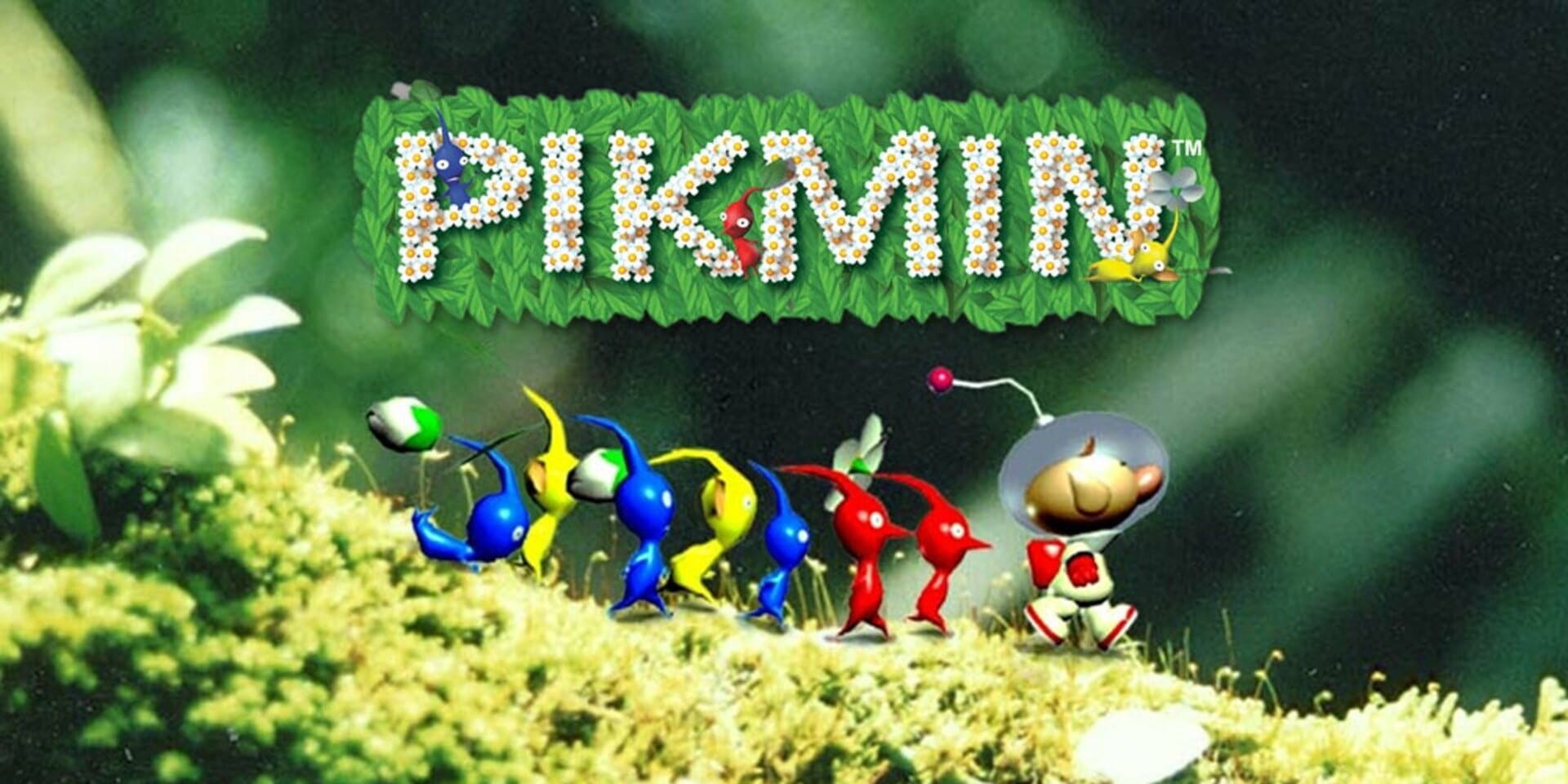
Twenty-five years ago today — October 26, 2001 — a small man in a spacesuit crash-landed on a planet that should have killed him immediately. The atmosphere was poisonous. The fauna was hostile. The flora was, somehow, sentient, and only barely interested in keeping him alive. Pikmin (2001) launched in Japan as one of the very first games available for Nintendo's new GameCube console, and it arrived not with the triumphant bombast of a Super Mario entry or the mythic weight of a Zelda opening, but with something rarer and stranger: genuine dread, dressed up in the most disarmingly cute packaging Nintendo had ever shipped.
 Official trailer
That dissonance — the gulf between how Pikmin looks and what it is actually about — has defined the franchise's entire quarter-century existence. It is the reason the series never became the cultural juggernaut that Mario or Zelda or Pokémon became, and it is precisely why the franchise endures with an intensity that those juggernauts rarely inspire. Pikmin is a game about a man who will die if he is not efficient enough. It is about using living creatures as tools and then watching them be eaten. It is about loneliness on a cosmological scale — an inch-tall alien stranded on a world that does not care about him, surrounded by helpers who cannot truly know him. On its twenty-fifth birthday, the series deserves a reckoning with how all of that got started, and why it matters.
The Garden and the Ant
The origin of Pikmin is one of the most-told stories in Nintendo lore, but it loses almost nothing in the retelling, because it says everything about how Shigeru Miyamoto's creative mind operates. According to a Telegraph interview that Miyamoto gave years after the game's release, the foundational image came from his garden — a line of ants marching past his feet, carrying leaves, moving in formation toward their nest. He imagined, because this is apparently just how Miyamoto's mind works, what the scene might look like if the ants were tiny people. From that image came a game concept: "lots of small people carrying things in a line, following a leader, with everyone going in the same direction."
That is a clean, elegant origin story. But it undersells the design work that followed. As Nintendo Life has noted, it perhaps "underestimates his detailed design approach to say that the series was formed primarily due to a fascination with growing plants." Miyamoto was also, by various accounts, deeply invested in gardening around this period — a hobby he had taken up with real seriousness, watching how small organisms interact within an ecosystem, how interdependence functions at a miniature scale. The game that emerged was less a simulation of ants carrying leaves and more an interrogation of what it means to depend entirely on a community of beings who do not share your stakes.
The Pikmin design itself came from that same collaborative ferment. Miyamoto provided the general concept of what he wanted the creatures to do and how they should feel, but the final product — including the iconic leaf growing from each Pikmin's head — came from the design team. In an interview with Hobonichi, Miyamoto recalled being drawn to how genuinely confusing the design was: did a Pikmin drink through its mouth or its head? Did it absorb nutrients through its feet, like a plant? That ambiguity was the point. Once the design existed, the next logical question was inescapable: what happens to the leaf when the Pikmin dies?
Death, then, was not an afterthought. It was the design's generative center. It was where the idea became a game rather than a toy.
Thirty Days, Thirteen Minutes, One Man
The mechanics of the original Pikmin are simple enough to explain in two sentences. Captain Olimar, a one-inch-tall humanoid from the planet Hocotate, crash-lands on an uncharted world and must use a native species called Pikmin to find thirty missing ship parts and escape within thirty days. His spacesuit's life support system operates on internal battery power. If he fails to collect at least twenty-five mandatory parts before the timer expires, the life support fails and Olimar dies from oxygen poisoning.
Those two sentences contain the entire philosophical argument of the game. The planet's atmosphere is not merely inhospitable — Earth's oxygen, the thing that sustains every creature native to this world, is the specific substance that will kill Olimar. He is a stranger in the most absolute sense: his presence here is an accident, and the very air is his enemy. The thirty-day structure, with each in-game day running approximately thirteen minutes of real time, creates a compression of urgency that almost no Nintendo game before or since has replicated. Every minute you spend watching a Pikmin carry a pellet across a field is a minute borrowed from your dwindling survival clock.
Miyamoto later described this timer as "a little bit too strict and confining" — and indeed, the sequels progressively loosened its grip, eventually eliminating it entirely in Pikmin 4 (2023). But in the original game, the timer is the text. It is not a difficulty modifier. It is the entire moral and emotional situation of the protagonist. Olimar is not a hero on a quest. He is a working man — his ship is called the S.S. Dolphin; he has a family back on Hocotate; he is, as his journal entries across the series establish, someone who "often sacrifices his time off to support his family" — who has been placed in a situation of absolute vulnerability and must work, with whatever tools the planet provides, to survive long enough to get home.
The Pikmin are those tools. And this is where the loneliness becomes structurally interesting rather than merely atmospheric.
The Loneliness That Isn't Solitude
Every night in Pikmin, when the sun sets and the nocturnal predators emerge, the Pikmin retreat into their Onion ships and Olimar retreats to what remains of his rocket. Alone. He then writes in his captain's log — reflections on what he found that day, on the strange creatures he encountered, on how much he misses his family. The Pikmin, by this point, are safely sheltered. But Olimar floats in low orbit with no one to talk to and no guarantee that tomorrow will be enough.
This is the structural loneliness that the original game constructs so precisely. Olimar is never truly alone — he commands an army, at peak capacity up to one hundred Pikmin on the ground at a time. But the army cannot reciprocate. The Pikmin follow him because following is what they do. They carry things, fight things, and die when overwhelmed, and then they are gone, permanently, unless the player is careful enough to call them back before they are consumed. There is no dialogue with them. There is no relationship with them. There is only the whistle — Miyamoto said the whistle mechanic was his wish, that it felt "like a teacher calling his children back from the playground" — and the willingness of these small creatures to respond to it.
The bad ending of the original game makes this loneliness concrete in the most unsettling way possible. Fail to collect enough ship parts, and Olimar attempts to launch anyway, fails, and dies. His corpse is then carried by the Pikmin to an Onion, which converts him — transforms his body into a Pikmin-like creature, planted in the ground. He does not escape. He becomes part of the ecosystem that he had been trying to use as a means of escape. The planet absorbs him.
That is not a conventional Nintendo bad ending. That is a meditation on what happens when a man is too far from home and too dependent on help he cannot truly rely on.
Miyamoto's Mortality Machine
The question of why Pikmin has never "exploded" commercially the way Nintendo's top-tier franchises have is one that Miyamoto has addressed directly. His explanation, in a developer interview around the time of Pikmin 4's release, is remarkably candid: "I get that people find it more difficult when death is a factor. But I think the franchise's strength lies in its relationship with mortality. If something is irreversible, you need to figure out a way to prevent undesired things from happening."
He is not wrong, and the admission is striking because it comes from the man who designed the franchise to work this way. The deaths of individual Pikmin are not just a penalty — they are the emotional register of the game. Unlike hit points, which regenerate, or lives, which can be earned back, a dead Pikmin is simply gone. You sent it somewhere. Something ate it. You could have prevented that. The game offers no absolution and no respawn. The only response to Pikmin death is Miyamoto's other concept: dandori.
Dandori — a Japanese term meaning, roughly, the discipline of planning ahead, of arranging tasks strategically so that nothing is wasted and nothing is lost — is the philosophical spine of the series, made most explicit in Pikmin 4 (2023), where the game articulates it in dialogue: "Dandori is the art of organizing your tasks strategically and working with maximum efficiency to execute your plans quickly." But dandori was always the series' implicit demand. The original game required it even before it had a name for it. To move through Pikmin's stages without losing most of your troops, you had to think ahead. You had to plan what you were doing before you did it, dispatch different Pikmin types to different tasks simultaneously, and maintain awareness of where every member of your colony was and what was threatening them.
This is, if you step back far enough, not a description of a video game. It is a description of management. Of care. Of the particular anxiety of being responsible for beings who cannot adequately protect themselves. Miyamoto confirmed the design intent: to try to prevent Pikmin from dying, you must practice dandori. And to practice dandori, you must accept that the stakes are real. As he put it: "To me, that's what makes this game unique."
The GameCube Arrival
It is worth pausing on the historical context of Pikmin's launch, because it shapes how remarkable the game's existence feels. The GameCube launched in Japan on September 14, 2001, and Pikmin followed six weeks later, on October 26, as one of the console's early titles. The world that game entered was not one naturally receptive to quiet, mortality-obsessed strategy games from Nintendo's legendary internal studio EAD. The genre context was wrong: real-time strategy was a PC domain, associated with StarCraft and Age of Empires, not with a console aimed at the same demographic that bought Super Mario Sunshine on the same hardware.
And yet the game arrived and sold. The GameCube version of Pikmin moved approximately 1.6 million units — a respectable figure for a launch-window title in a genre with no established console audience, on a new platform that had yet to prove itself. More significantly, the game earned strong critical reception. Its visual design — a recognizable suburban-world-seen-from-insect-height, with flowers and common household objects rendered as monuments — was genuinely unlike anything the GameCube launch offered elsewhere. The game looked adorable. It played like an anxiety disorder. Both things were true simultaneously.
That tension was not an accident of production. It was the series' founding aesthetic strategy. By making the world soft and colorful and full of creatures that sang when they worked and made small, satisfied sounds when they were called, Miyamoto and his team created maximum emotional exposure for the moments when things went wrong. The Pikmin are delightful. That is why watching them die is genuinely difficult.
A Franchise That Grows Sideways
The history of the Pikmin series is, in commercial terms, a story of slow accumulation rather than runaway success. Pikmin 2 (2004) arrived on GameCube and softened some of the original's edges — the time limit was removed entirely, which Miyamoto acknowledged was partly a response to player feedback while also admitting it changed the fundamental anxiety of the experience. The sequel introduced two-player cooperative cave exploration, added a debt-repayment narrative that gave Olimar's mission a different kind of urgency, and expanded the Pikmin types. It sold approximately 1.12 million units on GameCube.
Pikmin 3 (2013) arrived eight years after its predecessor, on the Wii U — a platform that Nintendo itself could not make commercially viable. Despite the hardware disadvantage, the game found its audience and eventually accumulated over 3.6 million sales across its Wii U run and the later Pikmin 3 Deluxe (2020) re-release on Switch, which moved approximately 2.4 million units on its own. The series was not exploding, but it was accreting. Each game added players. Each game added Pikmin types, environmental mechanics, and layers of ecological detail to the world that Miyamoto's ant-watching had started.
Then came Pikmin 4 (2023), and something shifted. Released on Nintendo Switch in July 2023, the game broke every franchise record almost immediately. In its first week in Japan alone, Pikmin 4 sold 401,853 units — a 135% increase over the previous franchise record set by Pikmin 3 Deluxe. Within less than three months of launch, it had become the best-selling game in the franchise's entire history, surpassing 2.61 million units sold. It eventually reached approximately 3.48 million units, and as of 2026, an enhanced Nintendo Switch 2 Edition with a Dandori Academy expansion is scheduled for November 12, 2026. The Switch 2's capacity to refresh beloved franchise entries has become one of Nintendo's clearest post-launch strategies, and Pikmin's place in that lineup is telling — it is no longer a curio but a pillar.
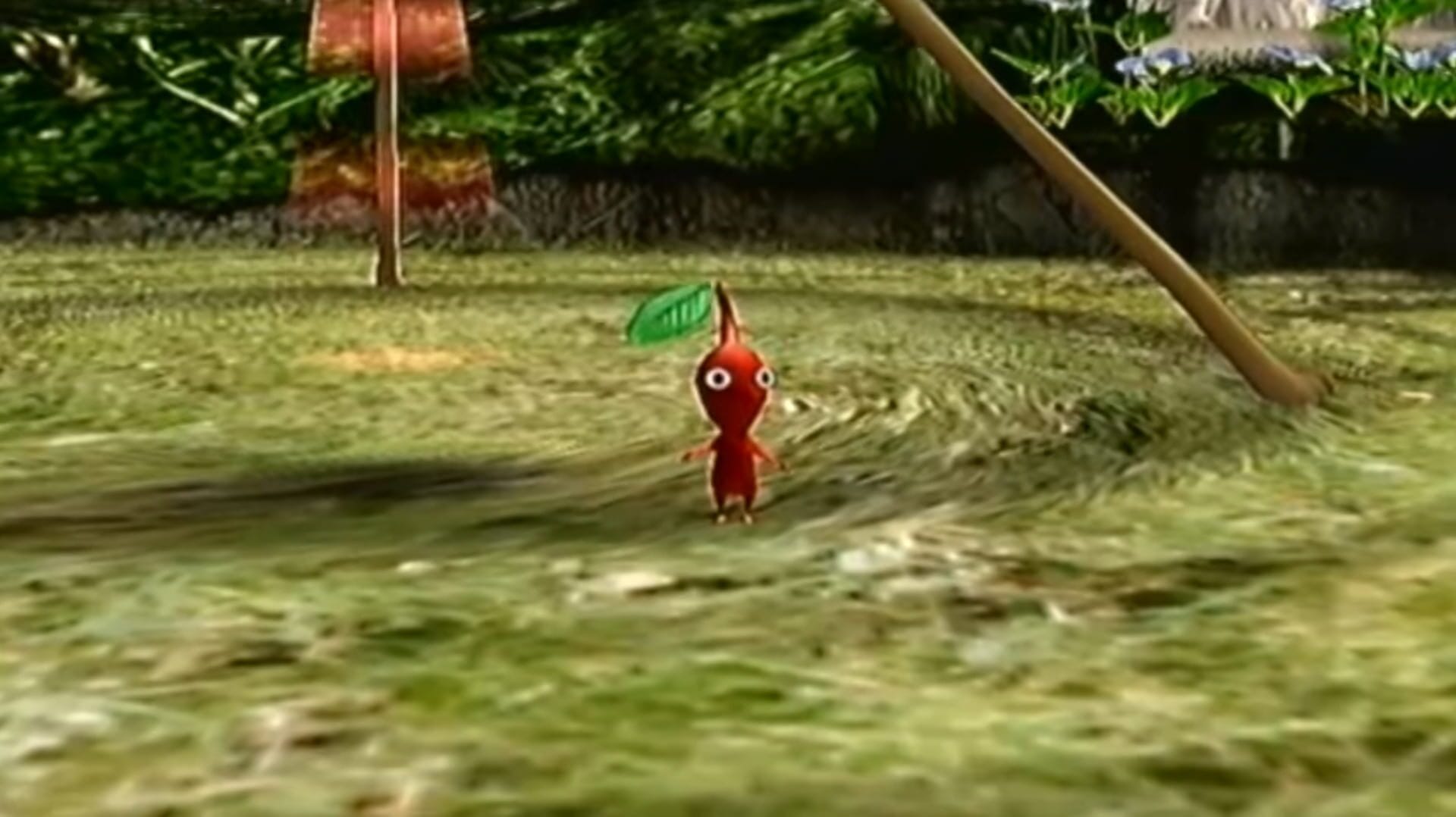
Pikmin 4 received positive reviews praising its level design, visuals, music, volume of content, and accessibility to newcomers. The accessibility question is worth dwelling on: the game made dandori explicit and legible through tutorials and in-game text, actively teaching players a skill that the original game simply demanded. It also introduced Oatchi, a rideable space dog companion, and removed the overarching time pressure that had defined the original. The result was a game that welcomed new players while retaining the ecological richness that the series had always offered.
Miyamoto himself was reportedly determined not to stray too far from the series' original template even as his team made these accessibility-oriented changes — insisting that mortality, consequence, and efficiency remain the core emotional and mechanical registers of the experience.
Ecology as Argument
One of Pikmin's least-discussed achievements is the coherence of its world-building. The planet — later identified in Pikmin 3 and Pikmin 4 as PNF-404, but clearly recognizable as Earth from Olimar's perspective — operates as a genuine ecosystem rather than a game-world backdrop. The Bulborbs hunt at night and rest during the day. The Pikmin, left without guidance, will wander but not die spontaneously; they are organisms with behavior, not mere units. Enemy carcasses can be converted into new Pikmin seeds when carried to an Onion. The food chain is visible, legible, and morally neutral. Nothing in this world is evil. Everything is just trying to survive.
That moral neutrality is one of the franchise's most quietly radical design decisions. Most Nintendo games involve a villain — a source of corruption or cruelty that organizes the world's hostility into something to be defeated. Pikmin has no villain. The creatures that eat your Pikmin are not malicious. They are hungry. The planet's oxygen-rich atmosphere does not hate Olimar; it simply exists in a way that is incompatible with his existence. The game's conflict is not moral but ecological. Olimar is the invasive species. The planet is just being a planet.
This framing makes the player's actions genuinely ambiguous in a way that Nintendo rarely allows. You are, across the course of any Pikmin game, using an indigenous species as a labor force, sending them into combat with creatures that will kill them, and treating their deaths as acceptable losses in service of your own extraction and escape. The game does not moralize about this. It does not reward or punish you based on how many Pikmin you lose, only whether you accomplish your objectives. But it does make the deaths visible, and it does make them feel like something. That feeling is by design.
The Sound of Being Small
Composer Hajime Wakai, who scored the original Pikmin and went on to contribute to The Legend of Zelda and other Nintendo projects, created a soundtrack for the original game that functions as a second layer of its emotional argument. The music is small-scale in the most literal sense — it sounds like something you might hear if you were the size of an insect, surrounded by the ambient hum of a garden. Instruments seem to breathe. Rhythms are organic rather than mechanical. The Pikmin's own vocalizations — the small chirps and hums they produce while working — are folded into the soundscape as a kind of percussion.
When the evening trumpet sounds, signaling that sunset is approaching and Pikmin must be recalled before night falls, the tone is not threatening. It is melancholy. Time is up, again. You did what you could today. You may not have done enough. The Pikmin will sleep safely. Olimar will not.
This is the affective architecture of a game that is doing something genuinely rare: creating anxiety not through action-movie pacing or horror-game jump scares, but through the simple, inexorable passage of time. Every day in Pikmin ends the same way — with the reminder that you are running out of days. The question is only how well you used the one you just had.
Why It Still Matters at 25
The reasons Pikmin has never achieved the mass recognition of Nintendo's grandest franchises are the same reasons it deserves more critical attention than it typically receives. It is a game that insists on consequences in a medium that has learned to systematically remove them. It is a game about ecological interdependence at a moment when that concept has rarely felt more urgent. It is a game that takes the protagonist's mortality not as a narrative device but as a mechanical fact — the clock runs, the oxygen depletes, and if you are not good enough, the man dies.
The question of whether older design philosophies can find new audiences without diluting what made them distinctive is one the games industry revisits constantly. Pikmin has managed something unusual: its most recent entry achieved commercial success larger than anything in the franchise's history precisely by articulating and teaching the philosophy it had always held implicitly, rather than by abandoning it. Dandori — planning ahead, working efficiently, accepting that consequences are real — is not a concession to modern game design sensibilities. It is what Pikmin was always about, finally given a name.
Miyamoto is 73 years old. He has spent a career translating his own enthusiasms and anxieties into games that other people could inhabit. The gardening, the ant-watching, the meditation on small creatures carrying things in lines — these became a franchise that, at its best, is about the weight of responsibility and the specific loneliness of being the only person who understands the stakes. Captain Olimar crashes alone. He works with helpers who cannot share his fear. He writes his logs at night in a broken ship while the planet breathes its poison air outside.
Twenty-five years ago today, that man first crash-landed on a GameCube disc in Japan. The game that contained him sold 1.6 million copies, launched a franchise, and quietly embedded itself in the consciousness of everyone who played it as something they had never quite felt before in a Nintendo game: the specific, irreversible weight of a small death in a large world that does not notice. That feeling has not aged. It has, if anything, grown more resonant. The loneliest game Nintendo ever made turns twenty-five today, and it is still telling the truth.