The week of October 26, 2026, the ARIA Singles Chart reads almost exactly the way the Australian pop market has looked all year: Tate McRae enters at the summit with "Housewife," Olivia Dean and Sam Fender hold the middle ground, and Olivia Rodrigo continues to take up space in the top ten with two different tracks running simultaneously. The difference this week is that one of those tracks — Expectations (2026), the Chappell Roan remix — is parked at #2 in what is only its second chart week, having debuted at the same position the week prior. No hype machine overreach. No massive feature swap between strangers seeking synergy. Just a number on a chart that holds up without embellishment.
The ARIA Top 50 Singles chart for October 26 confirms "expectations" at #2, holding its debut peak, while Rodrigo's earlier single "stupid song" continues to run at #10 — 19 weeks in, still viable. That dual presence on a competitive chart is a structural argument in itself. Rodrigo's third album, You Seem Pretty Sad for a Girl So in Love (2026), released on June 12 via Geffen Records, has been producing singles with unusual consistency across a market that rarely rewards patience from a single artist campaign.
The remix itself dropped on October 15. Rolling Stone confirmed it as Rodrigo's first-ever remix, and the symmetry with Roan was immediate: this is also Roan's first-ever credited feature. Two firsts, one record. The decision to hold both milestones until they aligned with the right song and the right artist is the kind of restraint that the pop industry's feature economy rarely produces. Features are normally transactional — a visibility exchange between camps operating at different trajectory speeds. This one is demonstrably not that.
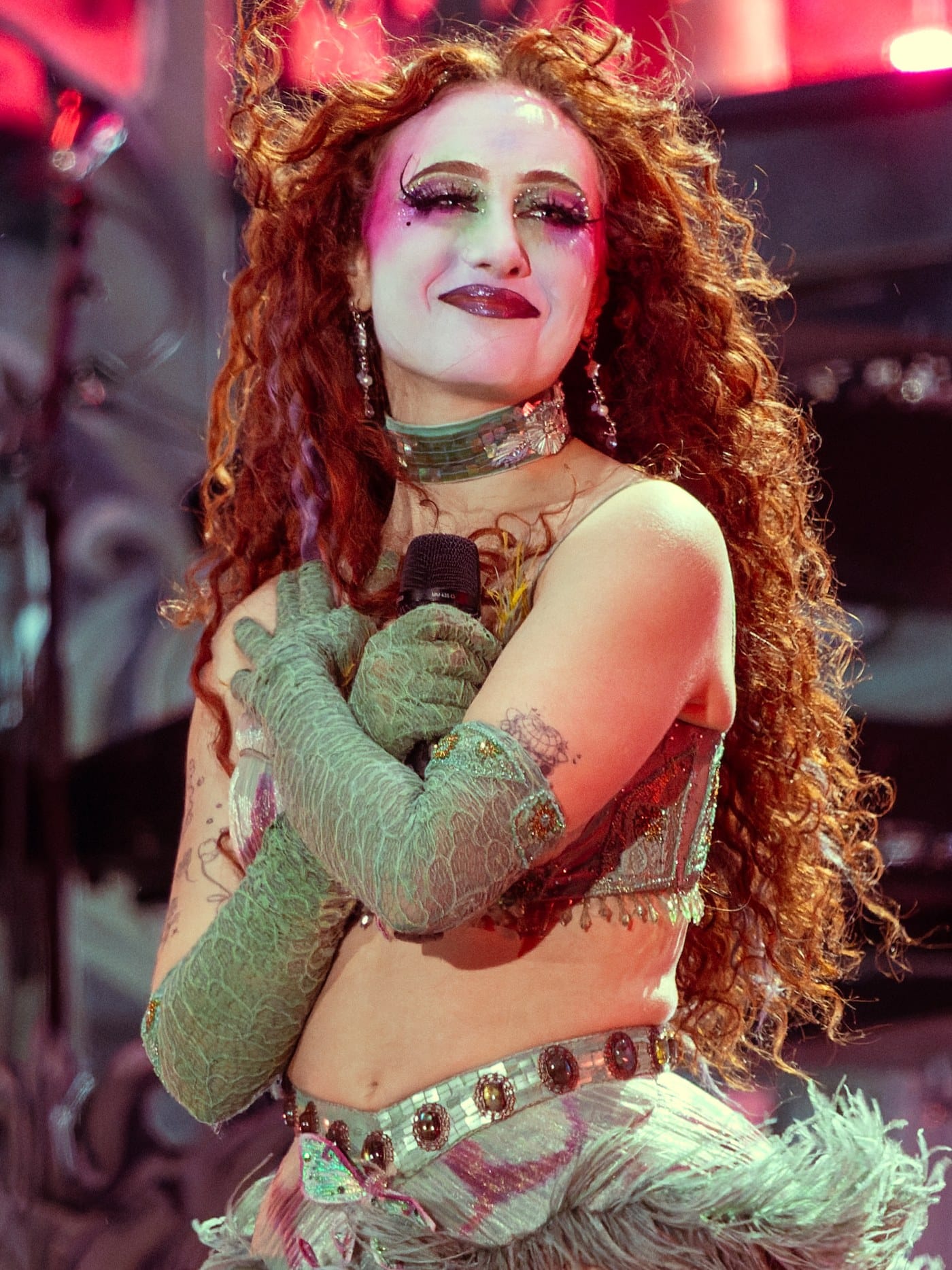
Rodrigo and Roan have a documented creative history that predates any chart incentive. Variety reported that Roan supported Rodrigo on both her Sour and GUTS tours, and both artists have built their recorded output almost exclusively through producer Dan Nigro — who produced "Expectations" and its remix, and who appears, appropriately, in the music video clutching a phone the size of a brick. The creative triangle was already in place. The remix formalised it.
Compositionally, the remix does what a good remix is supposed to do and almost never does: it changes the geometry of the original without replacing it. The Wikipedia entry on the song notes that Roan's new verse explores lesbian relationships, rewriting some choruses to refer to women — a modification that doesn't feel tacked on because it mirrors the song's core emotional logic about unmet expectation. Music criticism outlet &Asian noted "slight musical revamps" including chiptune touches and a faster drum groove in Roan's section — small enough to feel earned, distinct enough to signal that Roan actually worked on the track rather than recorded a vocal over an unchanged bed. She sings one of the choruses; Rodrigo provides higher-pitched harmonies. They trade the song rather than share it passively.
The music video, directed by Bardia Zeinali, sets all of this inside a retro game-show construct — a fictional series called "The Big Expectations Show" — with David Byrne cast as host Johnny Johnson. The conceit is campy but disciplined: different versions of Rodrigo and Roan compete across sets modelled on Jeopardy!, Hollywood Squares, and a Family Feud-style format. The camp earns its keep because the underlying song is melancholy. Staging heartbreak inside a game show is an old idea — the genre has always been built on performance anxiety and public judgment — but the video commits to the bit rather than winking past it.
The chart impact is measurable beyond the ARIA placement. Variety reported that You Seem Pretty Sad for a Girl So in Love returned to the top of the Billboard 200 the week following the remix's release — its third total week at #1 — generating 75,000 equivalent album units in that single chart week and displacing Taylor Swift's The Life of a Showgirl from the summit. The album had originally debuted at #1 in June with 485,000 units, becoming the biggest solo debut of 2026 and topping charts in 17 countries. The remix extended the campaign's commercial life in a way that suggests the track was well-chosen: "Expectations" was not a lead single engineered for maximum first-week impact. It is the twelfth track on a thirteen-song record. Picking it as the anchor for a remix is either an act of commercial instinct or artistic preference, and the result suggests it was both.

The ARIA context is worth dwelling on because Australia has historically been a leading indicator for Anglo-pop longevity. A song that holds ARIA real estate deep into its chart run — or, in this case, one that re-enters at the top on fresh momentum — is one that has found actual listeners rather than first-week curators. Rodrigo's "stupid song" at #10 after 19 weeks, alongside the remix at #2 in its debut week, is not a coincidence; it is the ARIA chart reflecting a sustained audience engagement that crosses multiple demographics and usage contexts. The remix brought the audience that was already there, and it held them.
There is also something worth noting in how the rollout was handled. Rumours of the remix circulated briefly when a German retailer listed it prematurely and then pulled the listing. Rodrigo posted an audio clip — Roan's voice saying "Ooh, Olivia does remixes now" — to her Instagram story. The official confirmation came two days later: a photo, a caption, a release date. No extended teaser campaign, no merchandise pre-sale attached to the reveal, no cross-promotional media rollout. The approach treated the audience as capable of wanting the thing without being engineered toward it. That restraint is not naive; it is a read on what the Rodrigo and Roan fanbases actually respond to, which is the music operating as the primary event rather than as the trailing element of a content strategy.
The question that a #2 debut raises — and that the chart alone cannot answer — is whether the remix holds. The ARIA data shows it debuted and held at #2 across both chart weeks available. Whether it climbs, drops, or stabilises through November will say more about the song's actual staying power than any first-week spike. But the debut position itself, achieved without a promotional apparatus larger than the song's own quality and the two artists' shared credibility, is already an argument. Pop collaboration is not broken. It just requires that neither artist actually needs the other — and that they do it anyway, because the music is better for it.
Rodrigo is currently in the middle of her sold-out Unraveled Tour, which runs through to May 2027. Roan, who recently organized her Super Graphic Spectacular charitable concert event in Los Angeles, remains one of the few artists whose visibility is self-sustaining without a constant release schedule. When artists with that kind of standing choose to spend one of their limited first-time gestures — a debut feature, a debut remix — on each other, the chart is almost beside the point. Almost. The #2 is still there.