Hans Zimmer turns 69 today, and there is a specific kind of tribute that gets written for composers on occasions like this one: a list of famous themes, a nod to the Oscars on the shelf, a line about "iconic scores." Zimmer deserves all of that. But it undersells what actually happened over the last four decades, which is stranger and more consequential than a highlight reel can capture: a self-taught keyboardist who couldn't read music in any formal sense walked into an industry built on the orchestral traditions of Max Steiner and Bernard Herrmann, and within twenty years had quietly rewritten what a blockbuster was supposed to sound like.
That's not hyperbole. It's an audit of the last twenty-five years of Hollywood's biggest films, and how many of them borrow, directly or by osmosis, from a vocabulary Zimmer built almost by accident.
An Outsider by Training, Which Was the Point
Zimmer's origin story resists the usual conservatory-trained-prodigy arc entirely. Born in Frankfurt in 1957, he taught himself piano, drifted through London's new wave scene, and briefly appeared on camera in the Buggles' "Video Killed the Radio Star" — the first video MTV ever aired, a footnote that turns out to be an accidental thesis statement for his entire career. He learned to compose on synthesizers because that was the instrument he had, not because he was chasing a sound. The orchestral fluency came later, once he had something a lot of conservatory graduates didn't: total comfort treating a film score as an electronic instrument first and an orchestral one second, rather than the other way around.
His mentor, Stanley Myers, brought him into film scoring in the UK in the mid-1980s, and by 1988 he'd landed his first Oscar nomination for Rain Man — a nomination that, in retrospect, undersold what was coming. Zimmer wasn't just a talented new arrival learning the house style of film composition. He was quietly building a different house.

The Hybrid That Became the Default
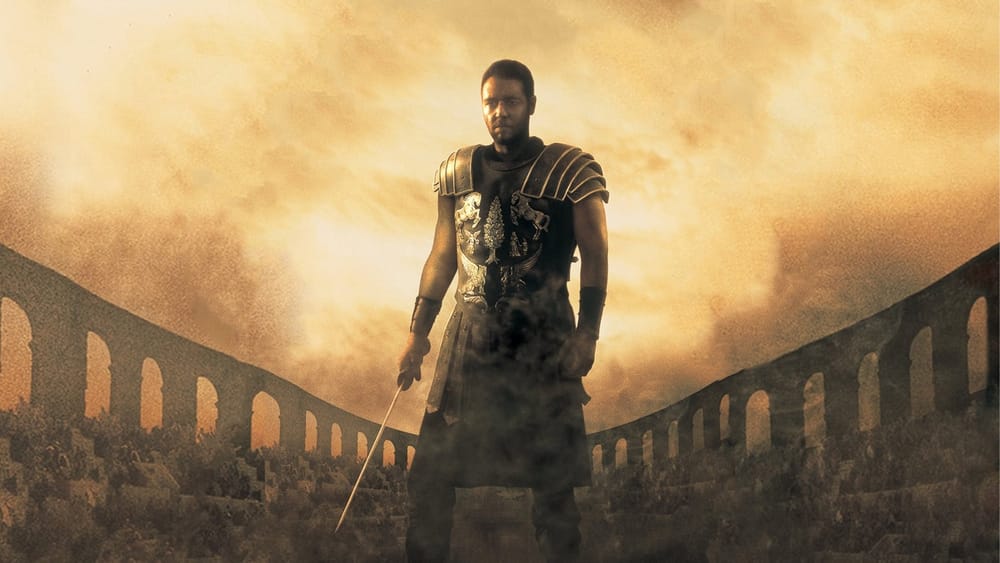
The technical case for Zimmer's importance is simple to state and easy to underrate: he normalized the fusion of electronic sound design and orchestral scoring as the default register for a certain kind of prestige blockbuster, rather than a novelty reserved for science fiction or horror. Gladiator (2000) is the clearest early proof of concept — a period epic that, by any prior convention, should have sounded like Miklós Rózsa. Instead, Zimmer and Lisa Gerrard built a score around drones, wordless vocals, and synthesized textures sitting directly against a full orchestra, and the result didn't read as anachronistic. It read as the only way that film could have sounded. That's the signature Zimmer move: making a hybrid feel inevitable in hindsight, even though nothing about it was obvious beforehand.
The collaboration that turned this from a personal signature into an industry-wide grammar was Christopher Nolan's. Across six films from Batman Begins (2005) through Dunkirk (2017), Zimmer and Nolan built a shared sonic language — the two-note "Batman" motif that refuses to resolve, the ticking-clock rhythm section underneath Dunkirk's entire runtime, and, most famous of all, the Inception "BRAAAM": a single brass hit, slowed and distorted almost past recognition, that became so widely imitated in trailers across every studio that it eventually curdled into a punchline. It's worth sitting with what that means. A single sonic gesture from one score became so structurally useful to the entire trailer industry that its ubiquity turned it into a cliché of Zimmer's own making — arguably the highest and most backhanded compliment a film composer can receive.
Restlessness at the Top
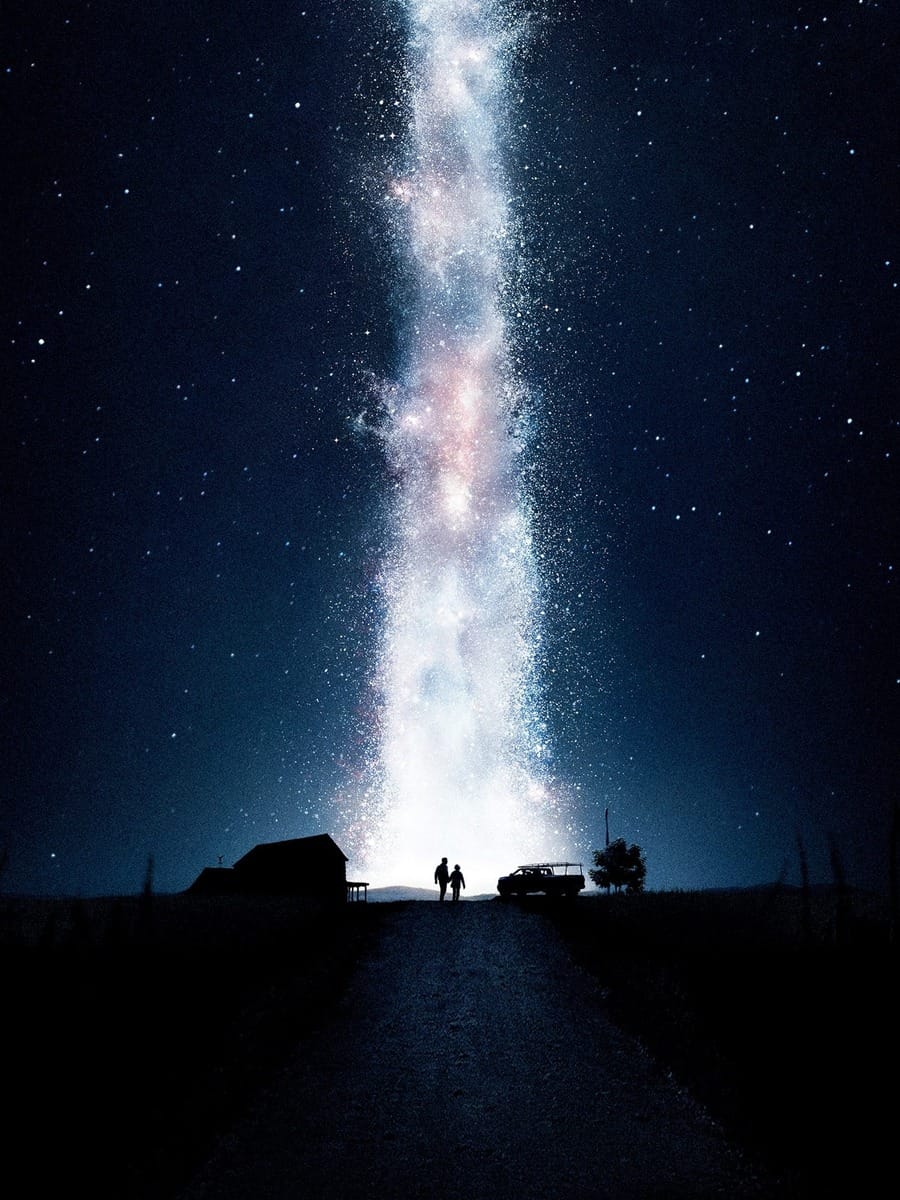
What separates Zimmer from a composer who simply found a signature and repeated it profitably is what he did once the "BRAAAM" era had already made him the most imitated man in film music. Interstellar (2014) is built around a church organ — a deliberately anti-electronic, anti-percussive choice for a science-fiction film, chosen specifically because Nolan wanted something that evoked faith and scale rather than spectacle. It's arguably Zimmer's most emotionally direct score, and it works precisely because it refuses the tools that had made him famous.
Then came Dune (2021), a score built substantially around invented instruments, processed human voice, and percussion that intentionally avoids Western orchestral color altogether, in service of a story that needed to sound like it came from nowhere on Earth. Two films, eight years apart, from a composer who by that point had every commercial incentive to keep delivering variations on the sound that made him famous — and instead delivered two of the most formally adventurous studio scores of the 2010s and 2020s. That's the part of the Zimmer story the "BRAAAM" jokes miss entirely: the willingness to throw out his own most bankable trick the moment it risked becoming a crutch.
Range Beyond the Tentpole
It's easy to build the Zimmer story entirely around Nolan and franchise-scale spectacle, but that skips over the range that made the Nolan collaboration possible in the first place. The Lion King (1994) won him his first Academy Award and remains one of the most fully orchestral, least electronic scores of his career — proof that the synth-heavy signature was always a choice, not a limitation. Crimson Tide (1995) and Black Hawk Down (2001) do something almost the opposite of Gladiator's myth-making: tense, propulsive, deliberately unglamorous music that treats modern warfare as claustrophobic procedure rather than spectacle. The Thin Red Line (1998) goes further still, finding something meditative and almost devotional in the middle of a war film, decades before Dunkirk would ask him to do something structurally similar with a ticking clock instead of a hymn.
Then there's the work that has nothing to do with box office at all. Zimmer's scores for the BBC's Planet Earth II and its Frozen Planet sequels sit oddly against the rest of his filmography until you notice the throughline: whether the subject is Gotham or a harp seal pup facing a melting ice shelf, Zimmer scores scale, not plot. He's less interested in underlining what a character says than in making an audience feel the size of the space around them — which is exactly the skill a nature documentary needs from its composer, and exactly why the same skillset works on a Batcave and an Antarctic ice floe alike.
Taking the Score Off the Screen Entirely
Somewhere in the last decade, Zimmer made a choice that very few film composers of his stature have bothered making: he took the scores off the screen and put them on an arena stage. Hans Zimmer Live and its touring successors treat film music as a legitimate live performance genre in its own right, not a nostalgia act or a novelty orchestra night — full band, real crowd energy, the "Time" cue from Inception played as a communal experience rather than something that only exists underneath dialogue and sound design. It's a strange, slightly radical proposition: that a film score, stripped of the film it was written for, can still hold an arena's attention purely on its own musical terms. Enough people bought tickets across multiple continents to prove the proposition correct.
The Legacy That Isn't a Melody
The single most underrated part of Zimmer's career might not be a score at all. In 1988 he co-founded what became Remote Control Productions, a studio and mentorship pipeline that has since incubated an entire generation of major film composers — including names now scoring franchises entirely on their own. Zimmer built something most celebrated artists never bother building: a structure that outputs other careers, not just his own music. It's the difference between being a great composer and being the reason a discipline has more great composers than it otherwise would have.
None of this is to wave away the legitimate critique that follows Zimmer everywhere — that the drone-and-brass toolkit he pioneered has, in lesser hands across a hundred imitators, flattened blockbuster scoring into a wall of undifferentiated low-end rumble. That criticism is fair, and Zimmer himself seems to know it, which is presumably why Interstellar's organ and Dune's invented instrumentarium exist at all — as course corrections from the one person with the most reason to keep cashing the same check.
Happy birthday to a composer who took an instrument built for new wave records into a room full of orchestras, and instead of being told to leave, ended up changing what the orchestra was allowed to sound like. Sixty-nine years in, and the retirements keep getting announced and un-announced, because there's apparently always one more sound he hasn't made yet. It's been that kind of week for music tributes on Kynari — see also our pieces on Dolly Parton and Tupac Shakur.