The numbers don't lie: week-over-week sales of key X-Men back issues jumped between 181% and 200% in the days following the first episodes of X-Men '97 Season 2. Not new printings. Not collected editions. Raw, decades-old single issues — the kind that sat in long boxes at convention halls for three dollars apiece, waiting for a reason to matter again. That reason is now airing on Disney+.
Editorial Archaeology in Real Time
What X-Men '97 (X-Men '97, 2025) is doing to the back-issue market is structurally different from what a live-action MCU announcement does. A casting rumor lifts one issue, briefly, and the wave recedes. The animated revival operates on a slower, more methodical frequency: each episode surfaces a specific corner of '90s Marvel continuity, authenticates it emotionally for a generation that grew up with the original series, and immediately transforms its first appearance into a collectible with renewed cultural legitimacy.
Garrison Kane — a character so obscure that even committed X-readers sometimes confuse him with other Weapon X adjacents — saw his debut in X-Force #2 (1991) spike past the 180% mark within 72 hours of his Season 2 appearance. The Brood, whose first appearance in Uncanny X-Men #155 (1982) is objectively a more significant issue, followed a similar trajectory the week it featured prominently on screen. Apocalypse's foundational issues — particularly X-Factor #5 and #6 (1986) — are no longer sleepers. They haven't been since Season 1, but Season 2 is sustaining that pressure rather than releasing it.
The Animated Canon as Arbiter of Value
There's a critical distinction being exposed here. The comic book market has long operated under the assumption that cinematic adaptation is the ultimate value driver — that a character only becomes financially significant once a major studio confirms their casting. X-Men '97 is dismantling that hierarchy. The animated series isn't adapting Marvel Studios' roadmap; it's drawing directly from the comics themselves, and in doing so, it's reasserting the primacy of the source material on its own terms.
This matters because the audience responding to these price signals isn't primarily composed of long-term collectors who already owned these issues. It's a younger demographic — viewers in their twenties and early thirties who experienced the original X-Men: The Animated Series (X-Men: La Serie Animada, 1992) as children — now entering the speculator market with disposable income and a precise nostalgia that the show is calibrated to activate. They don't need to know the full publication history of the Brood to understand that the issue is suddenly worth finding. The show told them it mattered.
What the 181–200% Surge Actually Signals
A spike of that magnitude in a single week isn't organic collector enthusiasm. It's a speculative feedback loop: an episode airs, a character registers, aggregator sites and CGC-focused communities flag the first appearance, and a purchasing cascade begins before the weekend is over. The infrastructure for this already existed — GoCollect, MyComicShop, eBay sold listings — but X-Men '97 is triggering it with a consistency and a depth of catalog reach that most modern properties can't match. Because the show is pulling from thirty-plus years of dense, serialized continuity, the pool of potentially activated issues is enormous.
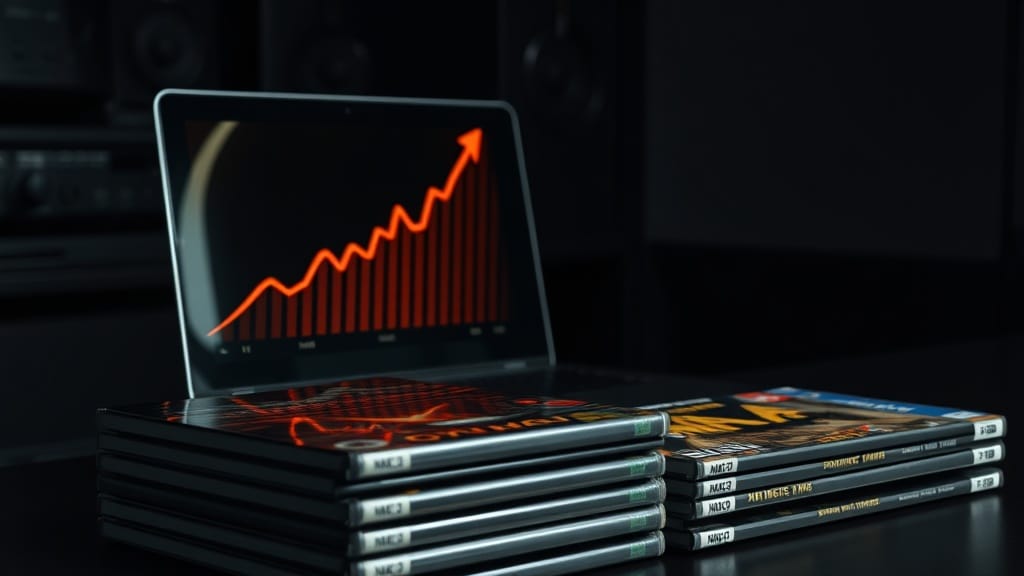
The more revealing pattern is which issues don't spike. Characters with well-documented first appearances — those already graded, slabbed, and priced into the market — show minimal movement. The real volatility lives in the mid-tier: characters significant enough to carry a storyline but obscure enough that their key issues remained undervalued. That's the specific register X-Men '97 Season 2 keeps hitting, almost surgically.
A Blueprint the Industry Should Be Reading Carefully
The implication for Marvel's publishing strategy is uncomfortable: a streaming animated series is doing more to rehabilitate the perceived value of its back catalog than any reprint initiative or variant cover program has managed in years. The issues gaining value aren't new. The stories aren't being retold in collected form. The engine is entirely narrative — a show confident enough in its source material to treat '90s comics continuity not as a liability to be streamlined, but as a mythology worth excavating.
Every episode of X-Men '97 Season 2 is, in effect, a real-time market report. And for anyone paying attention to what it's reporting, the editorial argument is already settled: the animated canon doesn't follow the printed one. Right now, it's leading it.