Three thousand years of oral tradition, war, myth, and homecoming compressed into a single theatrical release date: July 17, 2026. The Odyssey (2026), Christopher Nolan's adaptation of Homer's epic poem, opened to records that would have seemed implausible for any project rooted in ancient Greek verse. By Sunday it had crossed $200 million domestically. The IMAX bookings sold out in hours. The discourse arrived before the film did.
None of that is the interesting part.
What matters is the structural problem Nolan chose to accept when he optioned one of the oldest and most formally complex narratives in Western civilization. The Odyssey is not a story that moves forward. It circles. It digresses. It nests stories inside stories — Odysseus narrating his own myth to the Phaeacians while the audience already knows he survives. Its power is inseparable from that recursive, unreliable architecture. Nolan, whose entire filmography is built on temporal fragmentation and the instability of memory, is the most logical Hollywood director to attempt this. He is also the director most likely to impose his own grammar so completely that Homer's disappears beneath it.
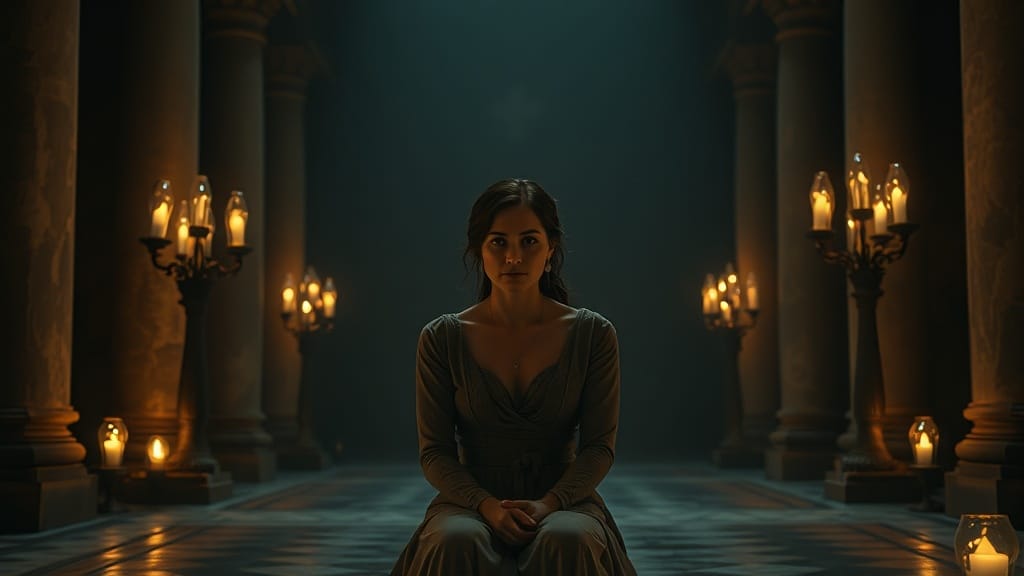
The film stars Tom Holland as a young, physically brutal Odysseus — a deliberate choice that front-loads the warrior and delays the wanderer. Zendaya's Penelope is no longer a passive figure weaving and unraveling; Nolan's script repositions her Ithaca sequences as a parallel intelligence operation, a woman running a court in a state of controlled crisis. Matt Damon's Poseidon is barely human, rendered mostly through environmental catastrophe and a single scene of cold, oceanic contempt. These are smart recalibrations. They acknowledge that a literal transposition of the Homeric catalog would be unwatchable, and they find modern equivalents that preserve structural function if not poetic texture.
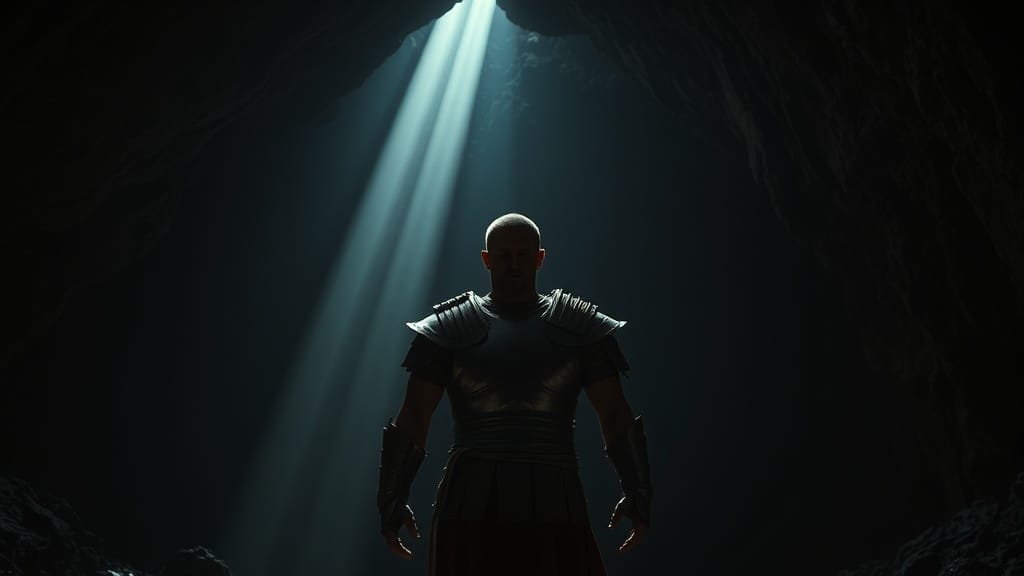
Where the film earns its IMAX ambition unconditionally is in the Cyclops sequence and the descent into Hades — two set pieces that justify the format with a ferocity that has no equivalent in Nolan's previous work. The Polyphemus sequence, shot in practical darkness with sound design that turns the cave into something between a submarine and a nightmare, is the best action filmmaking of his career. It trusts the audience to be disoriented. It does not explain itself.
The Circe episode is where the fractures show. Reduced to a single act of transformation and a negotiation scene, it loses the erotic and theological weight that makes it one of the poem's most disturbing passages. Odysseus spends a year with Circe in Homer. Nolan gives her perhaps twelve minutes. The compression is not merely economical — it is symptomatic. The film treats the wandering as a delivery mechanism for spectacle rather than as the point itself. The detours are the Odyssey. A hero who arrives too efficiently has not understood the sea.
There is a version of this argument that dismisses the film for not being the poem, which is both obvious and unfair. Adaptations are acts of interpretation, not transcription. The sharper critique is that Nolan's interpretation consistently privileges his own obsessions — the fractured self, the unreliable narrator, the cost of singular purpose — over Homer's, which are older and stranger: the relationship between gods and human futility, the specific humiliation of being lost, the way identity dissolves under prolonged displacement.
Holland's Odysseus is a man solving a problem. Homer's Odysseus is a man being undone and partially reassembled by an indifferent cosmos. Those are not the same character.
What Nolan delivers, definitively and without apology, is cinema as a cultural event in the tradition that blockbusters abandoned somewhere around the mid-2000s — a film that demands a specific physical space, a calibrated audience, and a degree of formal seriousness that most franchise product has stopped pretending to attempt. That is not nothing. In the current landscape, it is close to everything.
The records will hold. The conversation will continue for weeks. And the poem will outlast the conversation, as it has outlasted everything else, still circling, still refusing to arrive.