On October 23, 2026, a flyer appeared in Tokyo. The new project was revealed as a surprise, with a flyer distributed to attendees at a press preview for "OPEN HOUSE," a public event held at Dover Street Market Ginza. That is the entirety of the ceremony: no trailer, no release window, no announced director, and — most pointedly — no format. The staff of the 2026 series announced that a new project is now in the works, but the exact format of the project was not announced. In an era where streaming platforms announce series years in advance and franchises stage elaborate reveals, Science SARU and Bandai Namco Filmworks chose a fashion-adjacent event in a Ginza boutique. The silence about what this thing actually is may be the most deliberate decision in the announcement.
 Official teaser
The Series That Just Finished
To understand why the format question matters, you have to clock how recent the first project still is. The Ghost in the Shell premiered on July 7 on Amazon Prime Video in over 240 countries and regions worldwide, excluding mainland China, Russia, and Vietnam. The series, produced by Science SARU, was based in its entirety on the 1989–1990 manga by Masamune Shirow, and it aired from July to September 2026. Ten episodes. A clean run that adapted a single, complete source text and then ended.
The anime's production committee comprised Science SARU with Bandai Namco Filmworks, Kodansha, and Production I.G. That committee structure — involving Production I.G., the studio historically synonymous with the franchise's prestige television iterations — was itself a statement of intent. This was not a rogue reboot. It was the rights-holders choosing a new creative direction while keeping institutional memory in the room.
The series was directed by Mokochan, making his feature directorial debut. He made his directorial debut after serving as assistant director on titles like DAN DA DAN (2024–). The script was written by sci-fi author EnJoe Toh, known for works including Self-Reference ENGINE and Shadow.net. Character design and executive animation directing were handled by Shuhei Handa, whose previous credits include Scott Pilgrim Takes Off and Spriggan. The staffing prioritized a generation of animators trained inside Science SARU's aesthetic rather than veterans inherited from the franchise's past iterations — a structural signal that the studio intended to make something that looked and felt like theirs, not like a legacy continuation.
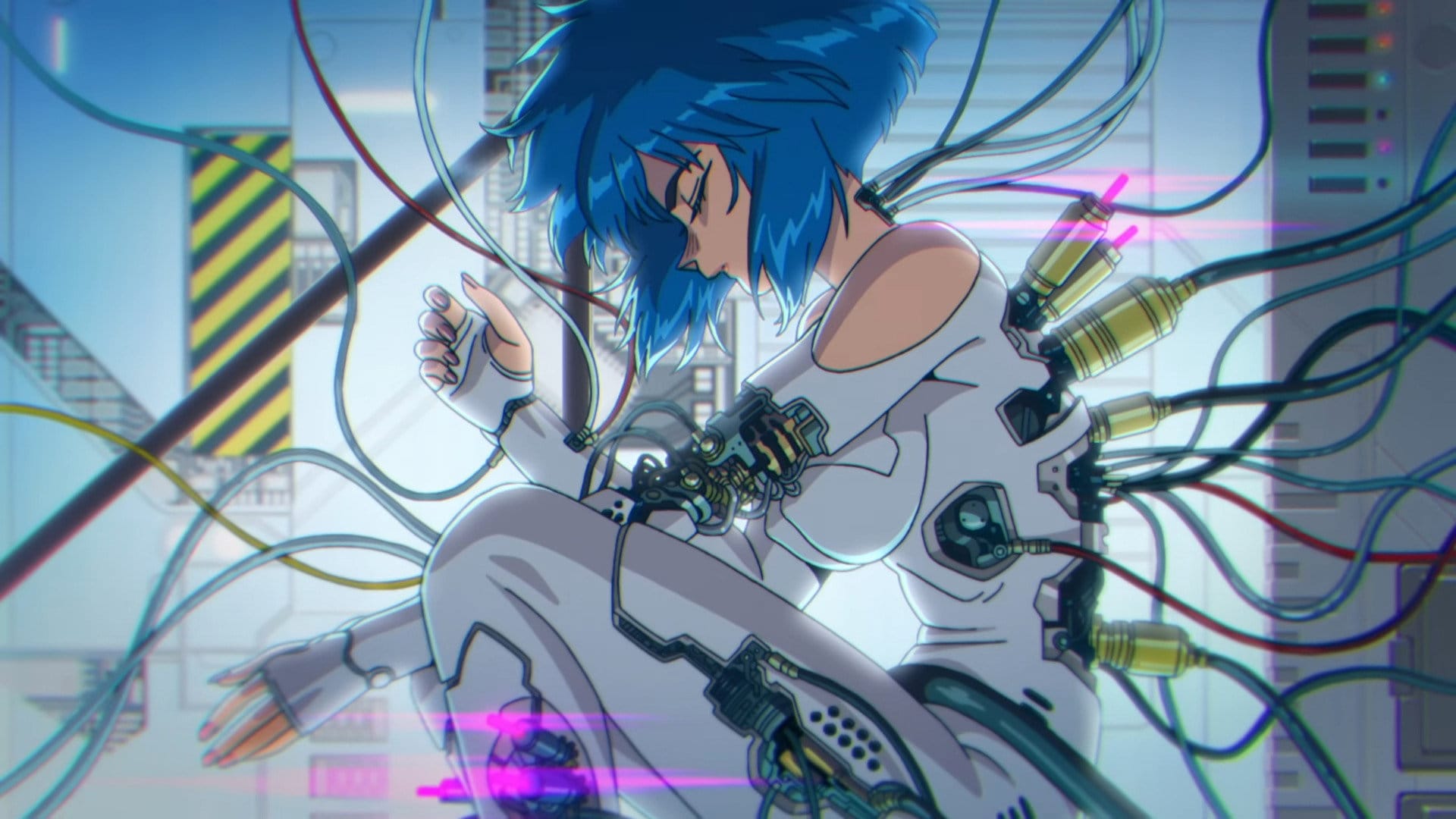
Director Mokochan and character designer Handa intentionally embraced a hand-drawn appearance, preserving the noise and distortions created during production because they added character to the final image. For a franchise whose 1995 film by Mamoru Oshii became a landmark of photorealistic cel animation, and whose Netflix successor Ghost in the Shell: SAC_2045 (2020) leaned into full CG, that commitment to visible imperfection was a counter-argument made frame by frame.
What the Franchise History Actually Means Here
Since the 1989 manga by Masamune Shirow, The Ghost in the Shell has inspired audiences and storytellers as an icon of cyberpunk fiction, generating the acclaimed 1995 animated film by Mamoru Oshii. It was followed by Ghost in the Shell: Stand Alone Complex (2002), an anime series directed by Kenji Kamiyama. The first 12 episodes of SAC_2045's 24-episode run were released on April 23, 2020, directed by Shinji Aramaki and Kenji Kamiyama. Each creative regime brought a distinct set of production priorities and, crucially, a distinct format: theatrical film, television series, full-CG streaming series.
Science SARU's 2026 series was, per manga creator Masamune Shirow himself, "the fourth version" of anime adaptation, following those by Oshii, Kamiyama, and Kise. The lineage is long enough that each new entry carries the weight of comparison not only to the source material but to the works that have become cultural objects in their own right. A new Oshii-lineage Ghost in the Shell is not just another anime — it is a benchmark against which directors have been measuring themselves for three decades. Science SARU's 2026 series declared its independence from that comparison aesthetically. What the new, unnamed project will do with that independence is the open question.
The Format Is the Story
The deliberate omission of format from this announcement is not an oversight. In contemporary anime production, withholding that single piece of information serves a precise function: it prevents the project from being pre-categorized before the creative team has locked on what it actually is. A sequel season implies narrative continuation and a returning cast. A film implies a different budget ceiling, a theatrical distribution strategy, and a story built for two hours rather than ten episodes. An OVA or special implies a pivot toward a niche fanbase. None of these are neutral. Each one carries a set of industry expectations that would immediately shape how the project is received, discussed, and commercially positioned.
On October 23, 2026, a brand-new animation project based on Shirow Masamune's manga officially entered production. The announcement described it as an entirely fresh creative endeavor following the July 2026 broadcast. Animation production will again be handled by Science SARU. The phrase "entirely fresh creative endeavor" is doing substantial work. It closes the door on a direct sequel while opening it to almost anything else. This is a production committee that has learned from watching other franchises announce prematurely: the format reveal is a trap if the format has not been fully decided.
The announcement as reported by Anime News Network confirms no staff, no story details, and no timeline — an almost aggressively minimal disclosure. What it does confirm is commitment: Science SARU is back, the committee is intact, and the IP has enough momentum to justify beginning something before knowing precisely what that something should be. That last part is either a sign of creative confidence or commercial reflex, and probably both at once.
What Science SARU Brings to This Blank Space
The studio's recent track record makes the blank space more interesting rather than less. Science SARU has earned widespread international acclaim for its innovative works, including the Golden Globe-nominated film Inu-Oh, the Shanghai International Film Festival Best Animation Award-winning The Colors Within, and the TV anime DAN DA DAN. These are not comparable works stylistically or tonally — Inu-Oh is a rock musical set in the Muromachi period, DAN DA DAN is a supernatural action-comedy — but they share a commitment to visual invention that does not default to genre convention. That range is what makes Science SARU's custody of this franchise unusual.
Most studios that handle legacy IP operate as custodians: they preserve what made the franchise recognizable and adjust it to contemporary production norms. Science SARU has operated more like an author taking over a text. Their 2026 series used hand-drawn imperfection as a philosophical argument about the nature of the franchise itself — a cyberpunk story about the persistence of the human within the machine, told with animation that insisted on its own material process. Whatever the new project turns out to be, that authorial posture is unlikely to change. The question is whether the format, once revealed, will constrain or amplify it.
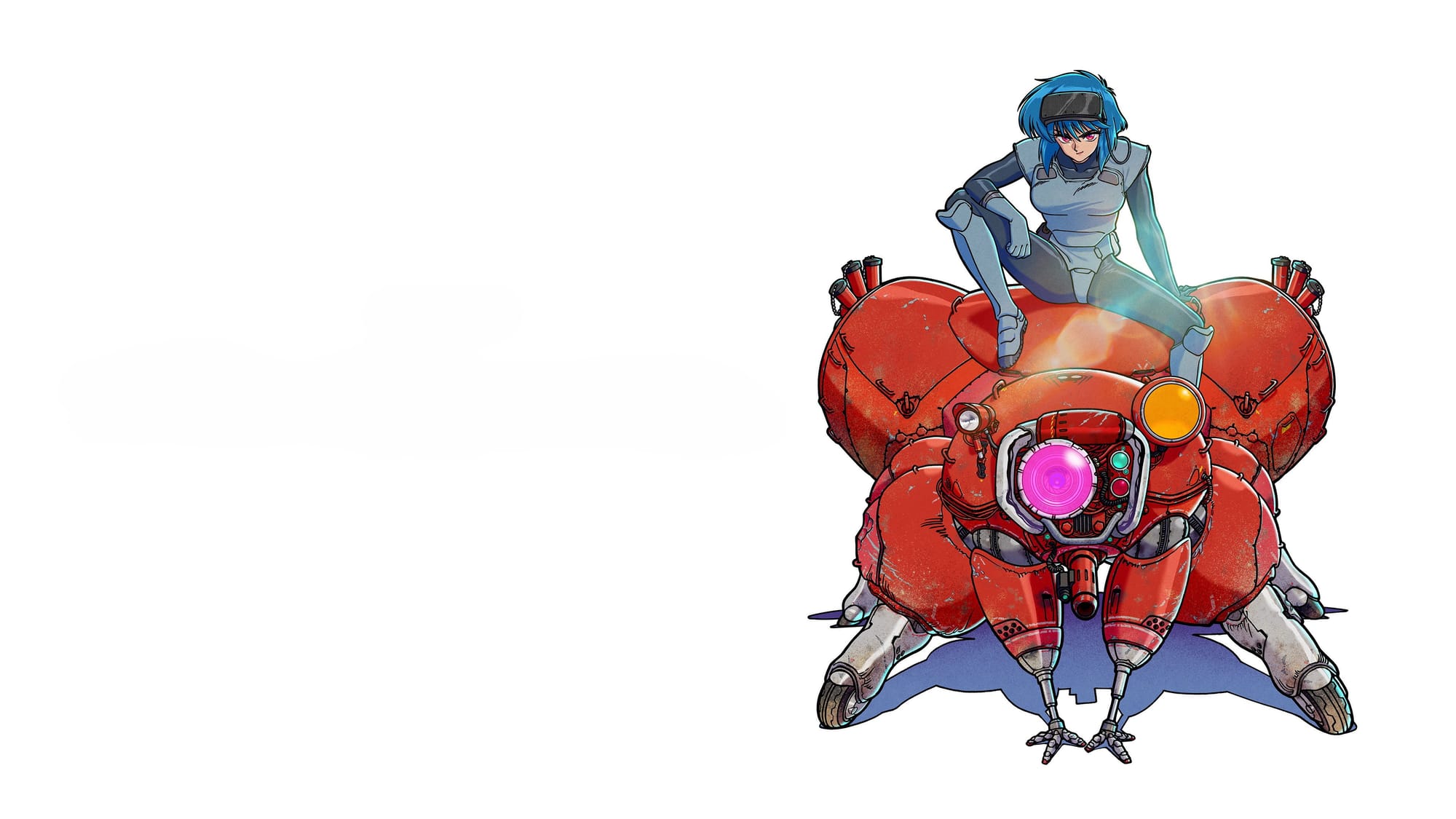
The Anime Corner report on the announcement included a new visual but no interpretive clarity about what it depicts. A visual without context is, in franchise terms, a Rorschach test: fans will read into it whatever they hope the project will be. That is almost certainly intentional. The announcement buys goodwill without incurring obligation. It is a flag planted in the future without specifying the coordinates.
This approach rhymes with a broader industry pattern worth noting — as Kynari has previously examined in the context of Aniplex's own content teases, the deliberate information vacuum has become its own promotional genre. The announcement of an announcement, stripped of specifics, generates conversation precisely because it refuses to satisfy it. And when the franchise in question carries thirty-seven years of accumulated cultural weight, even a flyer is enough to start the cycle.
What Science SARU does next with Motoko Kusanagi is genuinely open. The shell is confirmed. The ghost inside it has not yet been named.