The Japanese government announced on October 23, 2026, that anime director Rintarō had been named one of the country's 21 Persons of Cultural Merit for fiscal 2026. The ceremony is scheduled for November 4 at a hotel in Tokyo — the day after Culture Day, when the higher-ranked Order of Culture is presented by the Emperor at the Imperial Palace. Two separate ceremonies, two tiers of honour, and, if you read the architecture of it carefully, a quietly revealing hierarchy: animation shares the lower rung with jazz, while video games, in the person of Nintendo's Shigeru Miyamoto, cleared the upper bar this year. Both gestures are overdue. Both carry the faint odour of institutional relief at having finally got round to it.
 Official trailer
Rintarō's real name is Shigeyuki Hayashi. He was born in Tokyo on January 22, 1941. He entered the industry at seventeen as an in-between animator at Toei Animation on the 1958 feature Hakujaden. He moved to Mushi Productions in 1963, where he worked directly under Osamu Tezuka — Japan's equivalent of Walt Disney, the man who invented much of the visual grammar the entire industry still speaks. At Mushi, Rintarō worked on two of the most consequential series in anime history: Astro Boy (1963) and Kimba the White Lion (1965). The government's formal citation for the honour specifically names his contributions to the development of television animation through works such as Astro Boy. That phrasing is careful and correct. Rintarō did not merely watch those foundations being laid; he poured concrete.
In 1971 he went freelance. A year later he co-founded Madhouse alongside Osamu Dezaki, Masao Maruyama, and Yoshiaki Kawajiri — all of them ex-Mushi Pro animators, all of them building something they hoped would outlast the company that trained them. It did. Madhouse, established on October 17, 1972, became one of Japan's most important animation studios, a creative engine behind decades of landmark features and television series. Rintarō never took a staff position there; he remained a freelance director throughout, which tells you something about the generation that built the industry — they were constitutionally allergic to capture.
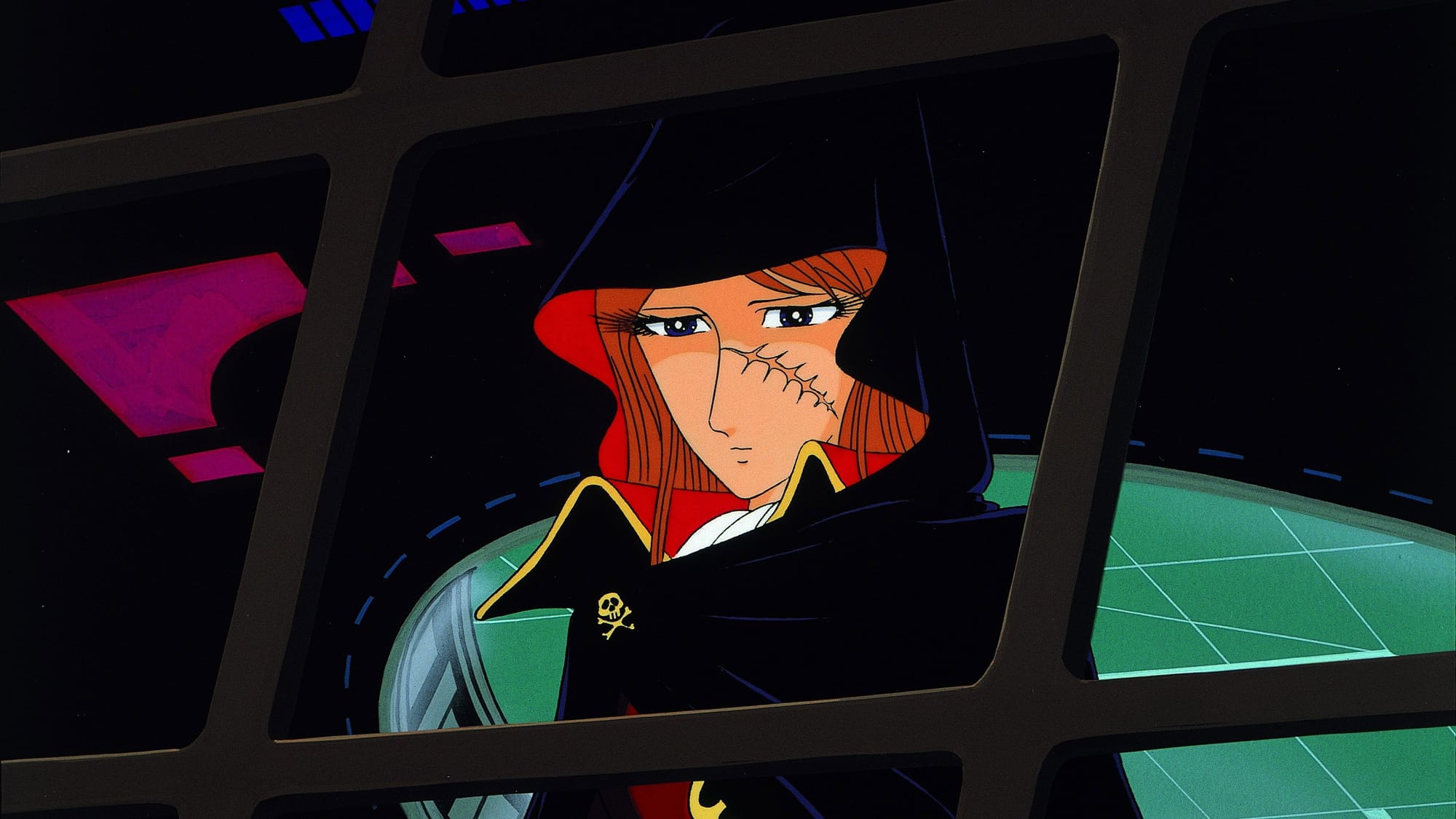
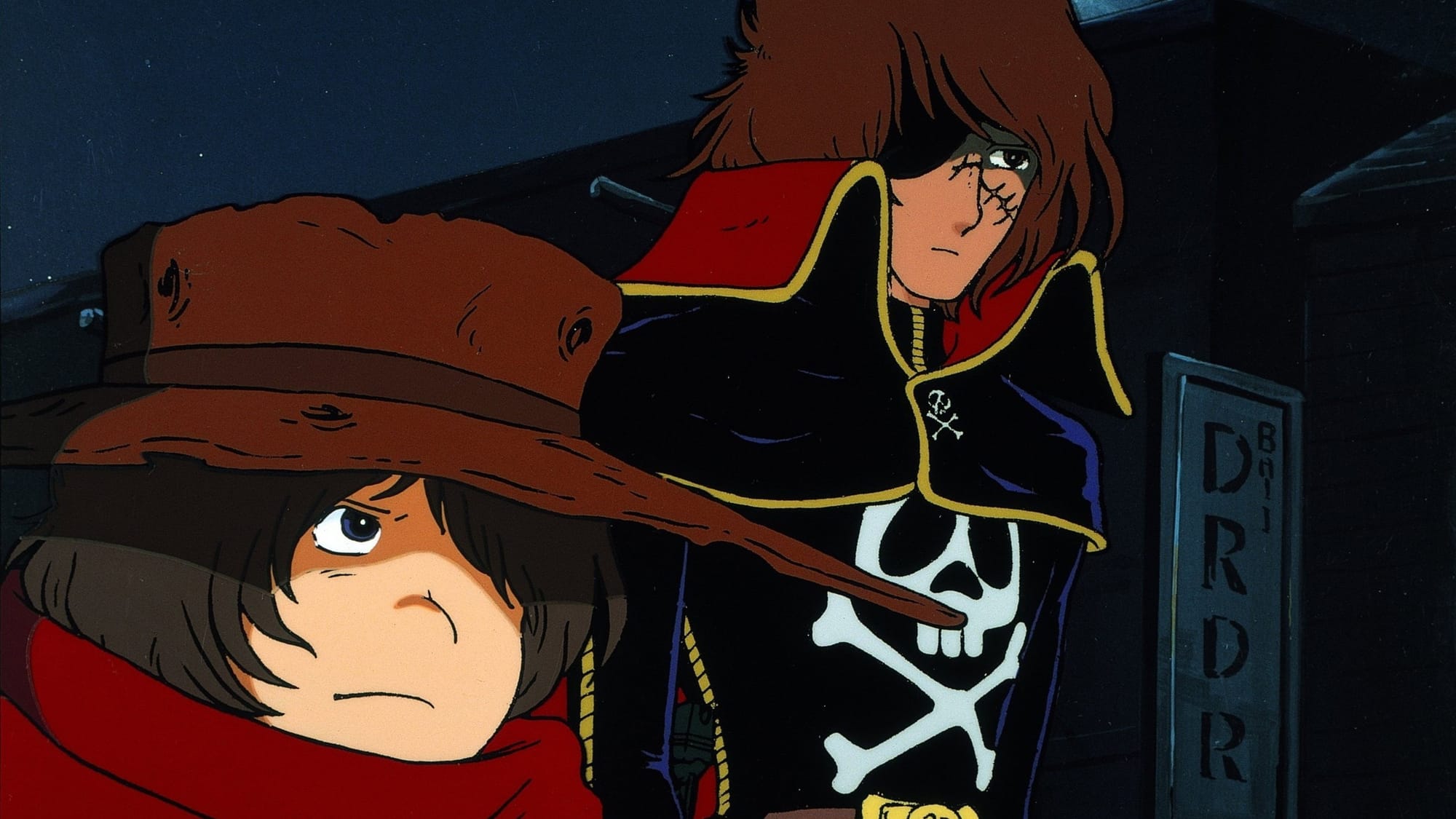
The work that followed is not a filmography so much as a map of anime's ambitions across four decades. In 1979 came the theatrical Galaxy Express 999, based on Leiji Matsumoto's manga — a cosmic elegy about mortality, mechanisation, and the human cost of immortality dressed up as a boy's adventure on a space train. Its sequel, Adieu Galaxy Express 999, arrived in 1981. Between those two films, Rintarō directed 42 episodes of the Space Pirate Captain Harlock television series. The productivity is almost alarming in retrospect: in roughly three years, he delivered two major theatrical features and a full television run. There was no industry infrastructure for any of this. They were building the track as the train moved.
Then came Harmagedon (1983), The Dagger of Kamui (1985), Phoenix: Karma Chapter (1986), Neo Tokyo (1987, an anthology in which Rintarō directed a segment alongside a then-emerging Katsuhiro Otomo), and X/1999 (1996). Each one pressed into different territory — mythological, historical, political, apocalyptic. The consistency is not of genre but of disposition: a preference for the operatic, for narratives that treat human fate as something worth mourning rather than simply resolving.
The clearest statement of that disposition is Metropolis (2001). Directed by Rintarō with a screenplay by Katsuhiro Otomo, the film earned an 86 percent critical approval rating and was described by critics as "a remarkable technical achievement" whose "eye-popping visuals more than compensate for its relatively routine story." It was produced by Madhouse, based on Tezuka's 1949 manga, which was itself inspired by Fritz Lang's 1927 silent film — a lineage of adaptations spanning the better part of a century. Rintarō fused traditional 2D cel animation with 3D computer graphics and layered the whole thing over a 1920s jazz and swing soundtrack, a deliberate anachronism that made the film feel simultaneously ancient and unmade. James Cameron, on seeing it, reportedly called it "the new milestone in anime." Whether or not you credit that endorsement, the film's ambition was unmistakable: it wanted to be the point at which anime proved it could hold the entire weight of world cinema's most examined fable about industrial society and still add something new.
After Yona Yona Penguin (2009), Rintarō spent fourteen years without directing a feature. The industry he had helped build was now a trillion-yen export machine. Anime hit ¥4.45 trillion in 2025, with 57 percent of that revenue coming from overseas — numbers that would have been unimaginable to the people at Toei Animation in 1958 who let a seventeen-year-old boy draw in-betweens. The medium had become an industry, then a global industry, then an infrastructure. The directors who built it became, in the interim, something closer to monuments than practitioners: living and largely unacknowledged except by the fan communities who had never forgotten.
Rintarō broke his long directorial silence in March 2023 with a short film — a silent manga cinema piece screened at the first Niigata International Animation Film Festival. Then, in January 2024, he launched an autobiographical manga, My Life in 24 Frames per Second, which won the Grand Prize at the 29th Annual Tezuka Osamu Cultural Prize and was later nominated for Best Graphic Memoir at the 2026 Will Eisner Comic Industry Awards. A man who spent decades making moving images turned, in his eighties, to the static frame — and the industry's most prestigious comics honours responded immediately. It is the kind of late-career plot turn that makes the Person of Cultural Merit designation feel not like a capstone but like a catch-up.
He is also currently developing the story for a new Toei Animation theatrical film based on the Galaxy Express 999 franchise. He directed the original 1979 film. He is 85 years old and is still the person they called when they needed someone to handle the source material with the right kind of gravity. That is not a ceremonial role. That is trust earned across sixty-seven years of professional practice.
The Person of Cultural Merit designation matters less as a reward than as a signal. Japan is a culture that takes its institutional recognitions seriously, and the fact that an anime director now sits alongside jazz saxophonists and Nobel laureates in the government's formal accounting of cultural contribution is not nothing. It is, in fact, the kind of acknowledgement that shapes what gets preserved, funded, and taught. The generation that built anime's foundations is ageing out of living memory, and the window for getting the institutional record right is narrowing. Rintarō's honour is a start. It is also, at 85, a reminder of how long these reckonings tend to take.
The November 4 ceremony will not change anything Rintarō has already made. Galaxy Express 999 does not become more or less significant because a hotel in Tokyo hosted a dinner in its director's honour. But the ceremony makes it harder for any future account of Japanese culture to omit the people who built its most globally influential art form from scratch, before there was money in it, before there was an audience for it abroad, before anyone had thought to call it an industry. That erasure has always been the real risk. The designation is, among other things, a hedge against it.