Four days ago, writing about Zach Cregger's Resident Evil before anyone outside a festival had seen it, we argued that the interesting question was not whether Cregger could make a good film. It was whether a studio would let him make his film — whether the industry had finally learned that rescuing a damaged franchise requires handing over control rather than managing it.
The answer arrived on Thursday night, in the form of numbers.
Resident Evil (2026) took $8.8 million in Thursday preview screenings — the largest preview night in the franchise's twenty-four-year screen history, and the third-largest ever recorded for a video game adaptation. It opened Friday across 3,166 North American locations. It sits at 96% on the Tomatometer, which makes it, by that metric, the best-reviewed film ever adapted from a video game, with an audience score of 91% running alongside it. Projections put the domestic opening somewhere between $40 and $60 million against a budget reported at around $80 million, with a global start near $80 million.
So the bet paid. That is worth saying plainly, because it does not happen often. But the more revealing story is not that it worked — it is what the previous twenty-four years had to look like for this to register as a surprise at all.
What 96% Means Inside This Particular Franchise
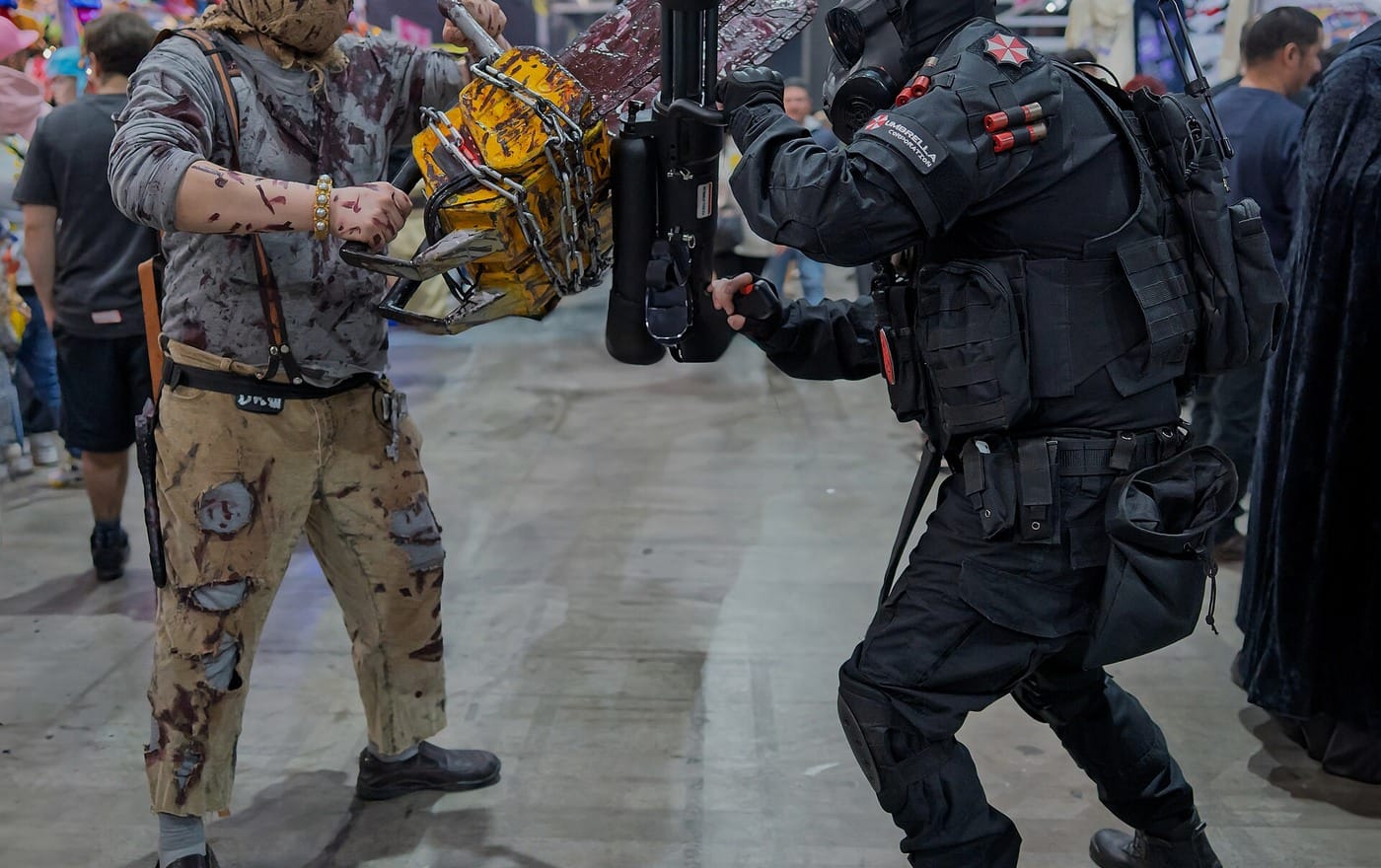
Context is everything with a number like that. Paul W. S. Anderson's six-film series, running from Resident Evil (2002) to The Final Chapter (2016), was never critically respectable and never pretended to be. Resident Evil: Welcome to Raccoon City (2021), the reboot that promised fidelity to the games, was received worse than the films it was correcting. The Netflix series lasted a single season.
Against that, a 96% is not an incremental improvement. It is a category change. And the critical consensus is unusually specific about why, which matters more than the percentage. Reviewers are not praising accuracy. They are praising the opposite: critics describe the film as adapting the spirit rather than the letter of the games, and one characterises it as a rejection of "the Comic-Con-brained idea that video game adaptations should just give 'the fans' what they think they want." The recurring formulation across reviews is that this is the first Resident Evil film that evokes what it feels like to play a Resident Evil game — which is a claim about sensation and structure, not about whether the right characters appear in the right order.
That distinction is the whole argument. Fidelity was the strategy that produced Welcome to Raccoon City. Interpretation is what produced this.
The Billion-Dollar Counterargument
Here is the uncomfortable part, and it is the reason the bet took so long to place.
Anderson's six films grossed roughly $1.24 billion worldwide against about $313 million in combined budgets. They were not good. They were extremely profitable. The Final Chapter alone made $314 million on a $40 million budget — a better multiple than most prestige releases manage in a decade.
This is the structural fact that every argument for creative autonomy has to survive. Studios did not withhold control from Resident Evil filmmakers out of stupidity. They withheld it because the formula worked, financially, for fourteen years. The critical failure of those films was not a business problem. It was an aesthetic one, and aesthetic problems do not appear on a balance sheet until the audience finally stops showing up — which, for this franchise, happened somewhere between The Final Chapter and the $41 million worldwide gross of Welcome to Raccoon City.
In other words, autonomy became thinkable only after the safe version stopped paying. That is not a story about an industry learning something. It is a story about an industry running out of alternatives.
Ninety-Three Minutes
One number in the production file deserves more attention than it will get: the film runs 93 minutes.
That is a thesis statement disguised as a technical spec. The prevailing grammar of franchise cinema is accumulation — more characters, more lore, more runtime, more setup for the next instalment. A 93-minute horror film written by Cregger and Shay Hatten, built around a medical courier played by Austin Abrams rather than a returning hero, with Zach Cherry, Kali Reis and Paul Walter Hauser filling out an Umbrella research team, is not a film hedging toward a cinematic universe. It is a film that intends to end.
Cregger's Barbarian worked on exactly that principle: tight, structurally aggressive, unwilling to explain itself. The evidence so far suggests Sony let him keep the method rather than scaling it up into something safer. That is the autonomy in question, and it is visible in the runtime before anyone buys a ticket.
What an Opening Weekend Cannot Tell You
A caution, because this is where franchise coverage usually overreaches.
Preview and opening-weekend numbers measure marketing, brand recognition and curiosity. They do not measure whether a film works. Welcome to Raccoon City also opened; it simply had nowhere to go afterwards. The figure that will actually settle this is the second-weekend hold — the multiplier that reveals whether audiences who saw it told anyone to go.
The 91% audience score is a promising early signal, and it is worth noting that it sits close to the 96% critical score rather than far from it. That alignment is rarer than it sounds; the fifty-five-point gap between critics and audiences on Practical Magic 2 is the more common shape of a contemporary release, and it usually signals a film serving one constituency at another's expense. Resident Evil appears, for now, to be satisfying both. Whether that survives the wider audience of week two is the open question.
The Transformers Problem, Inverted
There is a reason this result lands as news rather than as confirmation, and the forty-year history of Transformers on screen makes it legible.
That franchise ran the experiment in the other direction. It got better and earned less, repeatedly: Bumblebee at $468 million, Rise of the Beasts at $439 million, Transformers One at $124 million with the best reviews in the property's history. Quality went up; the market declined to pay. It is the single most demoralising pattern in modern franchise economics, and it is the pattern every executive points at when someone proposes handing a valuable IP to a director with a voice.
Resident Evil is the counterexample — and the difference between the two cases is instructive. Transformers One was a good film that asked an exhausted audience to return to a property they had already decided about. Cregger's Resident Evil arrived at an audience that had comprehensively given up on these films, which paradoxically left the door open: there was no accumulated goodwill to trade on, and therefore nothing to protect. A franchise nobody expects anything from is the only kind you can genuinely surprise.
Policy, or Anomaly
The thing to watch now is not the box office. It is whether Sony treats this as a repeatable process or a lucky exception.
The production credits are worth reading closely: Columbia Pictures, Constantin Film, Davis Films, Vertigo Entertainment — and PlayStation Productions. Sony now owns both a major studio and a games-adaptation arm, and is producing a Capcom property through both. The infrastructure for an industrialised pipeline of video game films is assembled and operational. The question is what that pipeline is instructed to optimise for.
If the lesson Sony extracts is "hire distinctive horror directors and leave them alone," this weekend will look, in retrospect, like a turning point. If the lesson is "Resident Evil is a viable brand again," the next one will be made by committee, run 140 minutes, and set up a sequel.
Four days ago the question was whether anyone would let Cregger make his film. They did, and it worked. The question for Monday is whether anyone was taking notes.