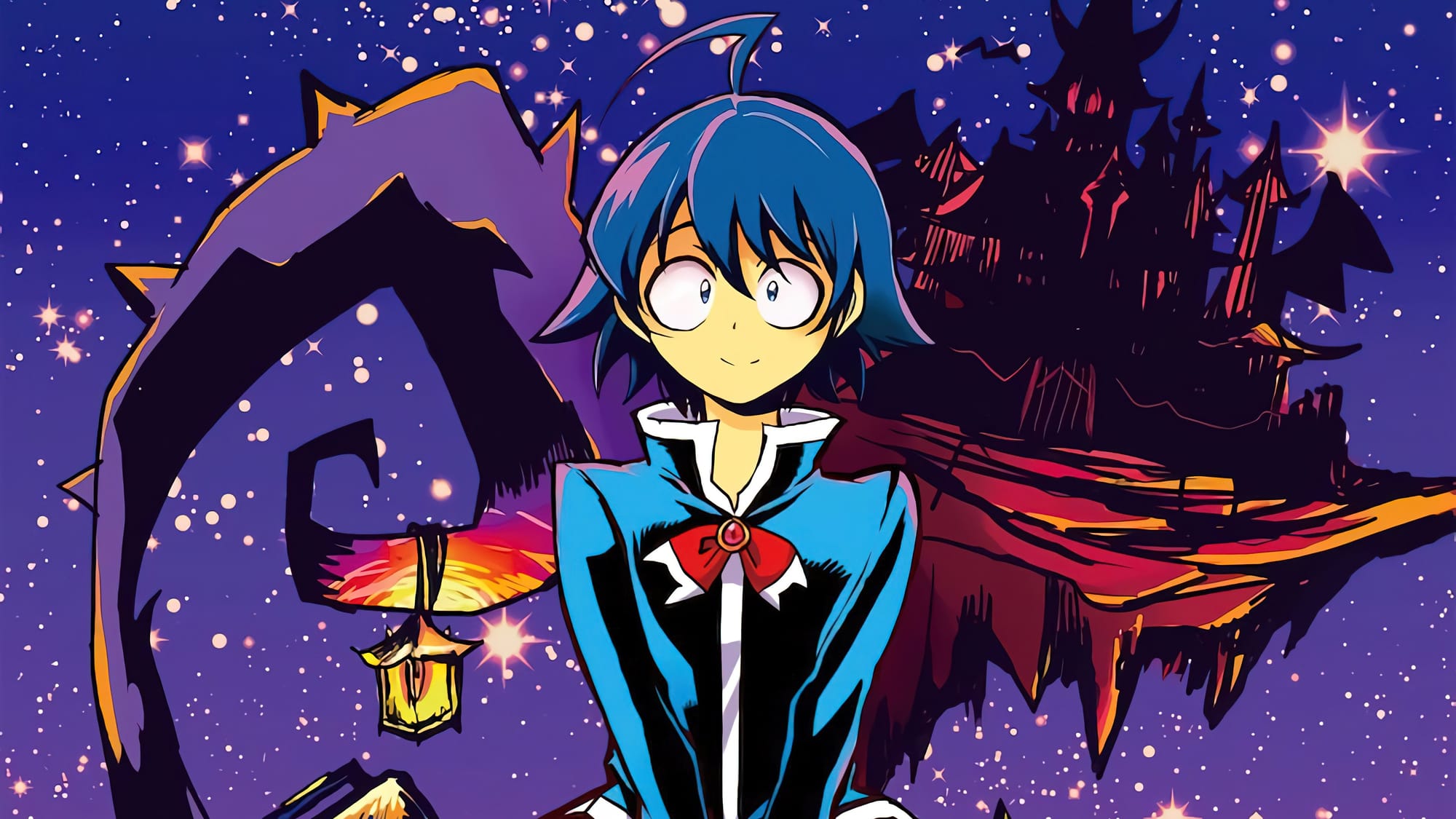
The announcement dropped on October 27, 2026, and the structure of it said more than the press release. Welcome to Demon School! Iruma-kun: IruMafia Edition — an alternate-universe mafia spin-off of one of Weekly Shōnen Champion's most durable franchises — revealed its January 4, 2027 premiere date alongside a main visual, six character visuals, and a production staff whose resume is a statement of intent. Twelve episodes, Monday nights at 11 PM, NHK General TV. The original cast is back. A different studio is producing it. And the entire premise has been stripped of its school, its demons-as-metaphor-for-adolescence architecture, and replaced with organized crime.
 Official trailer
That is not a minor adjustment. It is a genre transplant performed with the familiar faces still attached — and franchises do not attempt that unless they are confident the audience is following a cast, not a concept.
The Source: An "If" Story With Institutional Weight
The spin-off manga, drawn by hiroja and overseen by original series creator Osamu Nishi, began serialization in September 2023 — initially in Bessatsu Shōnen Champion, then transferred to Weekly Shōnen Champion in December 2025. Akita Shoten released its ninth volume on October 7, 2026, days before the anime announcement. The franchise itself is not small: by March 2026, the manga and its spin-offs had over 20 million copies in circulation. A property with that kind of weight does not greenlight a spin-off adaptation without editorial conviction behind the source material.
The premise of IruMafia Edition takes the DNA of the original — Iruma as the congenitally kind boy dropped into a world of power and hierarchy he does not understand — and relocates it entirely. In place of Sullivan the demon patriarch enrolling Iruma in a supernatural school, there is Don Sullivan, head of the Babyl Mafia, who finds an injured stranger cared for by a dirt-poor slum kid and decides that boy should be his grandson and eventual heir. The scaffolding of the relationship is identical. The world around it is not.
That structural preservation is the key creative logic of the project. Nishi has not built a story around Iruma's world — he has built it around Iruma's character. The mafia setting tests that thesis: does Iruma's innate decency read the same way when the stakes are bullets and territory rather than demon rank and magical exams? If the answer is yes, IruMafia Edition works. If not, the concept collapses regardless of how well-voiced the cast is.
The Studio Shift and What It Signals
The four seasons of the main Welcome to Demon School! Iruma-kun series — which ran continuously from October 2019 through September 2026 — were produced by BN Pictures (Bandai Namco Pictures) and aired on NHK Educational TV. IruMafia Edition changes both variables simultaneously. Tatsunoko Production handles animation, and the broadcast home is NHK General TV — the public broadcaster's flagship channel, not its educational arm.
The studio change is the more immediately interesting detail. Tatsunoko Production was founded in October 1962 and built its reputation across decades of original action and comedy properties — Speed Racer, Gatchaman, the Time Bokan franchise, Samurai Pizza Cats. It is one of the oldest continuously operating animation studios in Japan, with a long institutional history of genre versatility. Bringing Tatsunoko in for a mafia-flavored alternate-universe project is not arbitrary: the studio has the kind of tonal range that a show pivoting from school comedy to crime drama requires. BN Pictures was the right fit for four seasons of cheerful demon-school chaos. Tatsunoko Pro is a different instrument for a different register.
The channel upgrade is equally legible as strategy. NHK General TV is Japan's primary public broadcast channel — the home of news, major dramas, Kōhaku, and late-night anime with significantly broader reach than the educational arm. Moving the spin-off there rather than simply continuing on NHK-E is a declaration that IruMafia Edition is not being treated as a supplementary product. It is being positioned as a stand-alone event.
The Cast: Continuity as Creative Strategy
Whatever else changes, the voice cast does not. Ayumu Murase returns as Iruma, Mitsuki Saiga as Opera, Daisuke Ono as Naberius Kalego, Ryohei Kimura as Asmodeus Alice, Ayaka Asai as Valac Clara, and Saori Hayami as Ameri — the same performers who have inhabited these roles across eighty-nine episodes of the main series. Fudeyasu Kazuyuki, who handled series composition for the original, returns in the same capacity here.
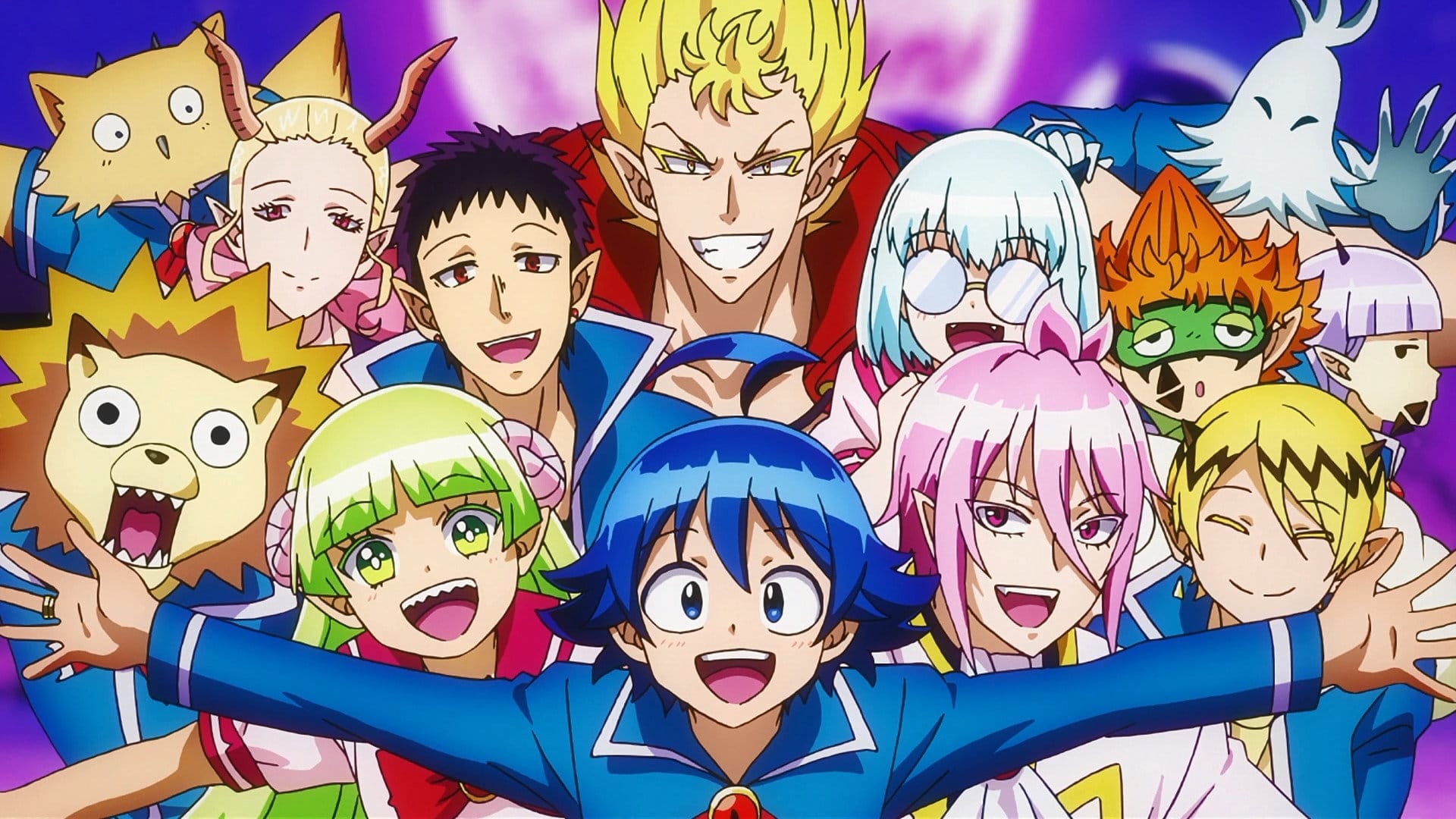
That decision is the clearest signal of what IruMafia Edition is actually selling. The visual redesigns — characters recostumed for a mafia-world aesthetic — are meaningful, but the voices carry the emotional continuity. An audience that spent four seasons learning how Murase inhabits Iruma's particular mixture of anxiety and warmth does not need to rebuild that trust from scratch. The familiar vocal texture is the bridge across the genre gap.
Director Keiichiro Kawaguchi, whose previous credits include Spy Classroom and Classroom for Heroes, brings a sensibility oriented toward ensemble comedies with tonal variety — which is precisely what a show this structurally unusual demands. Character designer Kenji Fujisaki and composer Yayoi Sekimukai round out a staff assembled with evident deliberateness.
The Structural Bet
Franchise spin-offs occupy an awkward middle ground. They need enough familiarity to draw an existing audience and enough distinctiveness to justify their own existence. Too close to the source and they feel redundant; too far and they lose the constituency that made the investment worthwhile. IruMafia Edition has threaded that needle unusually precisely: same characters, same performers, entirely different genre logic.
The mafia genre brings its own grammar — loyalty, hierarchy, violence as currency, the corrupting weight of inherited power. Iruma, as constructed across the main series, is defined by his refusal to be reshaped by the system he has been dropped into. In demon school, that means surviving without ever deploying the cruelty the institution rewards. In the Babyl Mafia, it means something with harder edges. The question IruMafia Edition is structurally positioned to answer is whether a protagonist whose defining trait is gentle subversion can sustain that identity in a world where gentleness is read as liability rather than aberration.
No international streaming platform has been announced as of this writing — a gap that will limit the immediate global conversation but will not prevent one once a platform deal materializes, as it eventually must for a franchise of this scale. The January 4 premiere date places the series as one of the first major anime titles of the Winter 2027 season, a scheduling position that maximizes attention at a moment when competitive clutter is low.
For a franchise that has spent seven years building an audience inside a single genre, IruMafia Edition is the first genuine test of what that audience is actually attached to. The bet is that it is the characters, not the classroom. Twelve episodes to find out.