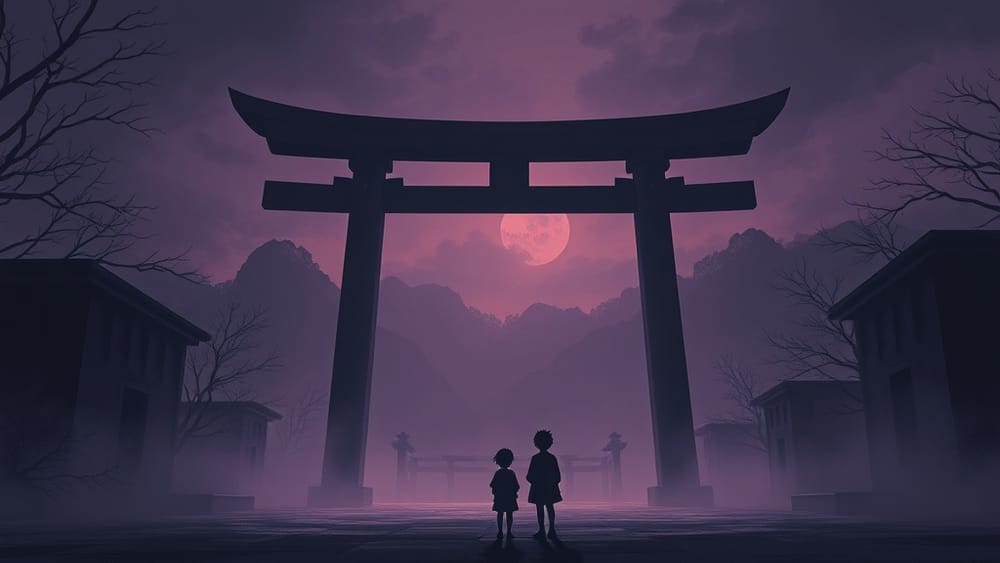
Daemons of the Shadow Realm (Yomi no Tsugai, 2026) debuted on Netflix on July 4, 2026, in the second week of the summer season. Two names on its production credits made that premiere an event before a single frame had aired: Hiromu Arakawa, the architect of one of the most structurally disciplined manga narratives in the medium's history, and Kyoto Animation, the studio whose post-2019 output has been defined by an almost defiant commitment to craft over commerce. The combination raises a question the industry has been circling for years without answering cleanly — can auteur anime maintain its identity inside a distribution model engineered for scale?
Arakawa's Return to Supernatural Action
Arakawa's manga, serialized in Monthly Shōnen Gangan since 2022, occupies familiar thematic territory — siblings, sacrifice, the cost of power — but reconfigures those elements through a mythology rooted in Japanese underworld cosmology rather than the alchemical pseudoscience of Fullmetal Alchemist. The result is a work that feels simultaneously like a homecoming and a refinement. Where her earlier work built its tragedy on systemic failure, Yomi no Tsugai operates at a more intimate register: two children navigating a world where the boundary between the living and the dead is not a metaphor but a measurable, exploitable fact.
That intimacy is precisely what makes the KyoAni pairing logical on paper. The studio built its reputation on emotional granularity — the way light changes across a character's face mid-sentence, the architectural weight of silence in a scene that lesser productions would score into submission. Applied to Arakawa's controlled violence and her characteristic restraint around grief, the match suggests something genuinely rare: a high-budget production where the budget serves the story rather than performing itself.
The Netflix Variable
The complication is the platform. Netflix's relationship with anime has never been neutral. Its simultaneous global release model eliminates the episodic communal rhythm that has historically shaped how audiences process serialized animation — the week between episodes, the collective theorizing, the cultural accumulation that turns a good series into a phenomenon. Daemons of the Shadow Realm drops into a context where the algorithm surfaces it alongside ten competing titles, where completion rates matter more than conversation, and where the pressure to retain subscribers across markets quietly shapes what kinds of pacing and tonal complexity get greenlit in the first place.
KyoAni, to its credit, has never been a studio that bends to external pressure gracefully. Its internal production model — writers, animators, and directors developed almost entirely in-house — creates a cultural insularity that is also a creative defense mechanism. The question is whether that insularity holds when the commissioning entity controls global distribution and owns the data on what audiences skip.
The risk is not that Netflix will make Daemons of the Shadow Realm worse. The risk is that it will make it invisible to the conditions that let difficult anime become essential anime.
What the Summer Season Reveals
Launching in week two of the summer 2026 season is a strategic choice that cuts both ways. The series avoids the oversaturation of premiere week while entering a conversation already in progress — audiences have already sorted their seasonal priorities, and a title with this pedigree arriving slightly off-beat carries the implicit promise of something that doesn't need to compete for attention because it generates its own gravity.
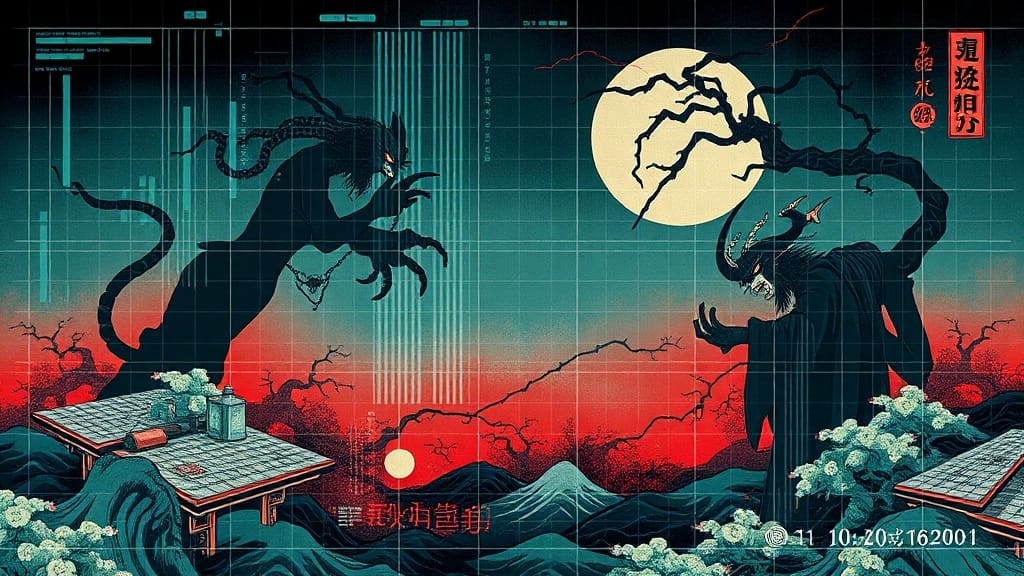
Whether that gravity translates across Netflix's recommendation architecture is a different problem. The platform's interface is not designed for the kind of slow, word-of-mouth canonization that elevated works like Mushishi or early KyoAni titles into reference points. It is designed for immediate engagement, and immediate engagement is not what Arakawa's manga rewards. Her pacing is accumulative, built on details that pay off chapters later, on emotional beats that require the reader to hold contradictory information simultaneously. That is, historically, exactly the kind of storytelling that streaming metrics punish.
The Broader Stakes
The debut of Daemons of the Shadow Realm is not just a premiere — it is a test case for whether the economic logic of global streaming and the creative logic of auteur animation can produce something neither would generate alone. The optimistic reading: Netflix's resources give KyoAni the runway to execute Arakawa's vision at a scale the traditional broadcast model would never have funded. The pessimistic reading: that runway comes with invisible fences, and the most interesting creative decisions will be the ones made in the gaps between what the contract specifies and what the algorithm rewards.
Arakawa has never written a story that resolves cleanly. It would be fitting if the conditions surrounding this adaptation didn't either.