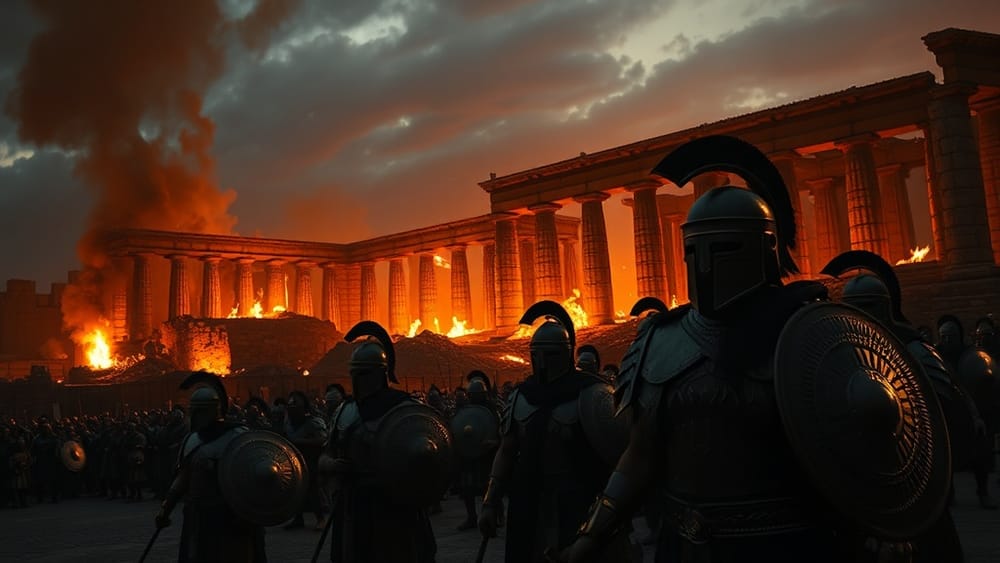
On July 17, 2026, Christopher Nolan will release The Odyssey — not an adaptation of Homer's Odyssey, but of the Iliad. The distinction matters more than the marketing might suggest. Where the Odyssey is a story of return, cunning, and survival, the Iliad is something colder and less forgiving: a decade of war compressed into weeks, governed not by intelligence but by wrath, pride, and the indifference of gods. It is the foundational text of Western literature precisely because it offers no redemption arc. Men die beautifully and pointlessly. The gods meddle without consequence. Troy falls, and no one emerges clean.
Nolan has spent his career engineering films around the mechanics of revelation — the hidden structure that reframes everything once exposed. Memento (2000), El truco final (The Prestige, 2006), Interestelar (Interstellar, 2014), Tenet (2020): his greatest sequences derive their power from the gap between what the audience knows and what the characters do not. Homer's Iliad grants him none of that. Every educated viewer in the theater will know that Achilles kills Hector, that Patroclus dies first, that the war ends with a horse no one in the poem sees. The suspense Nolan has historically weaponized is simply unavailable here.
What the text demands instead is something harder to manufacture: moral gravity. The Iliad does not ask whether Achilles will win. It asks whether his rage is worth what it costs — and then answers that question without consolation. That is not a puzzle to be solved in the third act. It is a condition to be sustained across every frame.
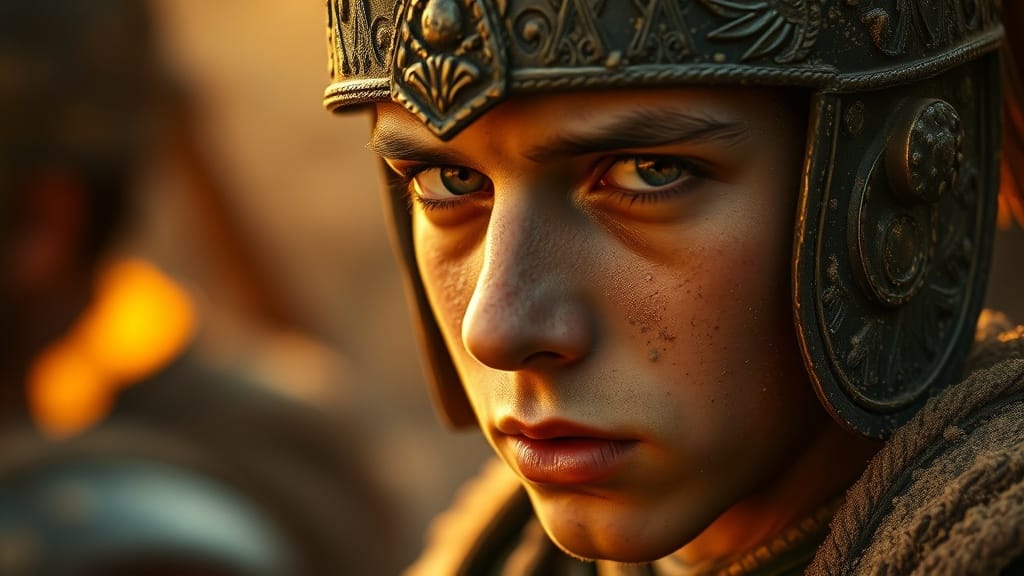
The Cast as Argument
The casting of Matt Damon, Tom Holland, Zendaya, and Anne Hathaway reads, at first glance, like a prestige-blockbuster calculation. But examined against the text, the choices carry a logic that goes beyond marketability. If Holland plays Patroclus — young, loyal, destroyed by a war that was never truly his — his established screen persona as a figure of earnest vulnerability works not against the role but into it. The tragedy of Patroclus in Homer is precisely that he is the most human figure in a poem full of demigods and their grievances. Holland's presence would anchor that humanity without requiring it to be explained.
Damon as Achilles is the more provocative proposition. Achilles is not a complicated character in the modern psychological sense — he is an absolute one. His grief, his fury, and his ultimate act of grace toward Priam are not developments; they are expressions of a single, terrible consistency. Damon's particular gift — the ability to project competence and interior restraint simultaneously — may serve that absoluteness better than a more overtly theatrical performer would.
Zendaya and Hathaway occupy a structural problem the film will have to solve honestly. Women in the Iliad are, with rare exceptions, objects of transaction: causes of war, prizes of battle, witnesses to grief. Any attempt to modernize their agency without distorting the text's moral universe risks producing exactly the kind of comfortable revision that drains an epic of its discomfort. How Nolan navigates that tension will say more about his intentions than any battle sequence.
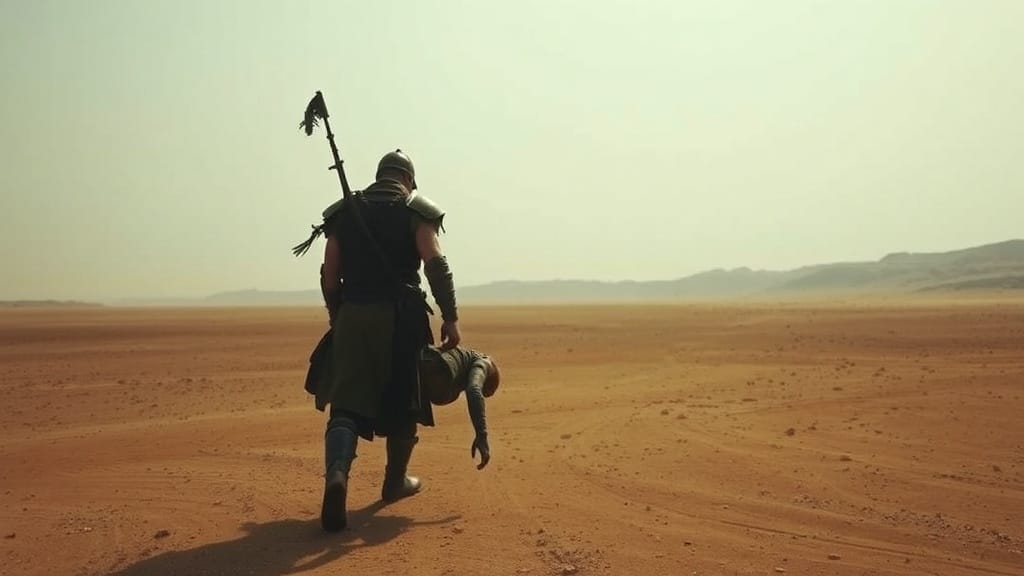
IMAX and the Scale of Grief
Nolan's commitment to shooting on IMAX is, at this point, a signature rather than a novelty. The format rewards the extraordinary — alien planets, time-dilated oceans, the curvature of space. Whether it can render the intimate brutality of Homeric combat — the aristeia, the stripping of armor from a fallen enemy, the moment Achilles drags Hector's body around the walls of Troy — is a genuinely open question. IMAX has proven it can make the sublime feel large. The Iliad asks it to make grief feel heavy.
That is the central wager of this film. Nolan has built a career on the architecture of time and knowledge. Homer built a poem on the architecture of consequence and loss. The overlap between those two modes is not zero, but it is narrower than a summer release strategy would prefer. The Iliad has survived three thousand years without needing a director. What it needs from Nolan is not spectacle — it has always generated its own — but a willingness to let moral weight do what narrative suspense cannot.
The Trojans lose. Hector dies. Achilles will follow. None of that is a spoiler. All of it is the point. Whether Nolan understands the difference will determine whether The Odyssey is a monument or merely a very expensive echo.