On July 25, 2026, Hulu and Disney+ will stream the opening episode of Bleach: La Guerra de los Mil Años – La Calamidad (Bleach: Thousand-Year Blood War – The Calamity, 2026), the fourth and final cour of the adaptation that Studio Pierrot has been building, methodically and expensively, since October 2022. The fan conversation has already narrowed to two fixed points: Kisuke Urahara's Bankai and Ichigo Kurosaki's final confrontation with Yhwach. Both are correct targets. Both are symptoms of a larger structural problem that no amount of animation budget can fully dissolve.
What the Adaptation Has Actually Proven So Far
The model Pierrot chose for Thousand-Year Blood War was a direct rebuke of the original series' filler economy. Each cour drops in discrete bursts, faithful to the manga's panel grammar, scored by Shiro Sagisu with the kind of orchestral weight that makes the original run sound like a rehearsal. The results through Part 3 have been uneven in precisely the places the source material was uneven, which is itself an argument. When the manga was precise — the Sternritter introductions, the massacre of the Gotei 13 captains, Yhwach's absolute authority as a villain — the adaptation elevated it. When the manga was vague or rushed, the animation gave it texture without giving it logic.
That distinction matters enormously as Part 4 arrives, because The Calamity adapts the chapters where Tite Kubo was visibly running out of time. The editorial pressure on the final arc of Bleach in Weekly Shōnen Jump is well-documented. What is less discussed is how much the adaptation's task changes when the source is structurally incomplete rather than merely imperfect. Pierrot can redraw. It can extend. It cannot retroactively install dramatic causality where none was written.
Urahara's Bankai: A Promise the Manga Broke on Purpose
Urahara's Bankai is, within Bleach's internal mythology, one of its most deliberate deferred revelations. Kubo withheld it across the entirety of the Arrancar arc, through the Fullbring arc, into the Quincy war — building anticipation as a structural device. When it finally appeared in the manga, it arrived in the wrong chapter at the wrong speed, its visual logic compressed into a sequence that fans spent years parsing in forum threads trying to reconstruct what had actually happened.
The adaptation's opportunity here is surgical: slow the sequence, let Sagisu's score breathe, let the frame composition make the argument that the panels couldn't. Leaks and production stills circulating since late 2025 suggest Pierrot has done exactly this. If so, Urahara's Bankai becomes the clearest case study for what the Thousand-Year Blood War project was always really about — not nostalgia, but rehabilitation. The question is whether a corrected execution can retroactively feel earned, or whether it will always carry the asterisk of intervention.
The Ichigo-Yhwach Problem Has No Clean Solution
The final battle between Ichigo and Yhwach is a harder case, and the fan debate circling it before Part 4's premiere is largely ignoring why. The problem is not choreographic. It is not even pacing. The problem is that Yhwach, as written, is a villain whose power set makes dramatic climax structurally impossible. His ability — the Almighty, which rewrites futures — functions as a narrative immune system. Any satisfying resolution requires the story to cheat against its own rules, which is precisely what the manga did, and which is precisely what the adaptation will have to do again, more elegantly.
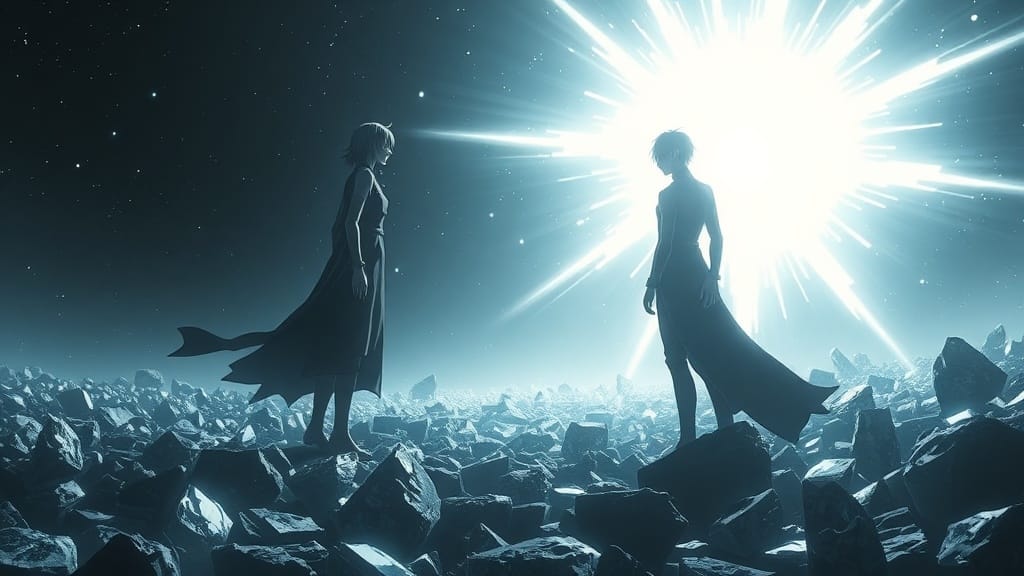
The mechanism of Yhwach's defeat in the manga — Aizen's Kyōka Suigetsu buying a moment, Ishida's silver arrow, the resurrection of a dead Ichigo — reads as a sequence of emergency exits rather than a constructed ending. Pierrot can make those exits look better. It cannot make them feel inevitable. The adaptation's fidelity, its greatest strength through three cours, becomes its constraint in the finale: you cannot be faithful to a resolution that was improvised and also make it feel designed.
What a Verdict Actually Looks Like
The real question Part 4 will answer is not whether Bleach ends well. It is whether the adaptation model — expensive, episodic, reverential, cours-based — can function as genuine critical revision rather than premium reproduction. The evidence through Part 3 suggests it can improve execution at the scene level while remaining bound by the architecture of the source. That is a meaningful achievement. It is also a ceiling.
The Calamity will almost certainly be the best version of this ending that exists or can exist. Whether the best version of a flawed ending constitutes redemption is the conversation that will outlast the finale itself — and it is a more interesting conversation than whether Urahara looks cool, which he will, because he always does.
The adaptation can rehabilitate a scene. It cannot reconstruct a philosophy. Bleach's finale was always going to be judged on what Kubo decided to mean, and Pierrot has no jurisdiction over that.