Batman: Bad Seeds – Sunrise #1 (2026) arrives with a structural problem baked in before its first panel. The event was announced early in 2026 as a single, compressed nightmare — one night in Gotham, ten weeks of comics, 23 issues sprawling across Batman, Poison Ivy, Detective Comics, Batgirl, Batwoman, Catwoman, Nightwing, and Harley Quinn, plus event-exclusive one-shots. The promise was unity of purpose across a fractured city. The finale's job was to cash that promise. It does so imperfectly, and the critical conversation that has followed its October 28 release is, in its own way, more revealing than the issue itself.
The premise that powered Bad Seeds from its August 26 opener was elegantly simple: Poison Ivy, serving as Gotham's mayor, unleashes prehistoric plant life across the city, and the Bat-Family — already hunted by a militarized GCPD under Police Commissioner Vandal Savage — must survive one long, catastrophic night. The event ran from August 26 through October 28, 2026, with Matt Fraction and G. Willow Wilson steering the core narrative while the satellite titles documented the crisis street by street. The creative architecture was ambitious. The execution, issue by issue, was uneven in the way that all ten-week crossovers inevitably are. Sunrise #1 is the moment where that unevenness either resolves into something coherent or crystallizes into a complaint.
It lands somewhere between those two outcomes — closer to resolution, but haunted by the structural question it can't fully answer.
The Shape of the Finale
Sunrise #1 opens with a rapid panel-by-panel accounting of where every major character from the tie-in issues stands at the close of the night — a pragmatic move that acknowledges the event's sprawl without pretending it has been seamlessly integrated. From there, the issue narrows its focus sharply. The finale centers almost entirely on Vandal Savage versus Poison Ivy, with Batman attempting to prevent either from killing the other. The prehistoric plant threat — the event's ostensible main crisis — has already been resolved a week earlier, in Detective Comics #1114's cold-blast climax. That displacement is both honest and deflating: the book admits, by its own architecture, that the spectacle of Bad Seeds was never really the point.
What Sunrise #1 is actually about is power and its aftermath. Savage, throughout the event, commanded a militarized GCPD and used the crisis as cover for his own agenda. Sunrise #1 raises some unanswered questions, but for the most part the extra-sized finale provides some thrills and emotion combined with gorgeous art. Ivy, for her part, arrives at the finale in a state of surrender — determined to die, according to multiple reviewers — while Savage is determined to ensure she does. Batman, characteristically, refuses both outcomes. What makes the triangle work emotionally, if not structurally, is how fully each figure is defined by their relationship to consequence. Ivy unleashed the catastrophe and owns it. Savage exploited it and wants to own the aftermath. Batman, as ever, is the one who absorbs the cost of stopping them both.
Camuncoli and the Weight of a City
If there is a point of genuine consensus across the critical response, it is Giuseppe Camuncoli's artwork. Camuncoli and Tomeu Morey effectively capture a city struggling to survive, and the physical confrontation between Savage and Ivy — and then between Savage and Batman — is rendered with a visceral economy that the writing occasionally can't match. Camuncoli is, by any measure, an exceptional draftsman of mania. The rage in Savage's physicality — the clenched-fist brutality, the unhinged momentum — communicates character in ways that dialogue is not always asked to supply here.
Cliff Rathburn's inks give the pages a weight appropriate to the stakes. Morey's colors shift register as the sun comes up, moving from the bruised purples and invasive greens that have defined the event's nocturnal palette toward something rawer and colder. The city at dawn looks spent. That visual grammar is doing real narrative work: Bad Seeds was always a story about survival, not triumph, and Camuncoli's Gotham looks like a place that survived rather than a place that won.
The Vandal Savage Problem
The contested centre of the critical conversation is whether Vandal Savage earns his position as the finale's true antagonist — and whether making him the event's real conclusion rather than its secondary threat retroactively reframes Bad Seeds in ways that don't entirely hold up.
Fraction and Wilson deliver a very unexpected ending that makes the event's necessity questionable, according to Comic Watch's review. The logic of that criticism is worth sitting with: if the resolution to a ten-week Gotham-wide plant apocalypse is ultimately a political power play by a centuries-old immortal warlord acting as police commissioner, then the question of what those ten weeks were actually building toward becomes genuinely complicated. The plants were the crisis. Savage was the context. The finale makes Savage the conclusion — and that inversion, whether intentional or structural drift, is not one the event fully prepared its readers for.
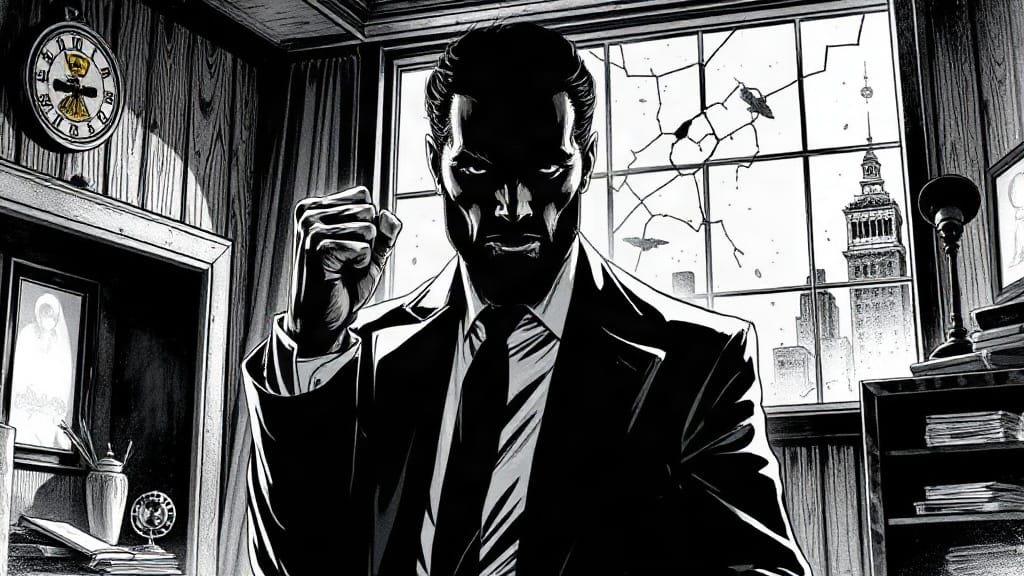
There is a counter-argument available, and some reviewers have reached for it. The main threat of the event, the prehistoric plants, got wrapped up last week, so here we deal with Batman and Ivy facing down Vandal Savage, who was the secondary antagonist throughout the rest of the event — and as ComicsXF's coverage acknowledges, the question of whether readers should have been treating Savage as the real threat all along is one that the finale forces without cleanly resolving. His behavior across the event's ten weeks was "somewhat unhinged," and there are callbacks to Batman: Bad Seeds – Streets of Gotham #1 that retroactively lend his arc more coherence than it appeared to have in the moment. But retroactive coherence is not the same as foreshadowing, and the distinction matters in a crossover event where readers are asked to invest week after week on the basis of an implied promise about where things are going.
What makes the Savage problem interesting rather than merely frustrating is what it reveals about the event's thematic priorities. The final battle between Batman, Poison Ivy and Vandal Savage is waged for the future of Gotham City, and it looks like there might be a few local government positions to fill after all is said and done. That's the real subject of Bad Seeds: not the botanical horror, but the question of who governs Gotham and at what cost. Ivy as mayor, Savage as commissioner, Batman as the city's reluctant conscience — these are political positions as much as narrative roles. The finale makes that argument explicitly, in its final pages, setting up new status quos across the Gotham-centric titles. Whether that feels like earned world-building or convenient housekeeping depends on how much you trusted the ten weeks that preceded it.
A Conclusion That Earns Its Emotion
Strip away the structural complaints and what remains is a finale that works as drama more often than it falters. The confrontation between Savage and Ivy has a genuine ferocity to it. Batman's insistence on keeping everyone alive, despite exhaustion and injury, reads as character rather than plot contrivance. The ending, widely flagged as surprising, lands with genuine force even where its setup feels compressed. Batman: Bad Seeds – Sunrise #1 delivers a largely satisfying conclusion to DC's Gotham-wide event, even if a few convenient plot developments undermine its biggest moments.
The 44-page oversize format — priced at $5.99 — gives Fraction and Wilson room to breathe in ways that the weekly installments sometimes didn't allow. The opening sequence, scanning the city and its survivors, has a quiet dignity to it. The closing pages, which reset the Gotham status quo with deliberate ambiguity, suggest that Fraction and Wilson are thinking past the event rather than merely concluding it. That's worth something. Events that arrive with a clear sense of what comes next are rarer than they should be.
Bad Seeds as a whole was — by design and by execution — the kind of crossover that rewards investment in its satellite titles while functioning as a coherent story for readers who only followed the core. That's a difficult balance. The main event ran for ten weeks, from August 26 through October 28, 2026, and across that span it documented a Gotham under genuine siege: infrastructure failed, communities fractured, the Bat-Family was hunted, and ordinary people bore the weight of extraordinary circumstances. Sunrise #1 honors that accumulation even while resolving it in ways some readers will find debatable.
Debate, in this case, is a sign that something real was at stake. The Vandal Savage question will linger. But the emotion of the finale — and Camuncoli's definitive work across its pages — is harder to dismiss. This is an event that aimed for something and mostly found it, even if the map it drew didn't always match the territory. For a ten-week Gotham siege written across more than twenty titles, that is not a verdict to be ashamed of. For fans tracking DC's current Batman era, this marks a genuine transition point, much as the Absolute Batman line has been staking its own claim to what Gotham means in 2026. The question of who holds that city — who governs it, who protects it, who defines it — is increasingly where DC's most interesting work lives, and Bad Seeds, contested finale and all, is a significant chapter in that ongoing argument.