Absolute Wonder Woman (2024) #25 ships Wednesday, October 28, and the thing it has been withholding since issue one finally arrives: Barbara Minerva as Absolute Cheetah. That sentence alone does not capture what makes the debut structurally different from the ordinary villain-reveal that fills out a back half of a first arc. Thompson and Sherman have spent two years engineering the conditions under which this transformation could land as event rather than plot point — and the distance between those two things is the only question worth asking about issue #25.
The groundwork is not incidental. Absolute Wonder Woman #3 introduced Barbara Minerva into this continuity, placing her in the orbit of a Diana who was raised in the Underworld rather than on Themyscira. The series built her methodically through subsequent arcs — through "Season of the Witch," through crossovers with the Absolute Batman line — before issue #21 showed the aftermath of the death of the original Absolute Cheetah and the imprisonment of Barbara herself. Issue #17 established that the prior Absolute Cheetah, Priscilla Rich, was a distinct entity — murdered, like her mainstream counterpart, by a successor. That lineage of violence runs underneath Barbara's story, which means her transformation in issue #25 arrives already blood-soaked in context.
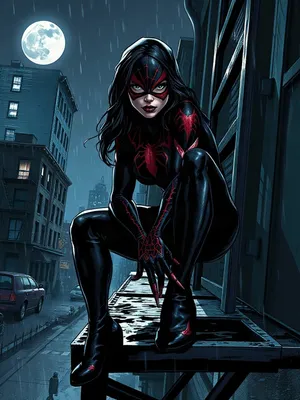
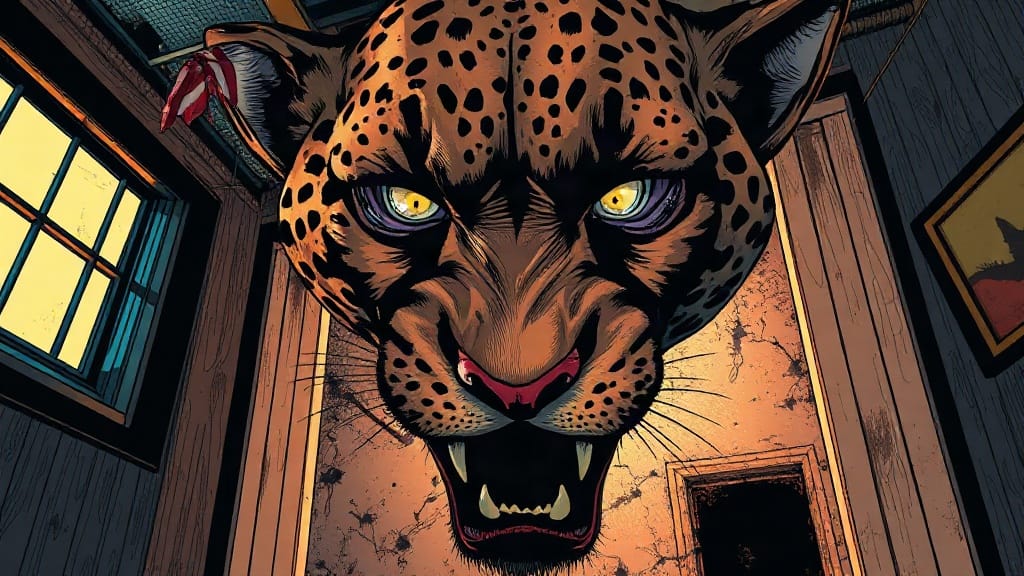
What Sherman has designed for the Absolute Cheetah is the visual argument that makes the issue impossible to dismiss. The design leans entirely into body horror — skin stretched and twisted into the silhouette of a cheetah, Barbara's human face still visible somewhere inside the distortion. That is a specific choice, and it separates this version from virtually every prior iteration of the character. The mainline Barbara Minerva, who debuted in Wonder Woman Vol. 2 #7 (1987), became Cheetah through a ritual that granted her a clean, mythological predator's form. The Absolute version refuses the clean line between human and beast. The horror is that Barbara is still in there. Thompson confirmed in DC's preview material that the transformation will be "not quite what anyone expected — which is the only way Barbara Minerva would have it." That framing is not just a teaser line; it is a thesis. The character's will is embedded in the form of her undoing.
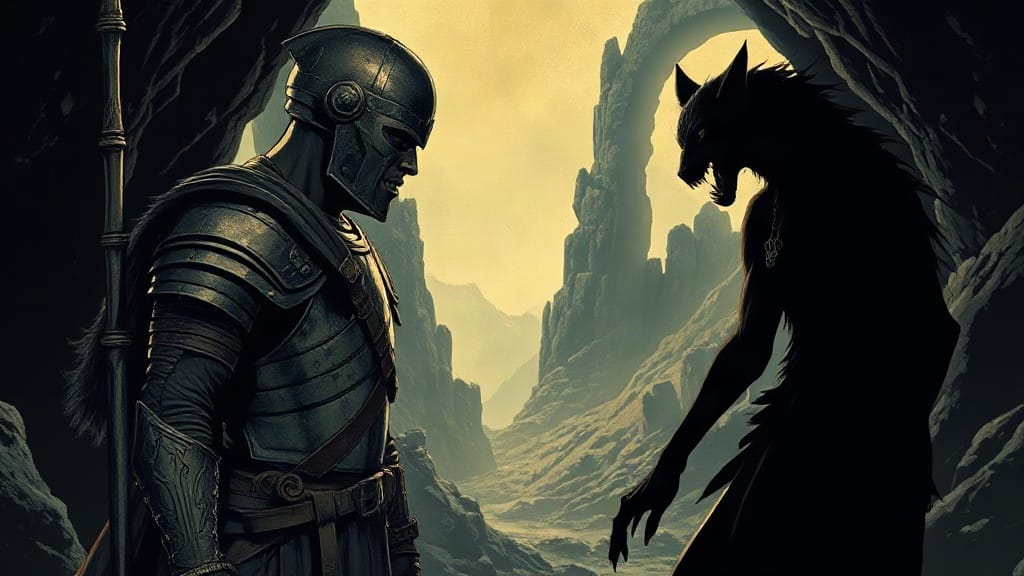
The issue carries additional structural weight because it arrives as part of the "Heretic" arc — Absolute Wonder Woman #25 is "Part 3" of that storyline — and because it is oversized, priced at $5.99 for thirty pages on the standard edition and $6.99 for the connecting cardstock variants. Those production decisions signal that DC regards this as a formal milestone, not a between-arc filler chapter. The Heretic arc has been positioning itself as the inflection point where Diana's search for Barbara concludes in what the publisher's own copy describes as "a bloody end." That language is blunt by design. The series has never been precious about violence or consequence, which is part of why the accumulated weight of Barbara's arc reads as earned payoff rather than manufactured spectacle.
The creative team carries considerable authority into this issue. Absolute Wonder Woman won the Eisner Award for Best New Series at SDCC 2025, with colorist Jordie Bellaire simultaneously taking Best Coloring — two awards for the same book, a result that reflects how legibly unified the series' visual language has been across its first year. Kelly Thompson also won Best Writer at those same Eisners, in part on the strength of this run. Sherman was nominated for Best Cover Artist. That recognition matters here because it creates an expectation the team is now required to justify with a milestone issue. Award season goodwill is a two-edged thing: it raises the stakes on every subsequent chapter.
The collector market is watching closely, though cautiously. Key Collector Comics designates issue #25 as "Introduction of Cheetah to the Absolute Universe — although Barbara Minerva appeared earlier, this is her first appearance as Cheetah." That caveat — the "although" — is exactly the kind of nuance the speculator market tends to flatten. Barbara's prior appearances are not throwaway cameos; she has been a primary cast member. But in the grammar of key-issue collecting, the costumed debut supersedes the human appearances that preceded it, which is how the market will categorize this issue regardless of how attentively the series built toward it. Whether that translates to sustained secondary-market interest depends entirely on whether the Absolute Universe proves durable enough to generate genuine scarcity — a question the series' first-print numbers will answer over the coming months.
That durability question sits beneath everything the Absolute line is doing at the twenty-five issue mark. This is not the first time the initiative has reached a milestone chapter — as examined in our analysis of Absolute Batman #25, the twenty-fifth issue becomes a test of whether a universe built on reinterpretation can generate its own mythology rather than simply borrowing momentum from the originals it reimagines. Absolute Batman faced that test with the weight of Scott Snyder and Nick Dragotta's accumulated worldbuilding behind it. Absolute Wonder Woman faces the same test with something slightly different: a protagonist who was already being reimagined more radically than any of her contemporaries in the line.
DC's broader Wonder Woman publishing agenda over the past twelve months has been expansive, which gives Thompson's version additional competitive context. There are multiple interpretations of Diana in print simultaneously. That could dilute the Absolute version's cultural distinctiveness, or it could sharpen it — a Diana raised in Hell, armed with a Nemesis Lasso rather than a Lasso of Truth, surrounded by horror-register villains, reads as genuinely distinct from what the mainline titles are doing. The Absolute Cheetah's body-horror design is the clearest proof of that distinction yet.
The debut itself is only as meaningful as the issue that contains it. Thompson's structural restraint across twenty-four chapters — resisting the transformation, deferring it, letting Barbara exist as a human threat for issue after issue — is the thing that makes issue #25 worth reading rather than simply worth owning. Cheetah has existed in the DC canon since Wonder Woman #6 (1943), and Barbara Minerva has been the definitive version of that character since 1987. What Thompson and Sherman are offering is not a legacy character repainted in darker tones. It is something more specific: a transformation that retains the human being inside the monster, visible and legible, which means the horror and the tragedy are the same thing at the same time. That is a harder trick than a first appearance. Whether they have pulled it off is the only reason to open the book on Wednesday.