The name is gone. The studio that spent twenty-one years building Forza Motorsport into Xbox's prestige sim-racing franchise — the team responsible for eight entries across four console generations — no longer exists as a legal or organisational entity. Turn 10 Studios has been officially folded into Playground Games and renamed Playground Games Redmond, completing a merger announced in September as part of Microsoft's continuing restructure of Xbox Game Studios. And on the same day that news became structural fact, the man who built it all — Dan Greenawalt, VP and studio head — announced his retirement after 27 years at Microsoft. The timing is not a coincidence. It is a conclusion.
 Gameplay
A Studio Built on Borrowed Purpose
Turn 10's origin story doubles as Microsoft's first serious ambition in gaming. The studio was established in 2001 by Microsoft to develop a racing series for the original Xbox — conceived explicitly as the platform's answer to Sony's Gran Turismo dominance on PlayStation. Greenawalt was there from the very beginning. He helped ship the original Xbox title Project Gotham Racing (2001) before leading the creation of Forza, founding Turn 10 Studios, and publishing eight racing games over the following two decades. The first Forza Motorsport arrived on May 3, 2005, and for the better part of fifteen years the franchise released on a reliable biennial cadence — Motorsport 2, 3, 4, 5, 6, 7, and then, after a four-year gap for development, the 2023 reboot that would turn out to be the last.
That cadence was the product of a studio with singular focus. Turn 10 did not make open-world sandbox racers or lifestyle games. It made circuit simulations: technically demanding, car-culture obsessed, and unapologetically nerdy about tyre physics and manufacturer licensing. When Playground Games was spun up in 2010 and pitched the concept of an open-world Forza at E3 2010, Turn 10 agreed to provide resources and the ForzaTech engine in exchange for the branch. The result — Forza Horizon (2012) — eventually became the more commercially dominant of the two franchises. That arrangement, where Turn 10 powered both series while maintaining its own identity, held for over a decade. What it disguised was a slow subordination.
How a Studio Dies in Stages
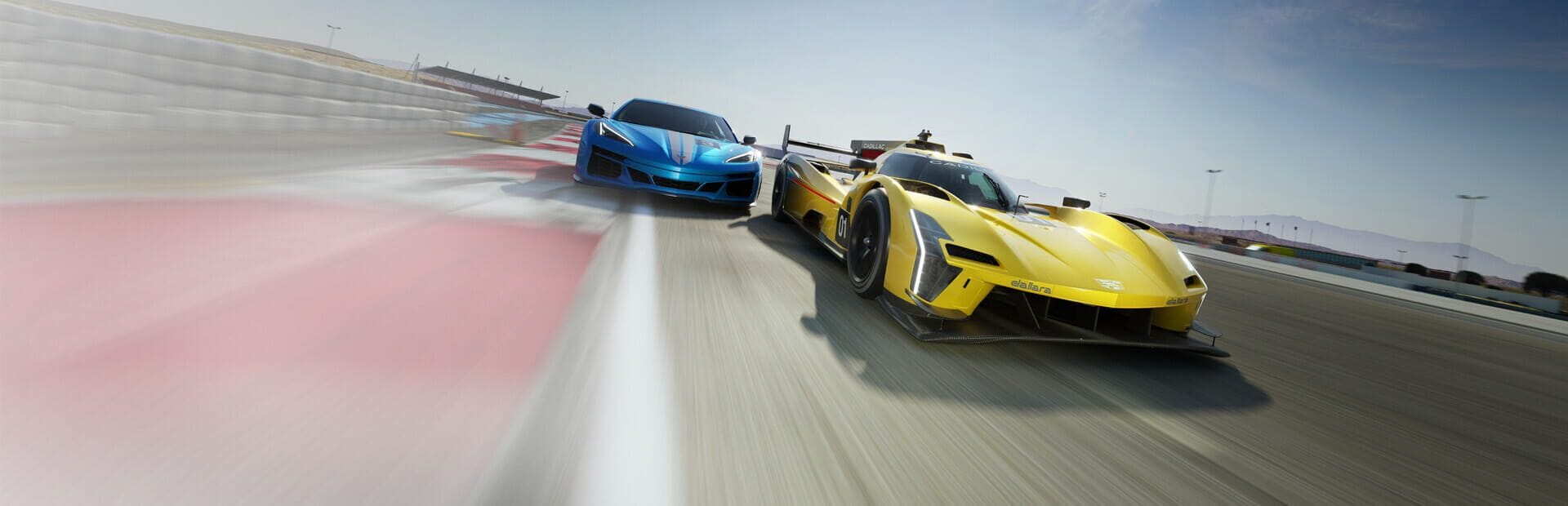
The end of Turn 10 as a meaningful independent entity did not happen overnight. It happened in three clearly legible steps. The first was the 2023 reboot — a game that, by most accounts, failed to make waves despite years of development and ambitious promises about it being an "evolving racing platform." The second step was July 2025, when Microsoft's sweeping 9,000-job reduction hit Turn 10 particularly hard. More than 70 employees — nearly half the studio's workforce — were laid off in a single round of cuts. What remained was not enough to build a new Motorsport title. It was barely enough to maintain the one that already existed.
The third step arrived in December 2025, when Turn 10 published a blog post confirming that Forza Motorsport (2023) would receive no further content updates, though its servers would remain active. The studio simultaneously announced it was shifting full attention to supporting Forza Horizon 6 (2026), which Playground Games was building. The sim-racing team had become a support contractor for the open-world franchise it had originally bankrolled. In September 2026, the pretense of independence ended. Microsoft announced the merger. This week, the renaming made it official.
What the Memo Says — and What It Doesn't
The internal memo, obtained by The Verge's Tom Warren and shared by Playground Games studio head Trevor Williams, is professionally warm and institutionally vacant. Williams confirmed that Greenawalt "has decided that this is the right time for him to retire from Microsoft," and acknowledged that it is "hard to overstate Dan's impact over the past 27 years." The memo credits him for Project Gotham Racing, for founding Turn 10, for the Forza legacy, for the E3 appearances — usually with a supercar in tow, Williams notes, in the kind of detail that reads as fond but also as a eulogy for a particular era of Xbox showmanship that no longer exists.
What the memo does not say is what happens to Forza Motorsport as a franchise. It does not announce a new entry. It does not confirm the series is dead. The remaining Turn 10 team is now working on Forza Horizon and Fable — neither of which is a circuit sim. Greenawalt himself will serve temporarily as an adviser to the new Playground Games COO, Michel Bastien, before formally departing. That transition window is the only acknowledgement that something technically requires handover. The absence of any language around Motorsport's future is, at this point, the most honest thing Microsoft could have said.
The Structural Logic of a Burial
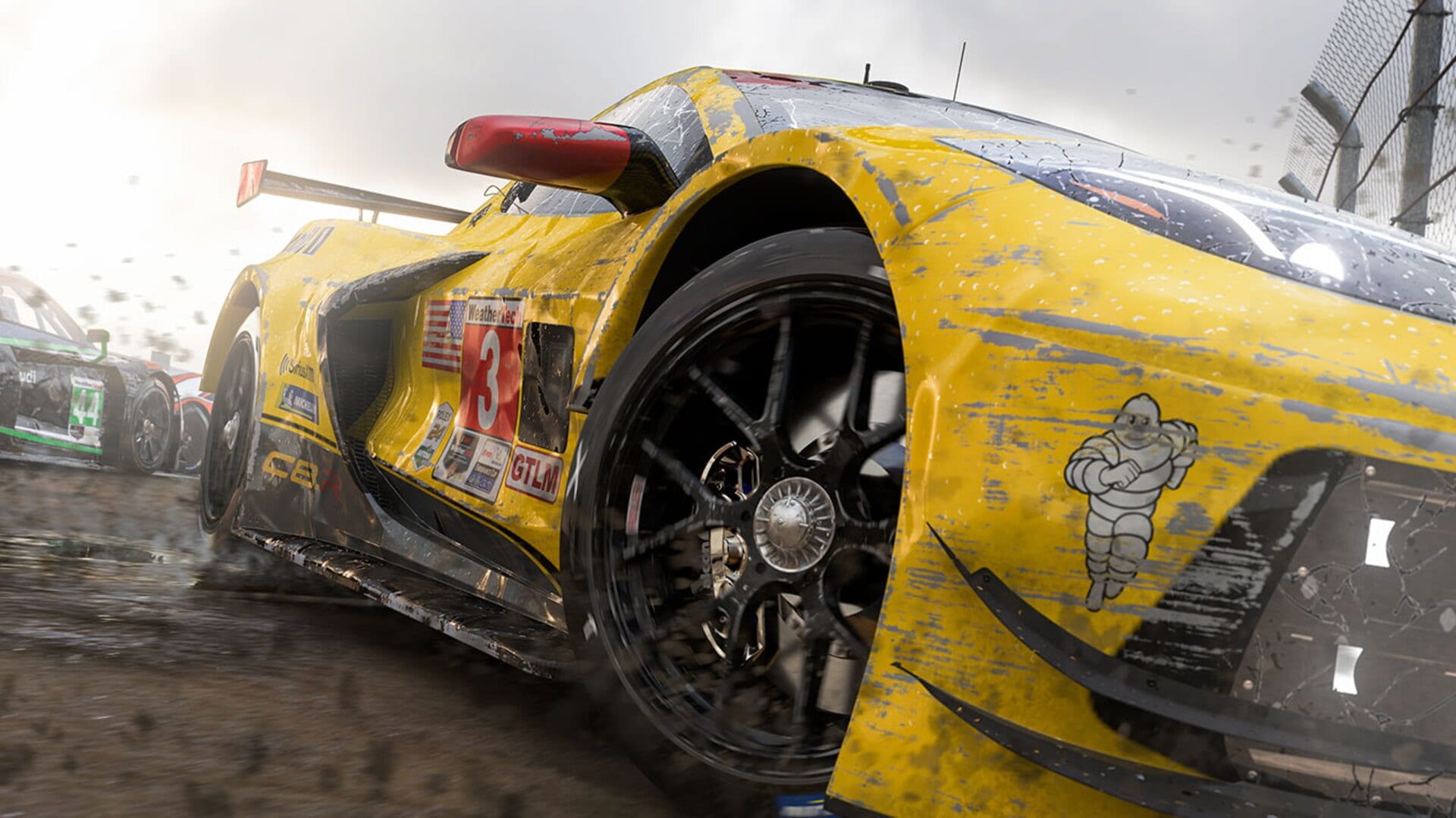
Microsoft has not announced that Forza Motorsport is discontinued. It has, instead, ensured that no studio exists to make it. That is a meaningful distinction in corporate communications and a meaningless one in practice. Turn 10 as an independent entity — the developer that shipped every Forza Motorsport since the original in 2005 — no longer exists. The combined Playground Games Redmond is, by stated mandate, focused on Forza Horizon and Fable. A full-scale Motorsport follow-up, if it were ever to happen, would need to be resourced from scratch inside a studio whose current priorities lie elsewhere entirely.
The ForzaTech engine — Turn 10's most durable legacy — survives. It has underpinned every Horizon game since the series began in 2012, and it also powers Playground's upcoming Fable. The technology outlasts the studio that built it, which is perhaps the most accurate summary of what corporate absorption looks like in practice: the infrastructure persists, the identity dissolves. In that sense, Turn 10 succeeded well enough to make itself redundant. It built tools good enough that Playground Games could use them without the original builders in the room.
Greenawalt's retirement is the final signal, not the cause. Studios die when their mandates are stripped and their headcounts are halved. The man leaving is simply the last visible thread connecting the franchise to its founding logic. Xbox's Helen Chiang departure earlier this year — another high-profile Xbox exit with a memo that said almost nothing — fits the same pattern: leadership departures that confirm restructuring already completed rather than triggering it. The reorganisation happens first. The announcements arrive as epilogue.
What Remains
What Playground Games Redmond inherits is a legacy, a set of tools, a headcount depleted by two years of attrition, and the goodwill of a fanbase that has not been given much reason for optimism. Forza Horizon 6 (2026) is the franchise's current centre of gravity — an open-world racer set in Japan that benefited from Turn 10's input during development, particularly in car detail and simulation mechanics. It is a better game for the collaboration. It is also proof that Microsoft has already decided which kind of Forza matters commercially going forward.
The circuit sim has no champion left inside the building. Whether that is a loss depends on how much you believe dedicated studio identity drives creative output — whether you think Forza Motorsport needed Turn 10 specifically, or merely needed someone to care about sim racing with institutional resources behind them. The evidence of the last three years suggests the former. Without the studio, without its founding director, and without a single publicly acknowledged development plan, Xbox's track-racing era is over in all but the fine print of a franchise trademark that nobody is actively working to redeem. This is what it looks like when something ends without anyone saying so. The supercar drives off stage. Nobody announces the show is over. The lights just go down.