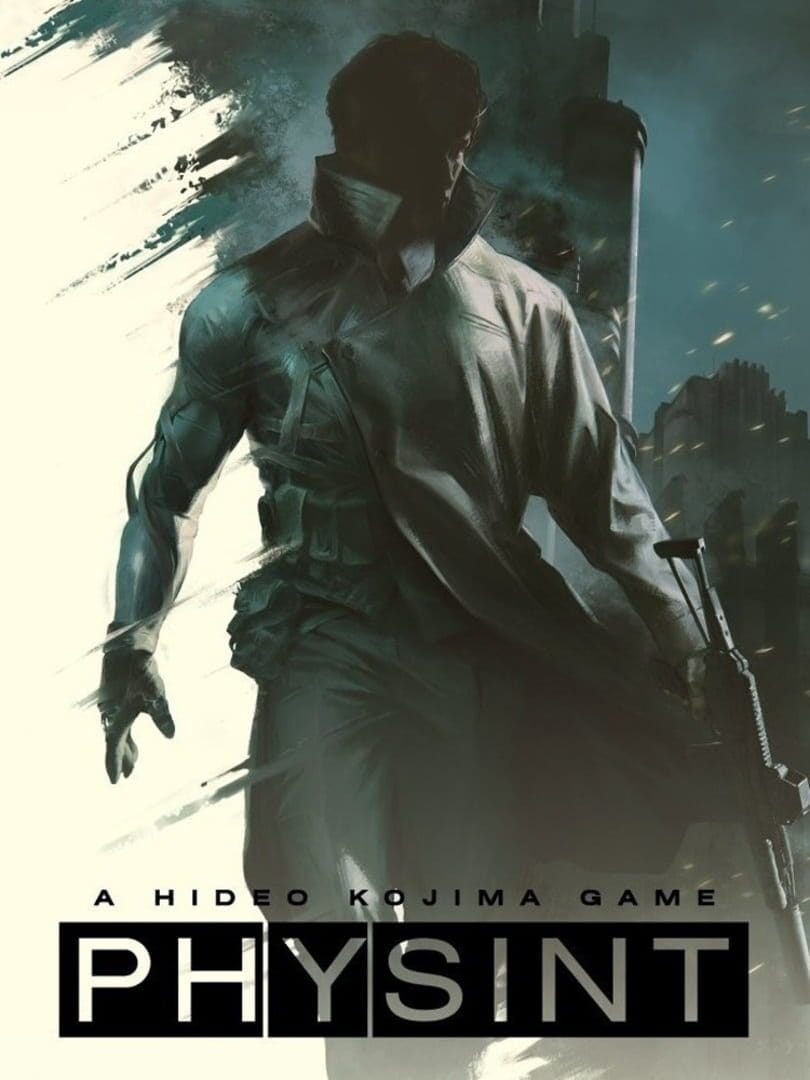
Hideo Kojima doesn't make casting announcements. He makes statements. When Mads Mikkelsen appeared in Death Stranding (2019), the choice wasn't about star power — it was a thesis. Mikkelsen carries a quality of cold moral complexity that the game's argument about connection and violence required. When Norman Reedus became the face of a courier traversing a collapsed America, the casting was thematic before it was commercial. So when Kojima Productions revealed at Tokyo Game Show that Bill Skarsgård will lead PHYSINT — the studio's forthcoming action-espionage title — the correct response is not to ask what kind of character Skarsgård will play, but what kind of game Skarsgård's presence signals PHYSINT is becoming.
The answer is inseparable from a deal that reshuffled the entire project: Xbox is now publishing PHYSINT. That single structural fact changes the orbit of everything around it.
The Actor as Architecture
Skarsgård's screen career has been built on a specific register of menace. His Pennywise in It (2017) was not simply frightening — it was carnivalesque, a predator who understood that terror requires seduction first. His work in Barbarian (2022) deployed physical enormity in service of something genuinely difficult to categorize: pity adjacent to horror. He is an actor whose face communicates wrongness even in stillness. Kojima, who has spent three decades architecting protagonists caught between weapon and person — Solid Snake, Big Boss, Sam Bridges — is not casting a villain here. He is casting someone who makes the category of "hero" feel uncertain.
That uncertainty is the point. PHYSINT was announced as Kojima's return to the action-espionage genre he defined with the Metal Gear series, a genre he lost control of when Konami severed ties in 2015. The game was positioned initially as a passion project, partly personal, partly a response to a health scare Kojima suffered that reportedly prompted him to reconsider what he still needed to make. In early framing, PHYSINT was PlayStation-exclusive — intimate, auteur-driven, tethered to the Sony relationship that had sustained Death Stranding. Then the Xbox deal was announced, and the coordinates shifted.
What Xbox Publishing Actually Means Here
The instinct to read the Xbox deal as purely financial is understandable but insufficient. Microsoft's gaming division has been executing a specific strategy: acquiring or partnering with prestige creative properties that elevate Game Pass and reposition Xbox as a platform for serious, authorial work. Kojima is exactly the kind of signal they want to send. But signals are not free. A publishing relationship with Microsoft — with its global distribution apparatus, its Game Pass subscriber base of tens of millions, its institutional interest in day-one accessibility — fundamentally alters who PHYSINT is being made for.
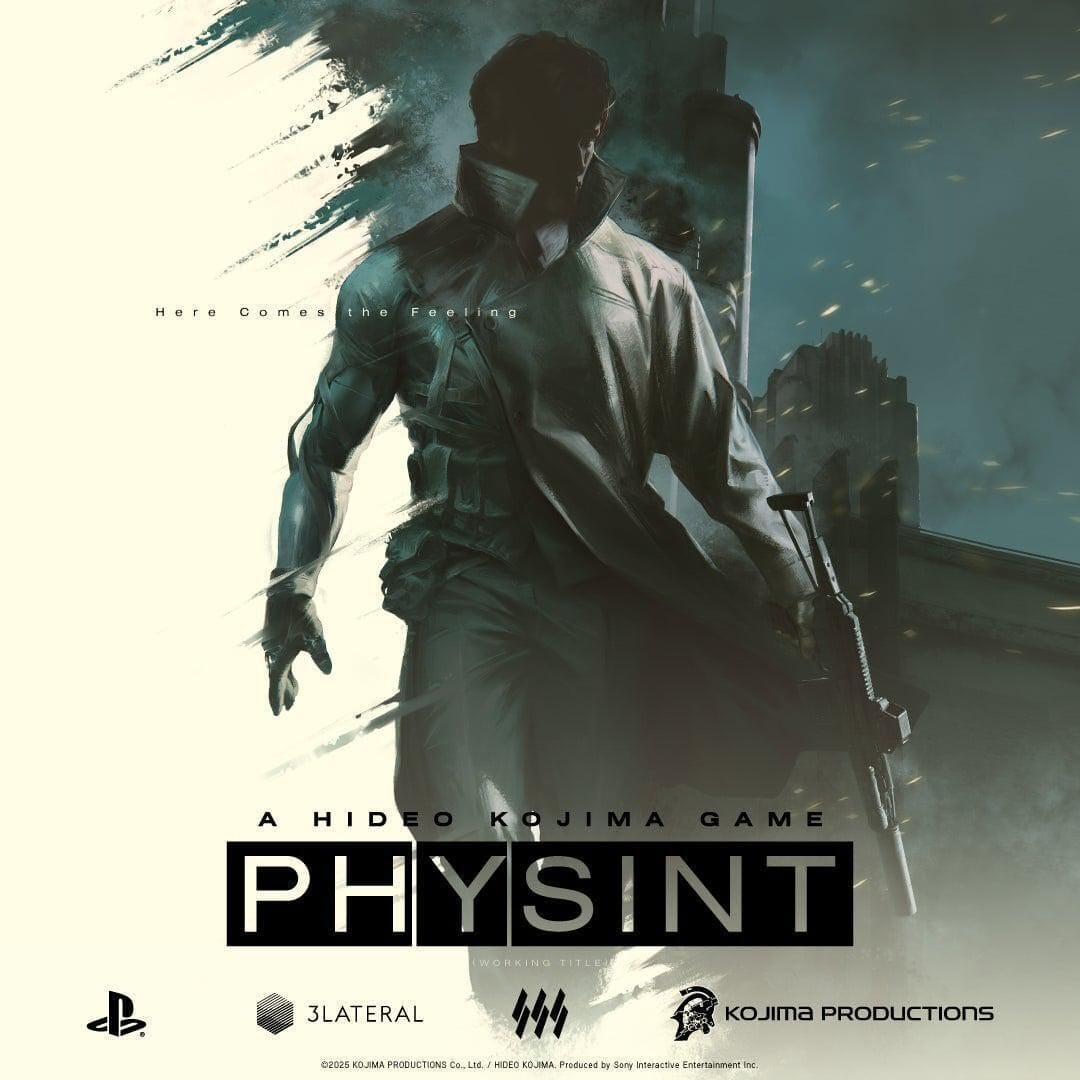
PlayStation exclusivity, whatever its commercial logic, creates a container. It tells developers and players alike that this is a curated object, available to a specific audience willing to be on a specific platform. The Death Stranding audience self-selected; the people who bought a PS4 or PS5 to play a Kojima game about loneliness and parcel delivery were, by definition, already aligned with the project's eccentric frequency. Game Pass removes that filter entirely. PHYSINT will be available at no additional cost to every Xbox subscriber on day one. That is an audience of extraordinary scale and breadth — which is precisely the pressure that changes a game's shape.
This is not a cynical observation. Scale does not automatically corrupt. But it demands legibility. A game reaching millions of players through a subscription service cannot afford the same degree of opacity that Death Stranding wore as a badge. Kojima knows this. The Skarsgård casting is, among other things, an act of legibility — a face recognizable to mainstream audiences, attached to genre credentials (horror, thriller) that signal accessible intensity rather than art-house difficulty.
The Espionage Return, Reconsidered
When Kojima described PHYSINT as a return to the spy-action genre, long-time fans heard it as a homecoming — a chance to reclaim the aesthetic territory that Metal Gear Solid V: The Phantom Pain (2015) left unresolved, the loose threads Konami never allowed to be tied. But a homecoming on Xbox is not the same homecoming as one on PlayStation. The platforms carry different cultural connotations, different expectations, different communities.
PlayStation has positioned itself as the home of cinematic, narrative-driven single-player games. Xbox, post-Bethesda and post-Activision Blizzard, is a broader tent — enormous in scope, less architecturally committed to any single aesthetic. PHYSINT on Xbox is not arriving into a curated identity. It is arriving into a catalog that contains Starfield (2023), Halo Infinite (2021), and Hi-Fi Rush (2023) simultaneously. The game must carve its own space rather than inherit one.
Skarsgård helps solve that problem. His presence guarantees a level of cultural press coverage — entertainment media, not just games media — that positions PHYSINT as an event before a single trailer has demonstrated gameplay. It is the same function that Keanu Reeves served in Cyberpunk 2077 (2020): a human landmark visible from a distance, orienting audiences who might not otherwise navigate toward the work. The difference is that Skarsgård is not a cameo. He is the lead. The game will be shaped around his performance in ways that Cyberpunk 2077's core experience was not shaped around Reeves.

Kojima's Authorship in a New Structural Frame
There is a version of this story in which none of the above constitutes compromise. Kojima has always been an entertainer as much as an auteur — Metal Gear Solid (1998) was a blockbuster at its moment of release, not a festival film. The tension between mass appeal and idiosyncratic vision is not new to his work; it is constitutive of it. The codec conversations, the fourth-wall breaks, the hours of cutscene — all of it existed inside games that millions of people completed. He has never been allergic to audience.
But the PlayStation-to-Xbox migration is a structural change of a different order than anything he has navigated before, because it coincides with the studio's maturation into a genuinely independent entity, and because it arrives at a moment when the games industry is under unusual financial pressure. Kojima Productions is not operating in the same climate as the studio that released Death Stranding. The economics of prestige single-player development have grown more precarious. Xbox's backing is meaningful precisely because it is necessary in ways that prior Sony support may not have been.
What Skarsgård's casting confirms, finally, is that PHYSINT is reaching for a different altitude than its predecessor. Not higher or lower — different. The film-industry ambition is no longer subtext; it is the headline. The action-espionage genre is no longer a private obsession being revisited — it is a commercial bet being placed. Kojima is making the game he needs to make, inside a set of conditions that are asking that game to be something larger than it might have been.
Whether those two forces produce something extraordinary or something merely impressive is the question that no casting announcement can answer. But it is, at last, the right question to be asking about PHYSINT.