Today, October 28, Nintendo's Indie World Showcase goes live at 7 AM PT — a tightly scheduled 15 minutes of announcements covering indie games for Nintendo Switch and Switch 2. The event was announced with barely 24 hours' notice via the Nintendo Today app and confirmed across social media. There is nothing unusual about the format. What is unusual is what Nintendo Japan said at the same time: their version runs approximately 25 minutes.
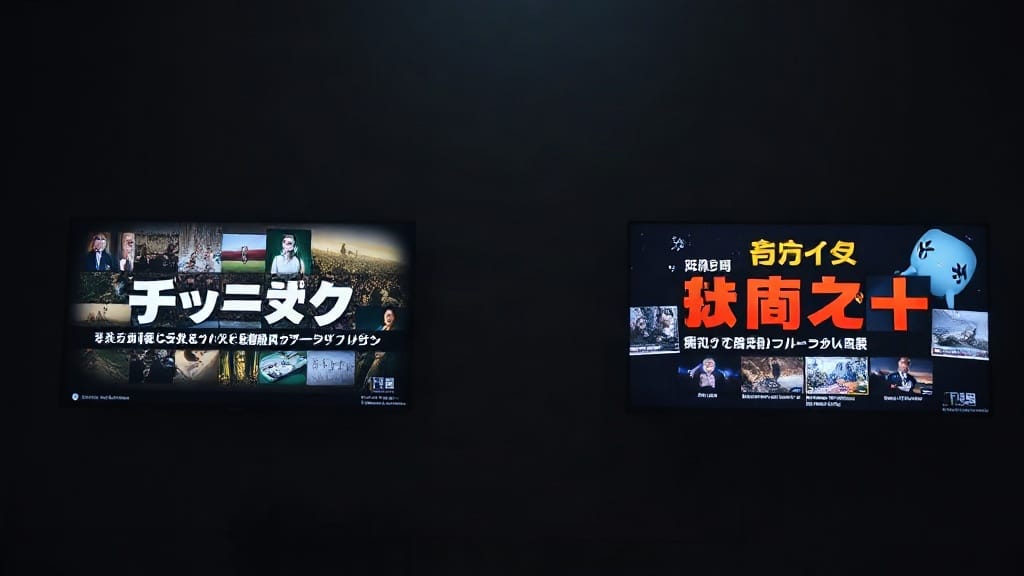
That is not a rounding error. It is a ten-minute difference — a third more broadcast time, in a separate domestic presentation, carrying content the rest of the world will not see at launch. Video Games Chronicle reported directly that "Nintendo's Japanese account on X has also promoted the show but says it will last 25 minutes — this suggests Japan will get a different version featuring more games, some of which are likely set to only release in that country." That is the thing worth sitting with: not merely a different runtime, but a structurally different product.
A Pattern, Not an Anomaly
Anyone who followed the March 2026 showcase will recognise this. That presentation ran roughly 18 minutes in English. The Japanese version ran 27 minutes and, as Digitally Downloaded documented, "includes many games not shown during the English showcase." The Japan-only slate from that March event included titles such as Japanese Rural Life Adventure, Magical Girl Witch Trials, Öoo, and Little Witch in the Woods — none of which appeared in the Western broadcast. In at least one documented case, a title like Japanese Rural Life Adventure was confirmed as not available on the North American eShop at all. That is not a delay. That is a wall.
The August 2025 showcase displayed the same architecture. GameSpot noted at the time that while many games were shared across regions, "there were some noticeable differences in the Japanese version of the Indie World showcase" — with games shown in different orders, given different amounts of screentime, and in some cases appearing exclusively in the domestic broadcast with no equivalent Western reveal.
This is a recurring editorial decision. Nintendo Japan is not simply translating the Western presentation and trimming it for time. It is producing a parallel showcase, pitched at a domestic market whose tastes and publishing infrastructure it actively cultivates separately. The extra minutes are not padding — they are titles, relationships, and commercial priorities that Nintendo has chosen not to globalise.
What the 15 Minutes Contains
The Western showcase today covers indie games for both Switch and Switch 2. The announcement, as carried across outlets including GameSpot, promises "new announcements and updates on indie games coming to Nintendo Switch 2 and Nintendo Switch" — deliberately non-specific, which is standard practice for these events. Nintendo has not pre-announced the lineup. No titles, no developers, no shadow drop hints. The presentation is built to function as a contained surprise, which means the audience has no frame of reference for what they are not seeing until the Japanese version surfaces separately.
This is also the second Indie World showcase of 2026 — the first being March 3 — and the format has stabilised around the 15-minute Western runtime as its baseline. That March event featured titles including Mixtape, Blue Prince, Rotwood from Klei Entertainment, Grave Seasons from Perfect Garbage and Blumhouse Games, and the immediately released Minishoot' Adventures. It was a strong slate by any measure. The point is not that the Western version is thin — it is that the Japanese version demonstrably contains more, and the Western audience simply doesn't know what it's missing until community researchers compile the difference after the fact.
The Structural Logic Behind the Gap
Nintendo's regional broadcast asymmetry is not new. The Nintendo Direct format itself began in October 2011 as a Japan-only presentation hosted by the late Satoru Iwata, with a shorter English-language companion version. That foundational split — Japan as primary market, West as adapted audience — has persisted across formats for fifteen years. The Indie World banner, which replaced the "Nindies Showcase" branding in North America around 2019, has carried that same logic into the indie tier of Nintendo's publishing ecosystem.
The mechanics are straightforward. Japanese indie publishers — often smaller studios releasing life-simulation games, visual novels, or culturally specific titles — have long relied on Nintendo's domestic eShop as a primary platform. Nintendo Japan maintains direct relationships with these studios that Nintendo of America and Nintendo of Europe do not replicate. When a title lacks confirmed localisation, a Western reveal offers no commercial upside and creates expectation Nintendo cannot fulfil. The rational response, from a publisher's standpoint, is to keep those titles in the domestic showcase and stage global announcements if and when localisation is confirmed.
The problem is that the practice is invisible by design. A viewer watching the English-language Indie World today has no indication that a parallel broadcast exists with additional content. The only signal is a runtime discrepancy that surfaces in gaming press coverage — a number buried in an announcement story. For audiences outside the specialist press, the gap does not exist until someone goes looking for it.
What This Showcase Signals for Switch 2's Indie Ecosystem
The broader context matters here. Switch 2 launched this year with Nintendo positioning the platform as a serious destination for both first-party titles and indie partnerships — a continuation of what made the original Switch one of the most hospitable platforms for independent developers in the hardware's history. Third-party publishers have been active on the platform, and the indie pipeline is a meaningful part of Switch 2's long-term library argument.
Japan's formal recognition of gaming as high culture earlier this year signals a domestic environment in which the cultural status of the medium — including smaller, artisanal productions — is being actively elevated. That context shapes what kinds of titles Japanese indie publishers are producing, and why Nintendo Japan would have a deeper well of domestic content to draw on for a showcase like this one.
For Switch 2 to fulfil its global library ambitions, the asymmetry between Japanese and Western indie pipelines needs to narrow — not because Japanese-exclusive content is a problem, but because the mechanism that keeps it invisible to Western audiences is a structural inefficiency. Games like Coffee Talk Tokyo, which premiered in Japan's Indie World orbit before receiving a full multiplatform release in May 2026, demonstrate that the domestic showcase genuinely functions as a discovery pipeline for global titles. The question is how many titles sit in that pipeline for years, or never leave it at all.
Today's broadcast will end in roughly 15 minutes. The Japanese version will keep going for ten more. Both will contain announcements. Only one will be reported as the showcase.