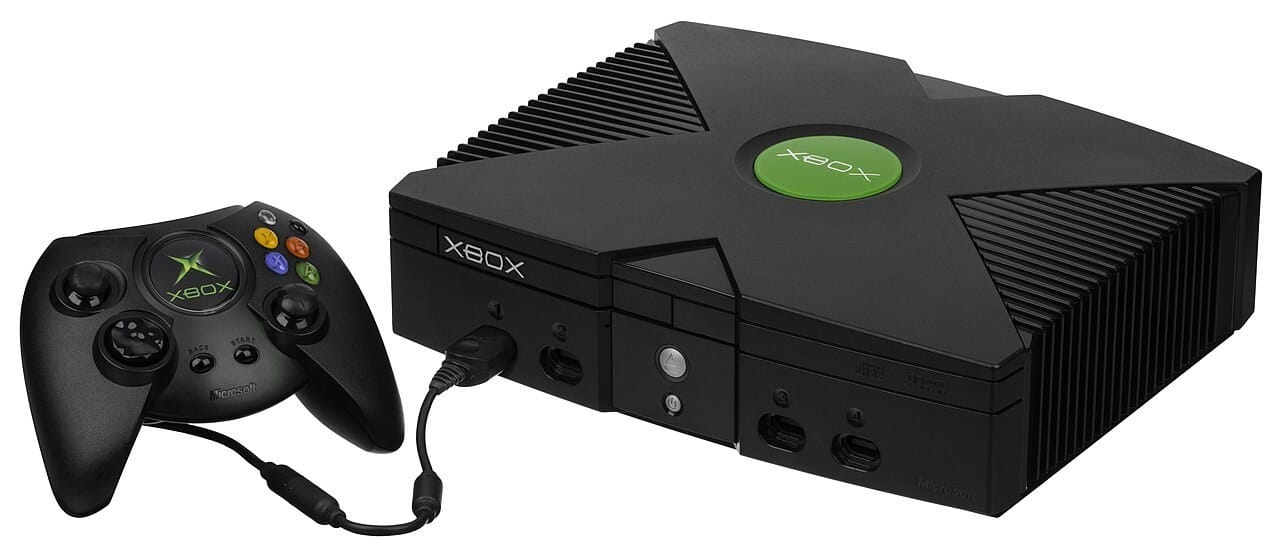
Twenty-five years ago this week, console gaming changed hands. On November 13, 2001, Konami released Metal Gear Solid 2: Sons of Liberty on PlayStation 2 in North America. Two days later, on November 15, Microsoft launched the original Xbox at $299, with Halo: Combat Evolved in the box next to it on store shelves. Three days after that, on November 18, Nintendo's GameCube arrived in the United States. Grand Theft Auto III had already landed on PS2 in October. No single autumn has delivered so many of the ideas the industry would spend the next quarter of a century working through.
Two of those games stand out, because each in its own way predicted the future. Halo showed what a console shooter, and an online console platform, would look like. Metal Gear Solid 2 showed, with uncomfortable accuracy, what living inside the internet would feel like. In 2026 both are still with us, remade, re-released and argued over, and the places they ended up say a lot about how the business has changed.
The Mac game that became Microsoft's flag
Halo was not supposed to be an Xbox game. At Macworld in July 1999, Steve Jobs introduced Bungie's project on stage as a title for Mac and Windows. Then, on June 19, 2000, Microsoft announced it was buying Bungie, and the studio's third-person sci-fi experiment was rebuilt as a first-person shooter for a console that did not yet exist. It was a bet that a company with no history in the living room could buy credibility with one game.
The bet paid off. In the two months after launch, Halo sold alongside more than half of all Xbox consoles, an attach rate that turned it from a launch title into the reason to own the machine. By November 2005 it had sold more than six million copies.
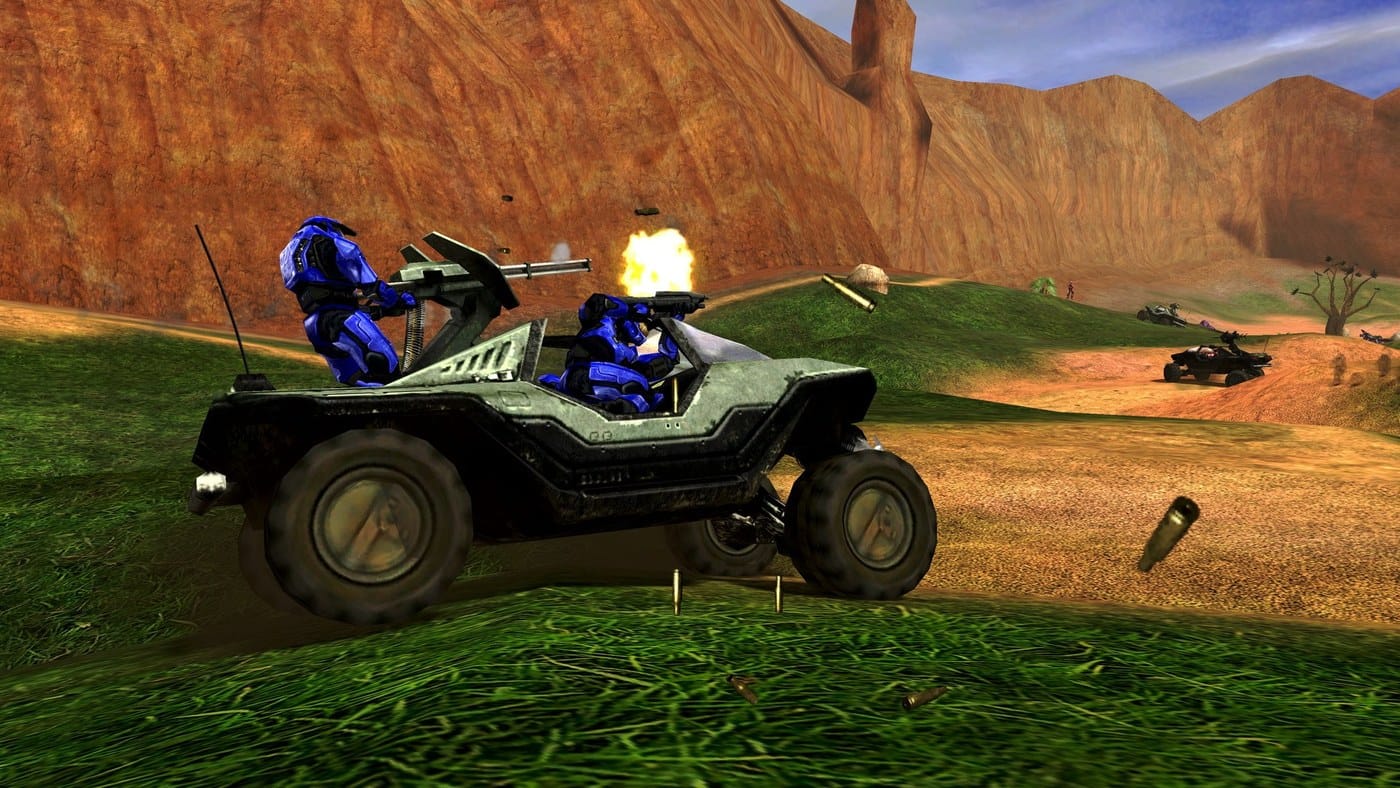
What it sold was a set of solutions. Shooters had belonged to the mouse and keyboard; Halo made them work on a gamepad, with aim and movement assistance tuned for thumbsticks and grenades and melee mapped so you never had to put your gun away. Its shield recharged automatically if you avoided damage for a moment, turning every fight into a rhythm of pushing forward and pulling back. You could carry only two weapons, so every pickup was a decision. Almost every console shooter since, including the ones that would later beat Halo at its own game, has used some version of that grammar.
From System Link to Xbox Live
The other prediction was social. Halo supported split-screen, and its System Link mode connected up to four Xboxes on a local network for matches of up to 16 players. That meant carrying consoles and CRT televisions to a friend's house and running cables across the floor. The LAN party was clumsy and unforgettable, and it showed Microsoft exactly what its players wanted.
A year to the day after the console launched, on November 15, 2002, Microsoft switched on Xbox Live, a paid online service with a single account, friends list and voice chat across games. It was the model every console platform would eventually copy, and Halo 2 in 2004 became its showcase. Online console play, subscriptions and the idea of a platform as a service rather than a box all run back to those 16-player rooms. The original Xbox itself sold only about 24 million units, but it bought Microsoft a seat at the table it has never given up.
Kojima's bait-and-switch
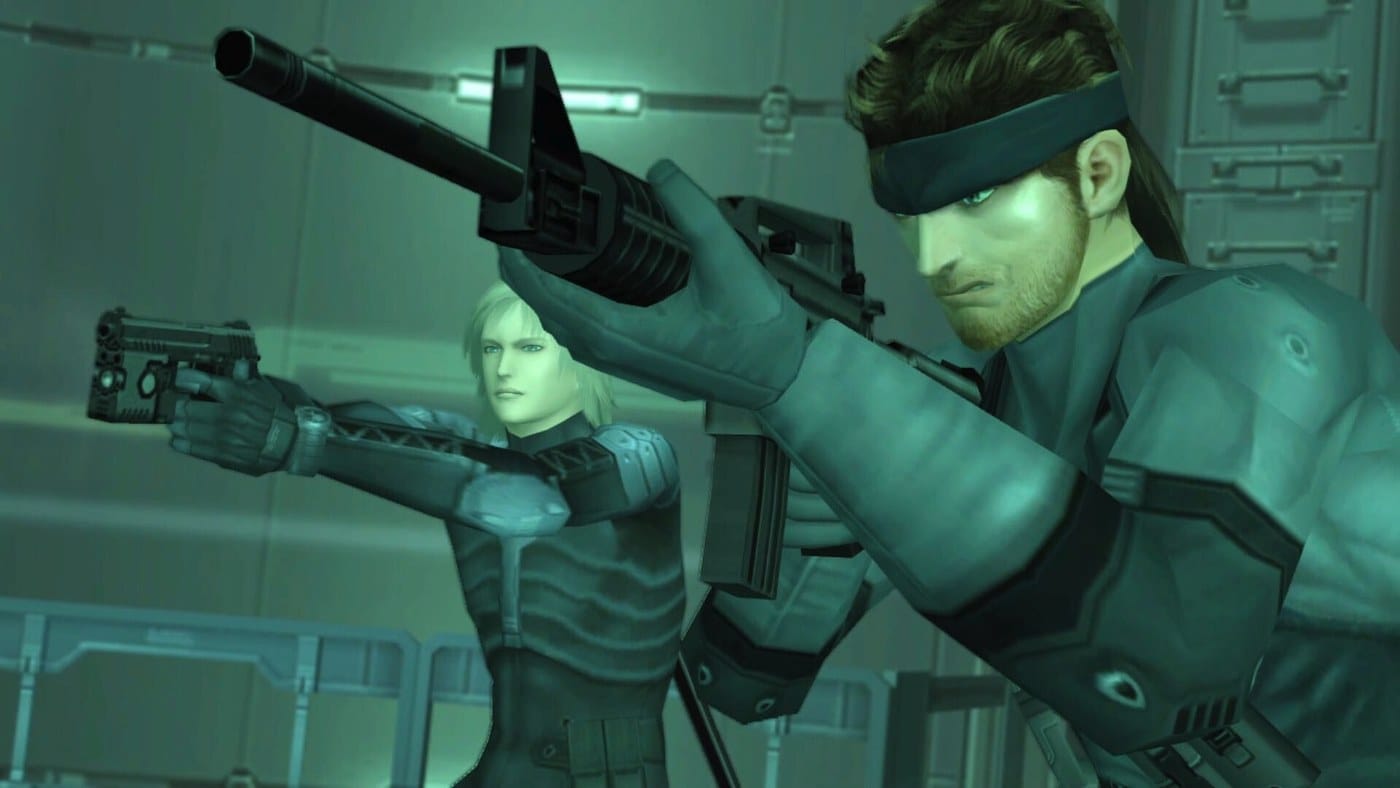
Konami sold Metal Gear Solid 2 as the return of Solid Snake. Its preview trailers showed Snake in situations that, in the finished game, belong to someone else. After the opening Tanker chapter, players found themselves controlling Raiden, a young, blond, untested rookie, for the rest of the game. Players found out by playing. Many were furious. The game sold anyway: 500,000 copies in the United States in two days, and around seven million worldwide by 2004 including the Substance edition.
The switch was the point. Hideo Kojima had made a sequel about sequels, a game in which Raiden is put through an exercise designed to reproduce the events of the first Metal Gear Solid, exactly as the player expected a sequel to do. The game was about control: of a soldier, of a story, of the person holding the controller. The real target turned out to be information itself.
The prophecy that reads like 2026
In its final hour, an artificial intelligence posing as Raiden's commanding officer explains what the shadowy Patriots actually want. The speech now circulates online as a kind of prophecy. "The digital society furthers human flaws, and selectively rewards development of convenient half-truths," the Colonel says. And then: "The different cardinal truths neither clash nor mesh. No one is invalidated, but nobody is right."
In 2001 this sounded like science fiction. Facebook did not exist, and the word meme still belonged to Richard Dawkins. Today the game is routinely described as ahead of its time for its treatment of post-truth politics, fake news, echo chambers and synthetic media. Its themes were memetics, social engineering and the filtering of information, and its villain was not a person but a system that decides what you see. Kojima wrote a game about algorithmic curation before there was an algorithm to curate anything.
It was also shaped by the world outside. After the September 11 attacks, two months before release, Kojima's team cut a finale in which the giant Arsenal Gear crashed through Manhattan.
Where Halo stands in 2026
The clearest sign of how far things have moved is that the Master Chief now appears on PlayStation. Halo: Campaign Evolved, Halo Studios' Unreal Engine 5 remake of the original campaign, launched on July 28, 2026, for Xbox Series X|S, PC and PS5, with three new prequel missions starring the Chief and Sergeant Johnson. As we wrote at launch, the PlayStation release was Xbox's biggest bet since the original: the game that once defined a console now serves a publisher that no longer depends on one.
The early numbers were mixed. Analytics firm Alinea estimated about 452,000 PS5 copies by early August, against a projected 900,000 on Xbox, a figure that includes Game Pass early-access upgrades. These are estimates, not official sales, but they suggest a brand that is still loved, still well reviewed and no longer dominant.
 Official trailer
Where Metal Gear stands in 2026
Konami and Kojima parted ways in 2015, and the series now has two custodians. Konami has turned the back catalogue into a restoration project. Metal Gear Solid: Master Collection Vol. 1, released on October 24, 2023, put Sons of Liberty on modern consoles and PC. Metal Gear Solid Delta: Snake Eater, a remake of the third game built in Unreal Engine 5 by Konami with support from Virtuos and without Kojima's involvement, launched on August 28, 2025, and had passed two million copies by March 2026. Master Collection Vol. 2 followed on August 27, 2026, finally freeing Metal Gear Solid 4 from the PS3 alongside Peace Walker.
Kojima Productions, meanwhile, marks its creator's 40th year in the industry with three fronts open. Death Stranding 2: On the Beach reached PC on March 19, 2026. The horror project OD is in production. And at Tokyo Game Show in September, Kojima revealed that Bill Skarsgård will lead Physint, the espionage game widely seen as his return to the genre Metal Gear defined.
 Official trailer
Two futures, one week
Seen from 2026, the week of November 13–18, 2001, looks like the moment the industry chose its direction. Halo pointed to platforms, services and shooters played together across the internet. Metal Gear Solid 2 warned about what that internet would do to the people inside it. Both turned out to be right. The Master Chief now lives on every system, and the Colonel's speech plays out daily on every feed. Twenty-five years on, the first is a franchise, and the second reads like a description of the world we now live in.