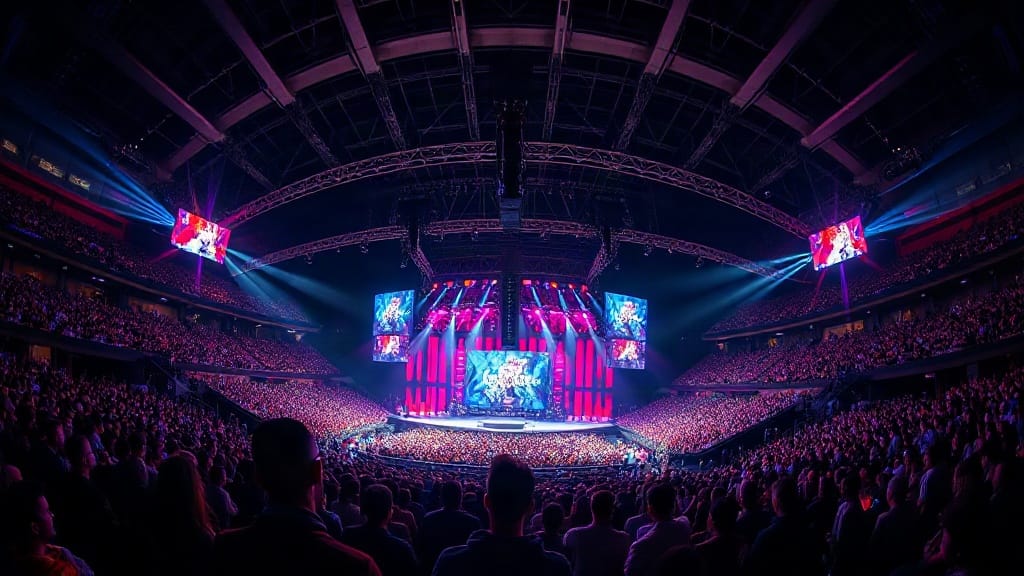
Tonight in Miami, Florida, the Esports Awards hands out its trophies for the eleventh time — and for the first time ever on that particular stretch of coastline. The ceremony takes place on November 17, with 199 finalists spread across 19 categories covering players, teams, games, broadcasters, and industry figures. The scale alone is a statement. This is not a show that wants to tell you what esports is. It wants to hold up a mirror wide enough that you can see all of it at once — and in doing so, it accidentally reveals the central tension the industry has never fully resolved.
The question the ballot quietly poses is this: what does it mean to be great at esports, when the word "esports" now describes something as structurally different as a Counter-Strike 2 rifle duel, a Rocket League aerial redirect, a Dota 2 team fight, and a League of Legends world final? The 2026 Esports Awards does not answer that question. It simply forces you to sit with it for three hours.
London to Miami: A Decade of Drift
The first ceremony was held at The Brewery in London on November 21, 2016, under the name eSports Industry Awards. It was rebranded to the Esports Awards in 2018, and the trajectory since has been one of deliberate Americanisation — Arlington, Texas for three years, then Las Vegas's Resorts World, then a split between Riyadh and Los Angeles in 2024. Miami is both a continuation of that logic and a rhetorical upgrade: warmer, louder, more cosmopolitan, more telegenic. The 2026 edition is produced in partnership with the Esports World Cup and Oakley, two sponsors whose involvement signals the ceremony's sustained effort to position itself as a crossover cultural event rather than a convention-circuit fixture.
Last year's Las Vegas edition carried the weight of a tenth anniversary. The 2025 ceremony introduced the first-ever Lifetime Achievement in Esports class and ran 24 categories, including a parallel "Decade Awards" track that handed Lee "Faker" Sang-hyeok the PC Player of the Decade title and T1 the Esports Team of the Decade. Those were consensus picks, the kind of honours nobody seriously argues against. Miami doesn't have that luxury. This year's ballot is a live wire.
The Ballot as Fault Line
Look at the Organisation of the Year shortlist and you have an instant portrait of the industry's geographic and cultural breadth. Finalists include Karmine Corp, T1, G2 Esports, NAVI, Team Liquid, Virtus.Pro, FaZe Clan, Team Spirit, Team Vitality, Team Falcons, and AG.AL — a list that spans South Korea, France, Germany, Ukraine, Saudi Arabia, and the United States. Each of those organisations has a different business model, a different fanbase, a different cultural register. T1 is a Korean entertainment conglomerate built around a single player whose profile has long exceeded the game he plays. Karmine Corp is a French community project that turned supporter culture into a revenue model. FaZe Clan is a content brand that happens to field competitive rosters. Asking a single trophy to adjudicate between them is not a category error — it is the category.
The PC Player of the Year race is similarly unresolvable on its face. Finalists include Mathieu "ZywOo" Herbaut, Illya "Yatoro" Mulyarchuk, Danil "Donk" Kryshkovets, Kim "Peyz" Soo-hwan, and Chen "Bin" Zebin — a CS2 rifler, two Dota 2 carries, and two League of Legends AD carries. ZywOo won the award last year on the back of a CS2 season of near-supernatural individual consistency; Mathieu "ZywOo" Herbaut was named Esports PC Player of the Year at the 2025 ceremony, making him the front-runner again by sheer momentum. But the presence of Dota and LoL nominees reminds you that the category is not asking who was the best CS2 player — it's asking who was the best human being at a PC game, full stop. That's a genuinely strange thing to decide.
The Personality of the Year category, meanwhile, has become the awards' most visible pressure point. Finalists include Lee "Faker" Sang-hyeok, Marc "Caedrel" Robert Lamont, Nicholas "Jynxzi" Stewart, and Magnus Carlsen — a career-defining LoL mid-laner, a retired pro turned broadcaster, a streamer who made Rainbow Six Siege into a viewing event, and the world chess champion. The inclusion of Carlsen is not absurd; competitive chess at the highest level now operates inside the esports ecosystem in every meaningful sense. But it does crystallise the question of where the word "esports" ends and where it becomes a synonym for "competitive things that happen on screens."
Team of the Year: Titles Across the Map
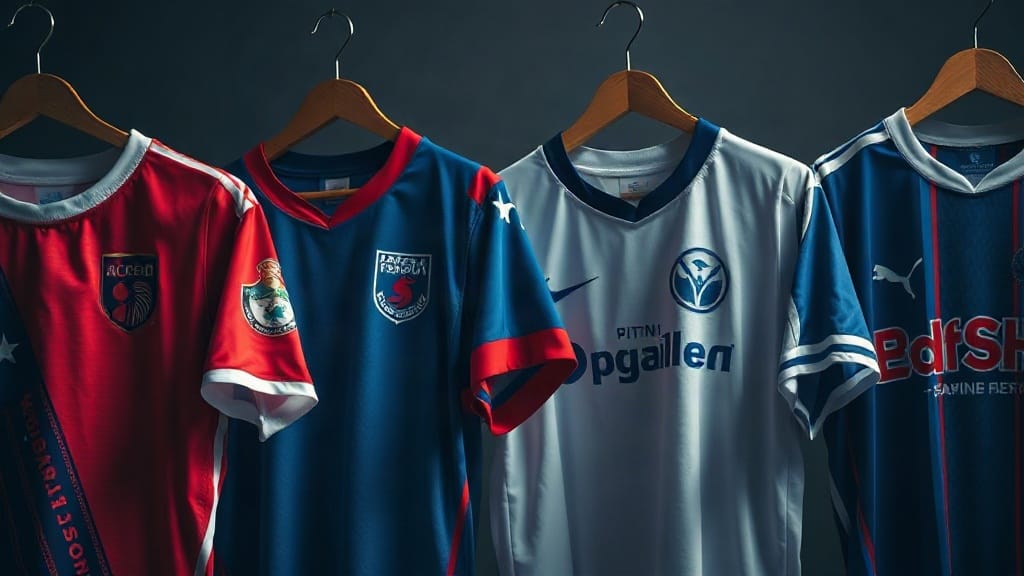
The Esports Team of the Year shortlist spans Team Vitality in CS2, OpTic Texas in Call of Duty, PARIVISION in Dota 2, Bilibili Gaming in League of Legends, Team Spirit in both CS2 and Dota 2, 100 Thieves in Valorant, and Gentle Mates in Rocket League. That list covers six separate competitive titles. The fact that Team Spirit appears twice — in two different games, with two entirely different rosters — is itself a kind of editorial comment on how the word "team" has evolved in the multi-title organisation era. You are not watching the same people; you are watching the same badge.
The Esports Game of the Year nominees reflect the same dispersion. Apex Legends and Rainbow Six Siege featured among the first wave of nominees, alongside mobile titles — Brawl Stars, Free Fire, Honor of Kings, Identity V, Mobile Legends: Bang Bang, and PUBG Mobile competing for Esports Mobile Game of the Year. The mobile category's very existence is the clearest evidence of how thoroughly the platform assumptions of early esports — PC, LAN, arena — have been eroded. A Free Fire final in a stadium in Brazil draws attendance numbers that some franchise leagues can only imagine. The canon doesn't know what to do with that yet, and neither does the ballot.
The Structural Argument the Ceremony is Really Making
The combined community vote and industry panel format means winners emerge from a blend of mass audience preference and specialist judgment. That hybrid produces results that are sometimes uncomfortable — popular streamers beating technically dominant players, Western audiences outweighing Korean or Southeast Asian ones simply by volume — but it is also the only honest model available. Esports has never had a single governing body, a unified league structure, or a shared calendar. What it has is an audience that cares, unevenly, about many different things. The Esports Awards is the one moment each year where those audiences sit in the same room, metaphorically speaking, and argue about what matters.
That argument is valuable precisely because it is unresolved. The 2025 edition saw Riot Games named Esports Publisher of the Year and Team Falcons take Organisation of the Year — a Saudi-backed organisation that emerged from a different competitive tradition than the Western franchises that once dominated the category. That result was not a fluke; it was a data point. The ecosystem's centre of gravity has been moving, and the ballot registers those shifts before the industry's traditional narratives catch up with them. That is worth something.
Tonight's ceremony in Miami is not going to tell you what esports is. It is going to show you, in granular and sometimes contradictory detail, what esports has become: a loose federation of communities, titles, regions, and business models that share a trophy but not necessarily a common definition of excellence. That tension is not a problem to be solved. It is the most interesting thing about it. For more on esports' defining competitive milestones in 2026, see Kynari's coverage of the Worlds 2026 Grand Final at Brooklyn's Barclays Center. And for the week's other major games industry recognition event, the 44th Golden Joystick Awards crowned its own 2026 winners in London just weeks ago — a reminder that November has become the industry's annual reckoning with itself, across every platform and every genre at once.