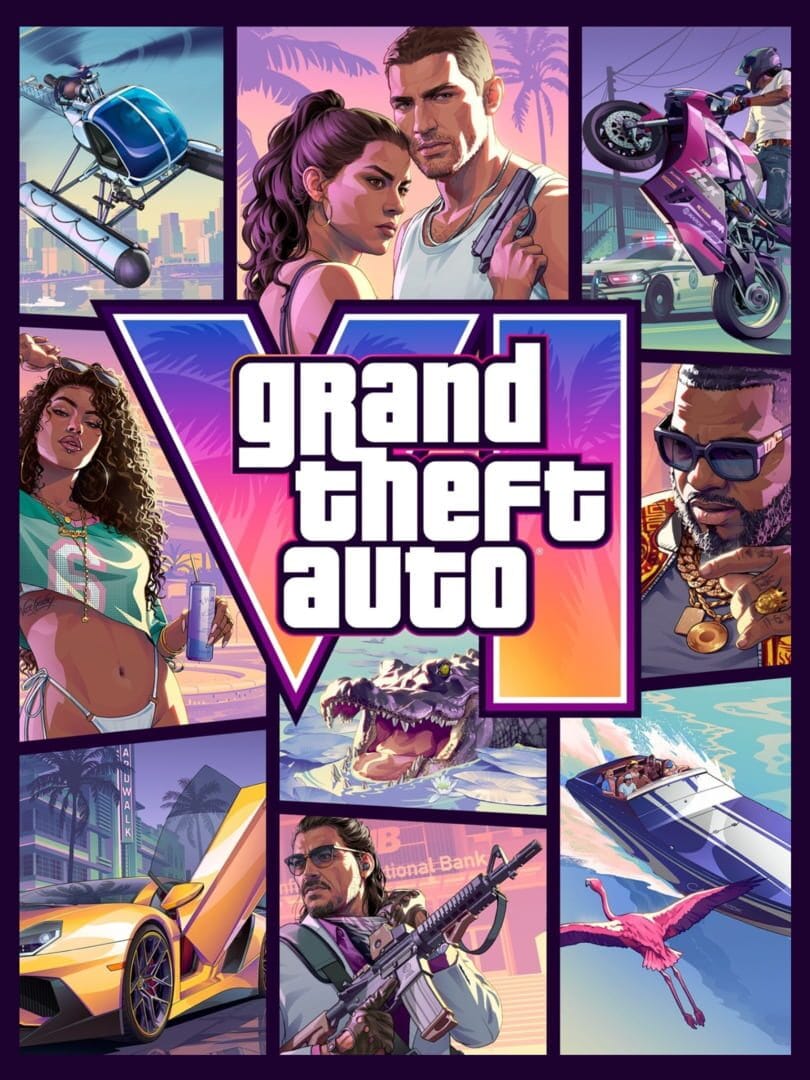
On September 17, during a shareholder meeting that received considerably less coverage than it deserved, Take-Two Interactive confirmed what had been quietly circulating in analyst circles for months: Grand Theft Auto VI (2025) will launch as a single-player title in November, with no online component announced at release, and with GTA Online — the multiplayer infrastructure built atop Grand Theft Auto V (2013) — explicitly maintained as a continuing live platform. The statement was brief, almost clinical. The implications are neither.
The instinct to read this as damage control is understandable. Delayed feature, troubled development, another online component that wasn't ready in time — the gaming press has rehearsed that narrative so many times it reaches for it automatically. But that reading misses the fundamental economics of what Take-Two is actually managing here, and it misreads how Rockstar has approached multiplayer since 2013.
The Asset They're Protecting Isn't GTA VI
GTA Online is not a legacy product. It is, by any rigorous financial measure, one of the most durably profitable live-service platforms in the history of the medium. Over a decade after its troubled launch — servers buckled, progress wiped, the community furious — it stabilized into a revenue machine that has driven hundreds of millions in Shark Card sales annually and sustained two console generations of re-releases. Take-Two has reported GTA Online as a material contributor to recurrent consumer spending every single fiscal year since 2014. That is not a product you casually absorb into a sequel's launch window.
The strategic problem Rockstar faces is not technical. It is cannibalistic. A simultaneous launch of GTA VI Online would not simply migrate the existing player base — it would fracture it, generate immediate platform confusion, and almost certainly accelerate the deprecation of GTA Online before its replacement is ready to absorb the revenue load. Rockstar watched this dynamic play out in miniature with Red Dead Online (2018), which launched into the shadow of GTA Online's dominance and never escaped it. That was a case of two products competing in the same company's portfolio. The lesson was written clearly enough.
Decoupling as Product Architecture
What Take-Two's September statement describes — intentionally or not — is a two-phase product architecture. Phase one: launch a single-player title that carries no obligation to maintain live-service parity, no day-one server infrastructure stress, and no multiplayer balancing demands competing with narrative polish. Phase two: release GTA VI Online as a discrete event, months later, with its own announcement cycle, its own media footprint, and a player base that has already spent time in the world and has reasons to return.
This is not an improvised solution to a missed deadline. Rockstar executed a version of this model with Grand Theft Auto V itself — the online component launched roughly two weeks after the base game in October 2013, and even that compressed gap created enough separation to generate a second wave of coverage. The difference now is that the gap is measured not in weeks but in months, possibly longer, and the financial justification for that extension is considerably more sophisticated.
By keeping GTA Online alive through the single-player launch window of GTA VI, Take-Two maintains recurrent revenue continuity during the one period when it is most vulnerable: the post-launch window of a massive new release, when developer attention is consumed by patches, performance fixes, and narrative DLC. Rather than a revenue gap, they engineer a revenue overlap. The existing platform continues to monetize while the new one builds its foundation.
What This Tells Us About Rockstar's Online Ambitions
Reading between the lines of the shareholder statement, there is a secondary signal embedded in the explicit commitment to keeping GTA Online operational: Rockstar is not planning a simple port of its multiplayer model into the new engine. If GTA VI Online were merely GTA Online with updated assets and a new map, a simultaneous launch would be the obvious move. The player base would migrate quickly, the infrastructure investment would be manageable, and the transition would be commercially straightforward.
The deliberate separation suggests something more architecturally distinct is being built. Rockstar has had twelve years to observe what GTA Online does well — the emergent session chaos, the heist structure, the property economy — and twelve years to observe where it ages poorly: the anticheat fragility on PC, the griefing feedback loops that drove casual players out, the content model that buried newer players under years of accumulated progression barriers. A clean-slate online platform, launched as its own moment rather than a launch-day obligation, allows Rockstar to address those structural problems without the pressure of day-one scale.
It also allows them to price and structure it independently. Whether GTA VI Online arrives as a free extension of the base game, a standalone product, or something with a more novel access model is a decision that can be made with full market intelligence — player behavior data from the single-player release, active GTA Online population metrics, and the competitive landscape as it actually exists at launch, not as it was projected during development.
The Industry Reads This Wrong at Its Own Risk
There is a version of this story that the games industry tells itself where any online component that isn't ready at launch represents a failure of ambition, a compromise extracted by reality from an idealized plan. That story is comforting because it's simple. It also completely inverts the logic of what Take-Two is doing.
The shareholder meeting confirmation was not an apology. It was a disclosure to people whose job is to evaluate financial risk. And what Take-Two disclosed, stripped of the corporate register, is that they have two distinct monetization platforms — one proven and currently generating revenue, one in development and not yet ready to operate at scale — and that they intend to manage them as separate assets rather than collapse them into a single launch event that serves neither optimally.
That is, by any coherent analysis, the correct call. GTA Online's longevity is anomalous in a medium where live-service titles routinely collapse within eighteen months. Protecting that anomaly while building its successor is not caution. It is exactly the kind of long-horizon thinking that produced the anomaly in the first place.
The industry has spent years being told that live service is the future, then watching live-service titles fail at scale because the infrastructure, the community management, and the content pipeline weren't ready at launch. Rockstar is declining to repeat that mistake with its most valuable franchise. The November release of Grand Theft Auto VI is the opening move in a much longer game. Treating it as anything less is a failure of reading.