The anime industry has a consolidation problem it keeps pretending is a solution. Every few years, a major publisher or holding group announces a restructuring — studios folded into studios, budgets pooled, pipelines harmonized — and the press release language is always the same: synergy, sustainability, shared infrastructure. KADOKAWA's Studio One Base, whose Ikebukuro hub is opening its physical doors this month ahead of a formal November merger, is the latest and most ambitious iteration of this logic. Five studios — ENGI, Studio KADAN, Chiptune, Bellnox Films, and Raging Bull — absorbed under one roof, one legal entity, one chain of command. The scale is real. The risks are equally real, and they are not the ones KADOKAWA is advertising.
What Is Actually Being Built
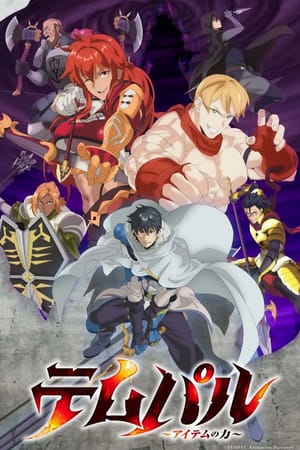
Studio One Base is not a rebrand. It is a structural merger, which is a meaningfully different thing. ENGI, perhaps the most recognizable name in the group, has spent the better part of a decade building a recognizable production identity — The Hidden Dungeon Only I Can Enter (2021), Girlfriend, Girlfriend (2021), My Hero Academia: World Heroes' Mission (2021) — while Studio KADAN, Chiptune, Bellnox Films, and Raging Bull have each occupied distinct niches across animation production, finishing work, sound, and live-action-adjacent pipeline support. The Ikebukuro facility is designed to house all of them simultaneously, centralizing everything from key animation to post-production under conditions that, in theory, reduce the brutal subcontracting chains that have long made anime's labor economics so punishing.
The timing is deliberate. KADOKAWA is navigating an acquisition bid from Microsoft while simultaneously expanding its own production vertical. Studio One Base is, among other things, a signal to the market — proof that KADOKAWA controls not just IP but the means of producing it. That context matters when evaluating what this merger is actually for. It is as much a financial positioning move as it is a creative infrastructure play, and conflating the two produces a distorted picture of what success looks like here.
The Labor Crisis Argument
The strongest case for consolidation is the one rooted in anime's chronic production crisis, and it deserves to be taken seriously. The industry's reliance on freelance key animators, the cascading delays caused by subcontracting bottlenecks, the routine undercompensation of in-between animators — these are structural failures that individual studios, operating on thin margins, cannot individually correct. Shared infrastructure genuinely can help. A centralized payroll, standardized contracts, a common facility with equipment that smaller studios could not afford independently — these are not trivial gains.
KADOKAWA has framed Studio One Base partly in these terms, and the framing is not dishonest. If the merger enables even modest improvements in labor continuity — retaining animators across projects rather than losing them to the freelance churn — the creative dividend could be significant. Consistency of personnel tends to produce consistency of craft. Studios like ufotable and Kyoto Animation have demonstrated for years that keeping talent in-house, under stable and humane conditions, produces work that is visually and emotionally coherent in ways that outsourced production rarely achieves.
The question is whether Studio One Base can replicate that logic at scale across five previously distinct organizations, each with its own working culture, its own relationships with directors and writers, its own aesthetic tendencies. Centralization does not automatically mean stability. It can equally mean homogenization — the slow erosion of the idiosyncratic in favor of the managerially legible.
The Creative Voice Problem
This is where the merger warrants genuine skepticism, not cynicism. The anime studios that produce work audiences actually remember — work that generates the IP value KADOKAWA is so invested in protecting — tend to be studios with a strong internal aesthetic identity. That identity is not a branding exercise. It emerges from specific director-producer relationships, from the accumulated shorthand of teams who have worked together long enough to develop a shared visual language, from the freedom to make production decisions that serve the work rather than the quarterly report.
ENGI, for instance, has developed a reliable if commercially oriented house style. Studio KADAN has been associated with different kinds of projects and different production priorities. Raging Bull and Bellnox Films operate in adjacent but distinct corners of the production ecosystem. Merging these entities does not automatically unify their working cultures — it creates a period of organizational uncertainty during which creative momentum is the first casualty. Directors become cautious. Producers spend energy navigating new hierarchies instead of developing projects. The institutional knowledge that makes a studio function — who to call, how to pitch, which compromises are acceptable — has to be rebuilt from scratch inside a new corporate structure.
The history of studio consolidation in other media industries is not encouraging on this front. When major publishing houses absorbed independent imprints, editorial voices that had defined those imprints frequently dissipated within a few years. When film production companies were absorbed into studio systems, the directors who had thrived under smaller structures often found themselves making different, less personal work — not because they wanted to, but because the institutional incentives had changed around them.
What KADOKAWA Gets Right — and What It Cannot Afford to Get Wrong
There is a version of Studio One Base that works. It requires KADOKAWA to resist the temptation to fully harmonize what it has acquired. The Ikebukuro hub should function as a shared production facility, not as a single creative command center. The individual studios — or at minimum their director and producer relationships — need to retain meaningful operational autonomy even under the unified legal structure. The merger's value is in the infrastructure, not in the mandate to make everything look and feel like it came from the same place.
KADOKAWA's IP library is vast, and the ambition to bring more of its production in-house is understandable and, under the right conditions, creatively promising. But the studios it has assembled under Studio One Base are valuable precisely because they are not interchangeable. The merger's architects need to understand that the thing they are most at risk of destroying is the thing they paid to acquire.
The November formalization of the merger is still months away. The Ikebukuro facility opening is a physical milestone, not a creative one. What happens in the space between — how leadership structures are drawn, how project autonomy is negotiated, how the individual studio cultures are either preserved or quietly phased out — will determine whether Studio One Base becomes a genuine model for sustainable anime production or another case study in what happens when the logic of consolidation outpaces the logic of craft.
The doors are open. The harder work is just beginning.